
Health placements
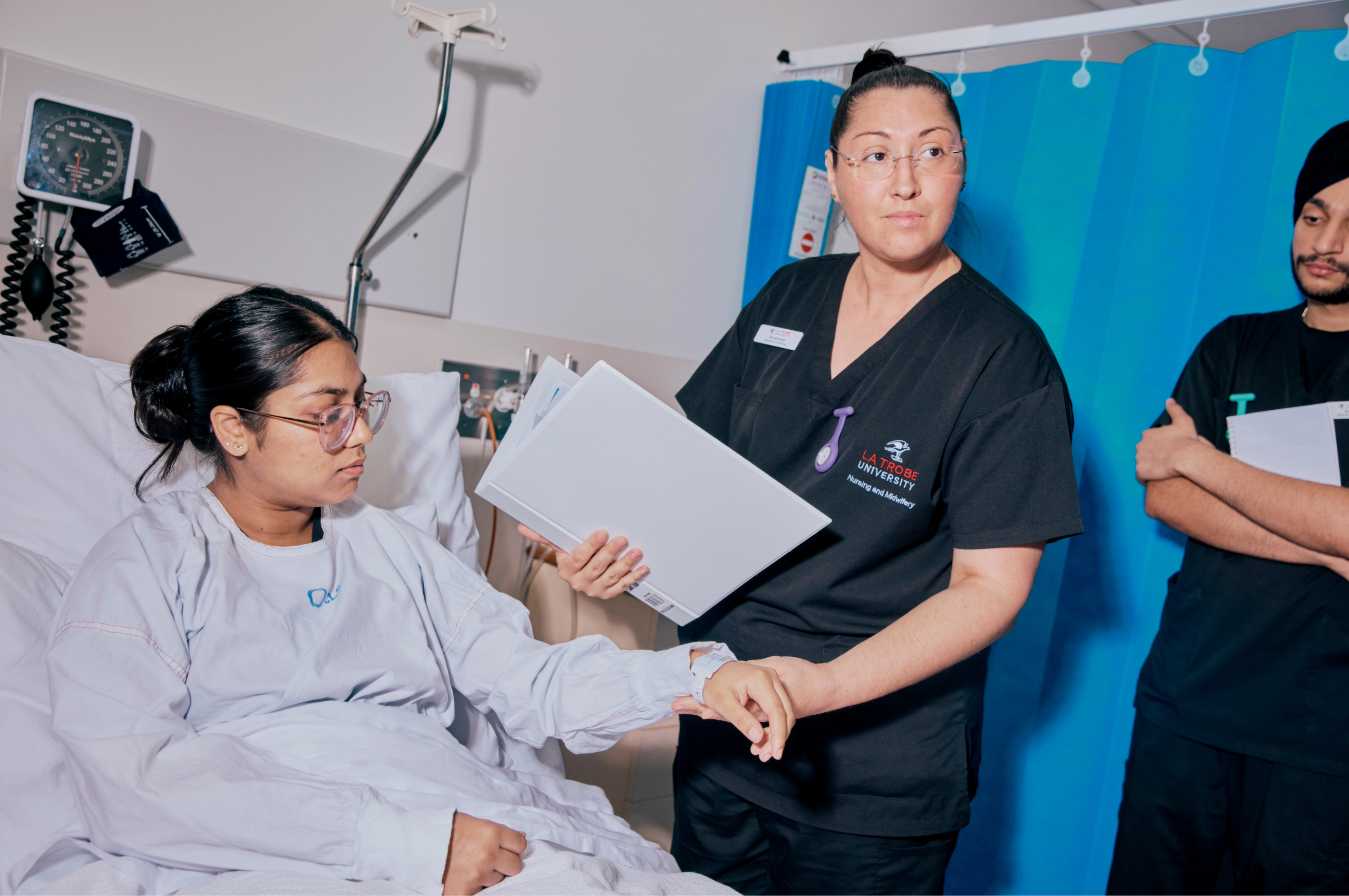
Compulsory work placements undertaken for academic credit.
If your course includes a mandatory placement, we’ll connect you with leading local and international industry partners. These clinical and professional placements let you put theory into practice, build your skills in supportive environments and gain hands-on knowledge of current industry standards.
Pre-placement requirements
All courses in Health require:
- Student Placement Deed
- Immunisation requirements (additional costs will be incurred: please refer to your course handbook)
- Child Safety and Wellbeing (CSW) training
- Volunteer Working with Children check
- Police check (additional costs will be incurred: please refer to your course handbook)
- Student Undertaking form
Current students can access detailed information relating to health placements on Your PlaceReady LMS Hub [La Trobe log in required].
Resources
International student?
Learn how early preparation can help you meet your pre-placement requirements on time.
We’ve put together practical tips to help you prepare for your health placement including what to organise before you leave home, what documents to bring (such as your vaccination evidence), and how to Start Smart.
Support with placement costs
Placement requirements by course
For all health students, learn more about what's required by finding for your course below.
Audiology
As an Audiology student, you will complete up to 40 placement days across your course. You may be placed in a variety of public and private settings, including major public hospitals, disability service providers and community programs in both metropolitan and regional areas, and gain exposure to both adult and paediatric practice. You will have the opportunity to assess and treat people who have hearing, tinnitus and balance disorders. You will also have the opportunity to undertake placement in the internal Audiology Clinic.
Dietetics
As a Dietetics student, you will complete 107 days of placement throughout your course. You will gain exposure to a variety of areas, such as food service, clinical patient care, public health nutrition and research. You may be allocated to placements in a variety of private, public or community settings, and will be required to complete placement in a regional facility throughout the course.
Exercise Physiology
As an Exercise Physiology student, you will undertake three 160-hour placements across your degree.
The clinical program ensures that students gain clinical experience across different healthcare settings (acute, rehabilitation and community practice) and areas of practice (musculoskeletal, cardiorespiratory, neurological) while gaining experience working with people across the lifespan.
Additional requirements:
- An National Disability Insurance Scheme (NDIS) Worker Screening Check may also be requested for some placements. Students will be advised if this is required. Additional costs will be incurred: please refer to your course handbook.
- Valid First Aid and CPR certificate (HLTAID011) - Enrolled La Trobe University students can attend this course for a discounted price through St John Ambulance. Additional costs will be incurred: please refer to your course handbook.
Occupational Therapy
Whilst studying Occupational Therapy, you will complete a total of approximately 1000 hours of placement and service learning throughout your course. Your first placement will be in the second semester of Year 3 (first year for students entering directly into the Master of Occupational Therapy) when you will undertake one four week placement, followed by one eight week placement in each semester of Year 4 as well as a ten week project placement.
Additional requirements:
- You may also need to obtain certificate of completion for a CPR course (HLTAID009), depending on where you complete your placements. Enrolled La Trobe University students can attend this course for a discounted price through St John Ambulance. Additional costs will be incurred: please refer to your course handbook.
- Your Police check, Working with Children’s Check, will need to be provided prior to your fieldwork commencing in Year 2. All requirements as listed will be required prior to commencing placement in Year 3. Additional costs will be incurred: please refer to your course handbook.
- National Disability Insurance Scheme (NDIS) Worker Screening Check. Additional costs will be incurred: please refer to your course handbook.
- Fitness and Readiness for placement InPlace Survey/Assessment (accessible once enrolled in a placement subject - LTU login required)..
Orthoptics
Whilst studying Orthoptics, you will undertake approximately 85 days of placement across your course, and placements will begin in year two. We place students across a variety of different eye health services in Australia and internationally. This includes private clinics, major public health networks, regional health services and not-for-profit organisations such as Vision Australia, as well as the La Trobe Eye Clinic.
Additional requirements:
- National Disability Insurance Scheme (NDIS) Worker Screening Check. Additional costs will be incurred: please refer to your course handbook.
Physiotherapy (Honours)
As a Physiotherapy student, you will undertake six 160-hour placements across the course of your degree, as well as observational experiences if you are completing the Bachelor of Physiotherapy (Honours).
The clinical program ensures that students gain clinical experience across different healthcare settings (acute, rehabilitation and community practice) and areas of practice (musculoskeletal, cardiorespiratory, neurological) while gaining experience working with people across the lifespan.
Additional requirements:
- Fitness and Readiness for placement InPlace Survey/Assessment (accessible once enrolled in a placement subject - LTU login required)
- You may also need to obtain certificate of completion for a CPR course (HLTAID009), depending on where you complete your placements. Enrolled La Trobe University students can attend this course for a discounted price through St John Ambulance. Additional costs will be incurred: please refer to your course handbook.
Physiotherapy (Postgraduate Musculoskeletal/Sports)
If you are studying Sports Physiotherapy you will undertake up to 120 hours of placement across your course. If you are studying Musculoskeletal Physiotherapy, you will undertake 160 hours of placement across your course.
Post-Graduate Physiotherapy placements are self-sourced, meaning you find your own placement under the guidance of your academic coordinator in an area and setting that is of interest to you. Post-Graduate students often complete placements interstate and sometimes even overseas.
Additional requirements:
- Valid First Aid and CPR certificate (HLTAID011) - Enrolled La Trobe University students can attend this course for a discounted price through St John Ambulance. Additional costs will be incurred: please refer to your course handbook.
Podiatry
Whilst studying Podiatry, you will undertake placement at the onsite clinic, as well as external placement with our experienced placement partners. Placements are undertaken in the student-led Podiatry Clinic within the Health Clinic (Bundoora Campus). Clinical practice commences in the onsite clinic in year 2 and continues throughout years 3 and 4, as students work towards attaining entry level professional competencies.
An external observational placement commences in year 2 (7 hours), in a private podiatry clinic. External clinical placements in year 3 (112 hours) and year 4 (392 hours) are a combination of observational and hands-on learning activity including patient assessment and management, minor surgical procedures, and use of scheduled medicines. Students will be exposed to a broad scope of clinical practice including but not limited to paediatrics, musculoskeletal, high-risk foot, rheumatological, surgical, general care, dermatological and sports.
Clinical learning in years 3 and 4 has a strong focus on the use of scheduled medicines for podiatry. Students in year 4 may also have an opportunity to undertake external placements in regional/rural locations, interstate or overseas.
Additional requirements:
- An National Disability Insurance Scheme (NDIS) Worker Screening Check may also be requested for some external placements. Students will be advised if this is required. Additional costs will be incurred: please refer to your course handbook.
- Valid First Aid and CPR certificate (HLTAID011) - Enrolled La Trobe University students can attend this course for a discounted price through St John Ambulance. Additional costs will be incurred: please refer to your course handbook.
Prosthetics and Orthotics
As a Prosthetics and Orthotics student, you will complete 560 hours of placement throughout your course. You may be placed across a wide variety of health services, such as major public and private hospitals, community health centres and private practices, and will be exposed to both prosthetic and orthotic practice.
Social work
As a Social Work student, you will complete two 67-day placements in the final two years of your course. You may be placed across a range of facilities, such as major public or private hospitals, community health centres, mental health services and private clinics across both metropolitan and regional areas. Areas of practice may include alcohol and drugs, youth services, indigenous services, gender specific issues and justice services.
An application form will need to be submitted if you wish to complete a non-standard or overseas placement. Applications forms can be found at the Social Work Student Placement forms page.
Speech Pathology
As a Speech Pathology student, you will complete approximately 92 days of placement throughout your course, beginning in your third (Undergraduate students) or first (Masters students) year. You will gain exposure to both adult and paediatric practice, and may be placed in a variety of settings, including major public and private hospitals, disability support services and community and school programs. You may also have the opportunity to attend placement at the La Trobe Health Clinic.
Bundoora-enrolled students will attend an Endoscopy clinic observation day during your fourth year. This opportunity is available to Bendigo-enrolled students dependent on availability.
Nursing (Bachelor)
You will complete up to 800 hours of placement across the course of your degree, depending on your study plan and entry pathway. Placements may occur in various settings such as acute, sub-acute, and rehabilitation, exposing you to diverse areas of nursing, including aged care, mental health, and primary health care.
Additional requirements:
- National Disability Insurance Scheme (NDIS) Worker Screening Check. Additional costs will be incurred: please refer to your course handbook.
- Valid First Aid and CPR certificate (HLTAID011). Enrolled La Trobe University students can attend this course for a discounted price through St John Ambulance. Additional costs will be incurred: please refer to your course handbook.
- Hand Hygiene for Clinical Healthcare Workers online learning module through Hand Hygiene Australia.
Nursing (Re-entry to practice)
Re-Entry to Practice Nursing program will complete 160 hours of clinical placement following the completion of online coursework. Placements can be undertaken in a variety of settings based on factors such as your previous nursing experience, location and AHPRA recommendations.
Additional requirements:
- Valid First Aid and CPR certificate (HLTAID011). Enrolled La Trobe University students can attend this course for a discounted price through St John Ambulance. Additional costs will be incurred: please refer to your course handbook.
Nursing Practice (Masters)
You will complete up to 800 hours of placement across the course of your degree, depending on your study plan and entry pathway. Placements may occur in various settings such as acute, sub-acute, and rehabilitation, exposing you to diverse areas of nursing, including aged care, mental health, and primary health care.
Additional requirements:
- National Disability Insurance Scheme (NDIS) Worker Screening Check. Additional costs will be incurred: please refer to your course handbook.
- Valid First Aid and CPR certificate (HLTAID011). Enrolled La Trobe University students can attend this course for a discounted price through St John Ambulance. Additional costs will be incurred: please refer to your course handbook.
- Hand Hygiene for Clinical Healthcare Workers online learning module through Hand Hygiene Australia.
Midwifery (Graduate Diploma)
You will complete approximately 180 hours of placement across your course, with the health service you have obtained placement with as part of your application to study.
Midwifery (Bachelor)
As a combined Bachelor of Nursing/Bachelor of Midwifery student, you will complete all Bachelor of Nursing placements, plus an additional 1007 hours of placement across your course. You may gain exposure to a variety of clinical settings, such as Birth Suites, Day Assessment Centres and Special Care Nurseries.
Additional requirements:
- National Disability Insurance Scheme (NDIS) Worker Screening Check. Additional costs will be incurred: please refer to your course handbook.
- Valid First Aid and CPR certificate (HLTAID011). Enrolled La Trobe University students can attend this course for a discounted price through St John Ambulance. Additional costs will be incurred: please refer to your course handbook.
- Hand Hygiene for Clinical Healthcare Workers online learning module through Hand Hygiene Australia.
Child, Family and Community Nursing
You will complete a minimum of 304 hours of placement across the year. You will gain exposure to child care, maternal and child health, community health, early intervention, early parenting/day stay and specialty services. Most Child, Family and Community placements are self-sourced, meaning you will have the opportunity to arrange your own placement experiences in conjunction with the University.
Paramedicine
You will complete approximately 640 hours of placement throughout the final three years of your course. You will be placed with public and private hospitals as well as Ambulance Victoria, and have an option to complete some interstate ambulatory services during your final year. You will gain exposure to various area of Paramedicine, such as aged care, emergency care and primary care. You may also have the opportunity to complete an international placement in Canada or the United states.
Additional requirements:
- Ambulance Victoria Fitness to Practice assessment
Dentistry
As a Dentistry student, you will provide patient care in the third year of your course (approximately 264 days) and complete 152 days of clinical placements across the final two years of your course. Dependent on the service you attend for your clinical placements you may be required to complete up to 152 days as a dental assistant. You will be rotated through a number of regional and metropolitan clinical sites throughout this time.
Oral Health
Whilst studying the Bachelor of Oral Health Science, you will complete approximately 725 hours of placement. This will begin in the first semester of your second year, with a 170-hour placement that will be arranged by the Department of Dentistry and Oral Health, and follow through to your final year with an additional 555 placement hours.
Additional requirements for all Dentistry and Oral Health courses:
- Valid First Aid and CPR certificate (HLTAID011) - Enrolled La Trobe University students can attend this course for a discounted price through St John Ambulance. Additional costs will be incurred: please refer to your course handbook.
- Hand Hygiene for Dental Healthcare Workers online learning module through Hand Hygiene Australia.
As a Pharmacy student, you will complete approximately 250 hours of placement throughout your course. You will gain exposure to a wide variety of public and private settings, including regional and metropolitan hospitals, aged care and privately owned pharmacies. Placements will begin in your first year, with two short introductory observation visits.
Rural Pharmacy Student Placement Allowance (RPSPA) Program
The Rural Pharmacy Student Placement Allowance (RPSPA) Program provides financial support to encourage and enable undergraduate pharmacy degree programs at Australian Universities to deliver compulsory student placements in rural and remote communities. The Scheme aims to facilitate positive placement experiences for pharmacy students in rural and remote communities, encouraging students to return to rural or remote practice on graduation.
For further information and to apply please see the Rural Pharmacy Student Placement Allowance (RPSPA) Program.
Art Therapy
As an Art Therapy student, you will complete approximately 774 hours of placement across your course. More information on individual subject placement requirements can be found in the subject entries of the handbook . You may be placed across a range of settings, including (but not limited to) community health services, mental health services, aged care and schools, taking into account any previous work history and your future career goals alongside academic needs.
Additional requirements
- Fitness and Readiness for placement InPlace Survey/Assessment (accessible once enrolled in a placement subject - LTU login required)
Health Information Management
As a Health Information Management student, you will complete up to 64 days of placement across your course, depending on the course you are enrolled in. More information on individual subject placement requirements can be found in the subject entries of the handbook .
You will gain exposure to a variety of settings and health services; this could include major public and private hospitals, regional health services and research centres. For your final placement, you will have the opportunity to express interest in a number of projects proposed by our agency partners, and will be matched to one of these by your Academic Coordinator.
Psychology (Postgraduate)
As a postgraduate Psychology student, you may undertake placement across a variety of public and private settings. Information on individual subject placement requirements can be found in the subject entries of the handbook .