
Writing Themselves In: In our words - Youth LGBTIQA+ health and wellbeing in Australia
Australia's largest youth LGBTIQA+ health and wellbeing survey
Data collection for Writing Themselves In 5: In Our Words is now complete! Watch this space, or join our mailing list for report updates.
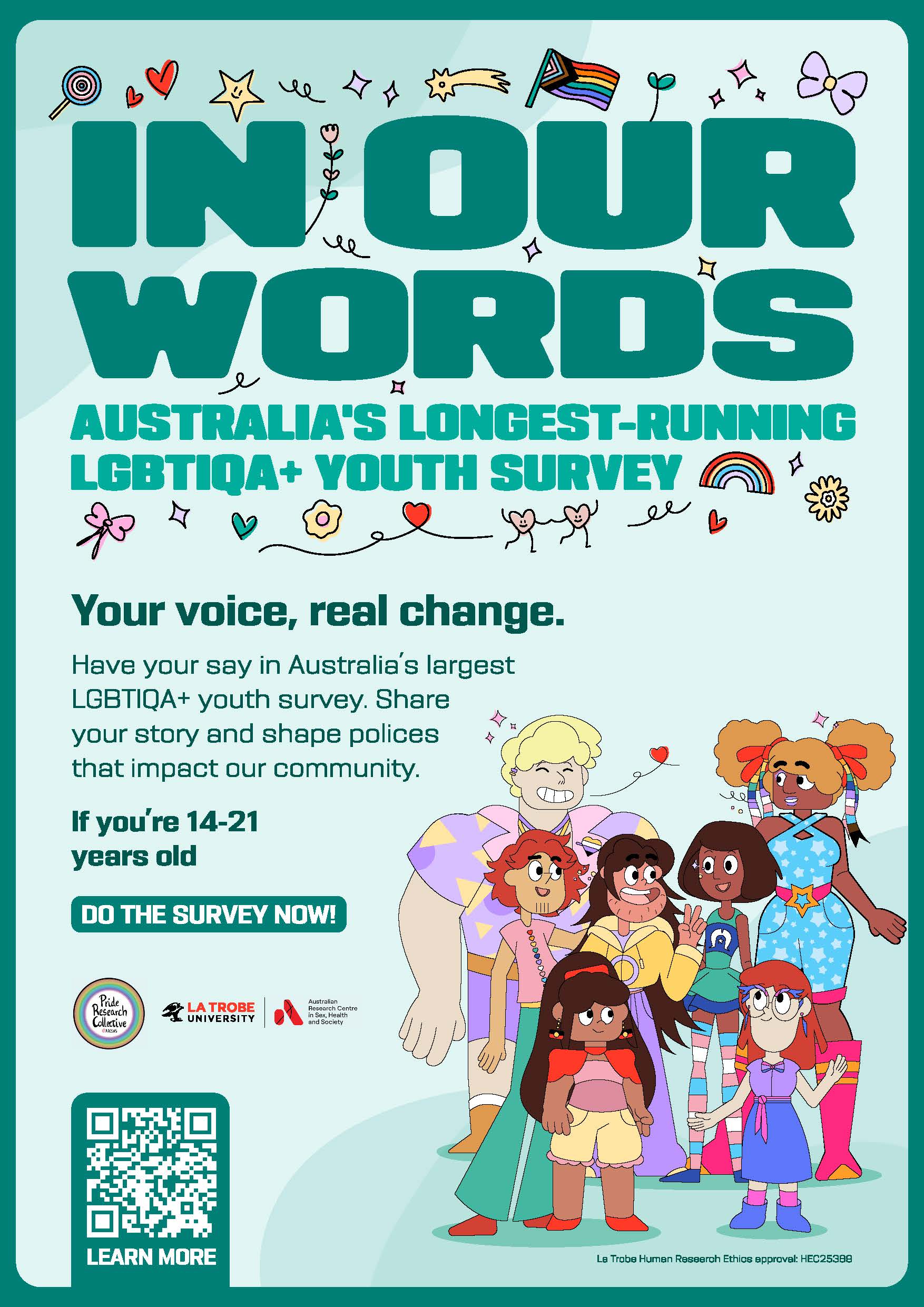
Australia's largest and longest-running survey of the health and wellbeing of LGBTIQA+ youth since 1994!
Your voice matters.
Data collection for Writing Themselves In 5: In Our Words is now complete.
About the survey
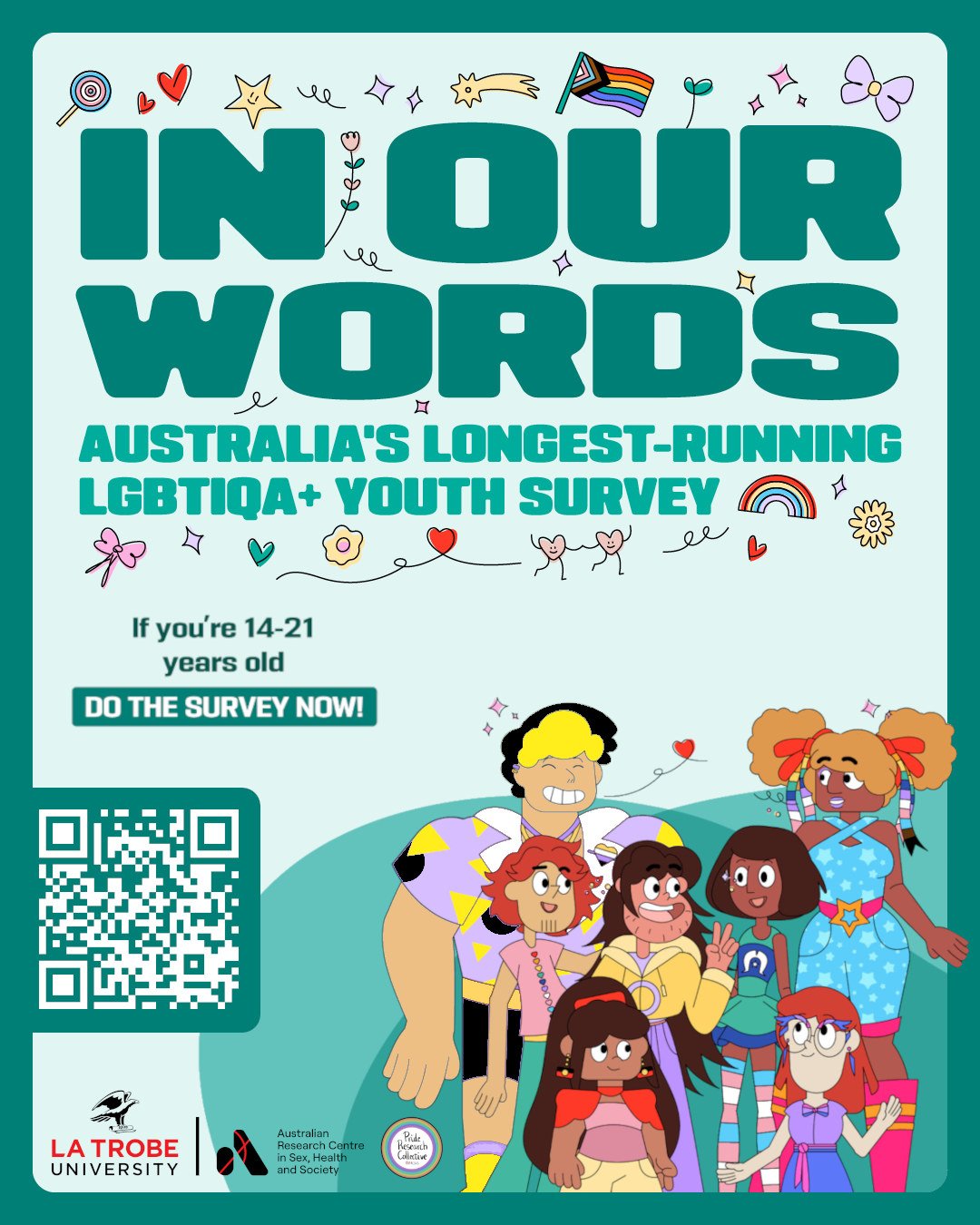
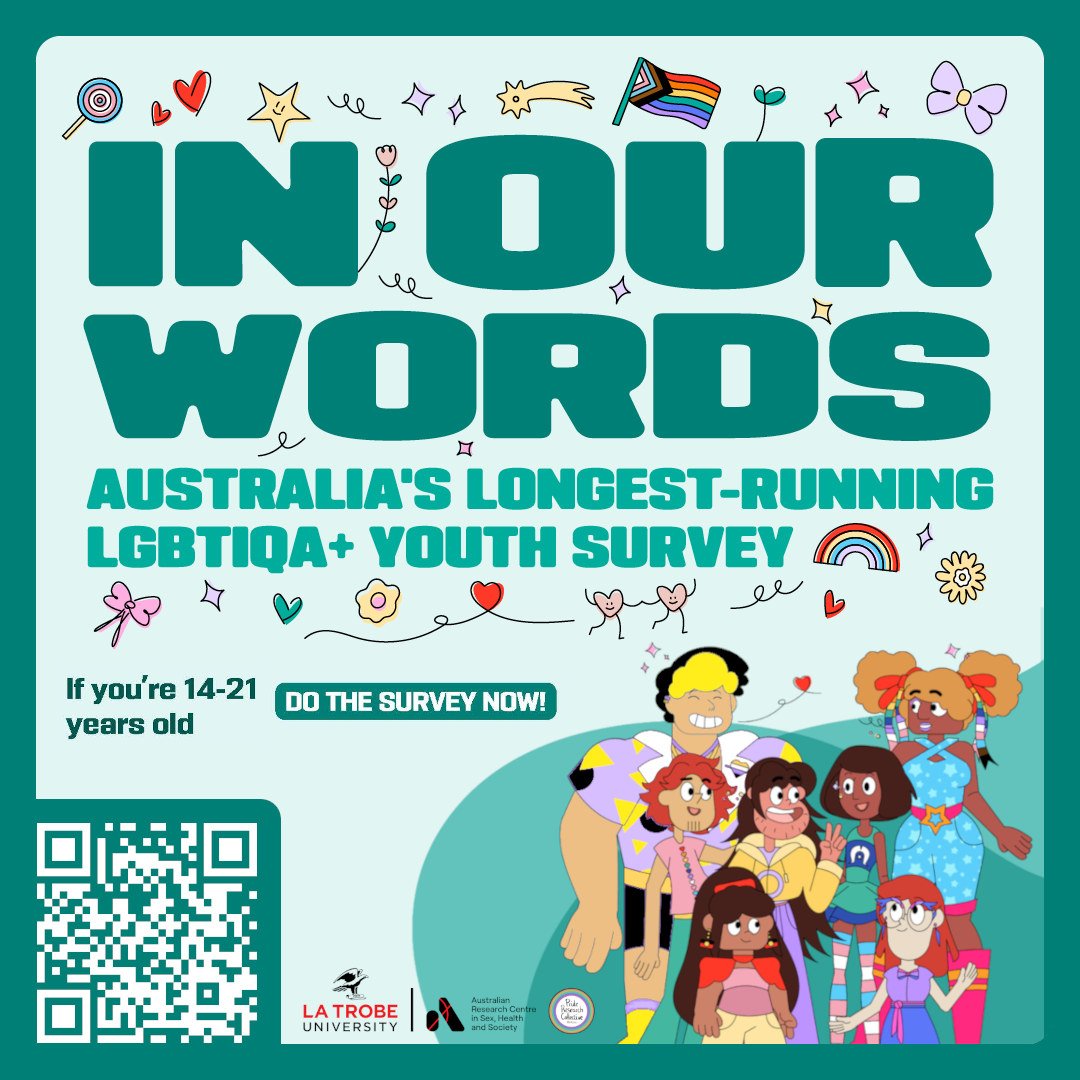
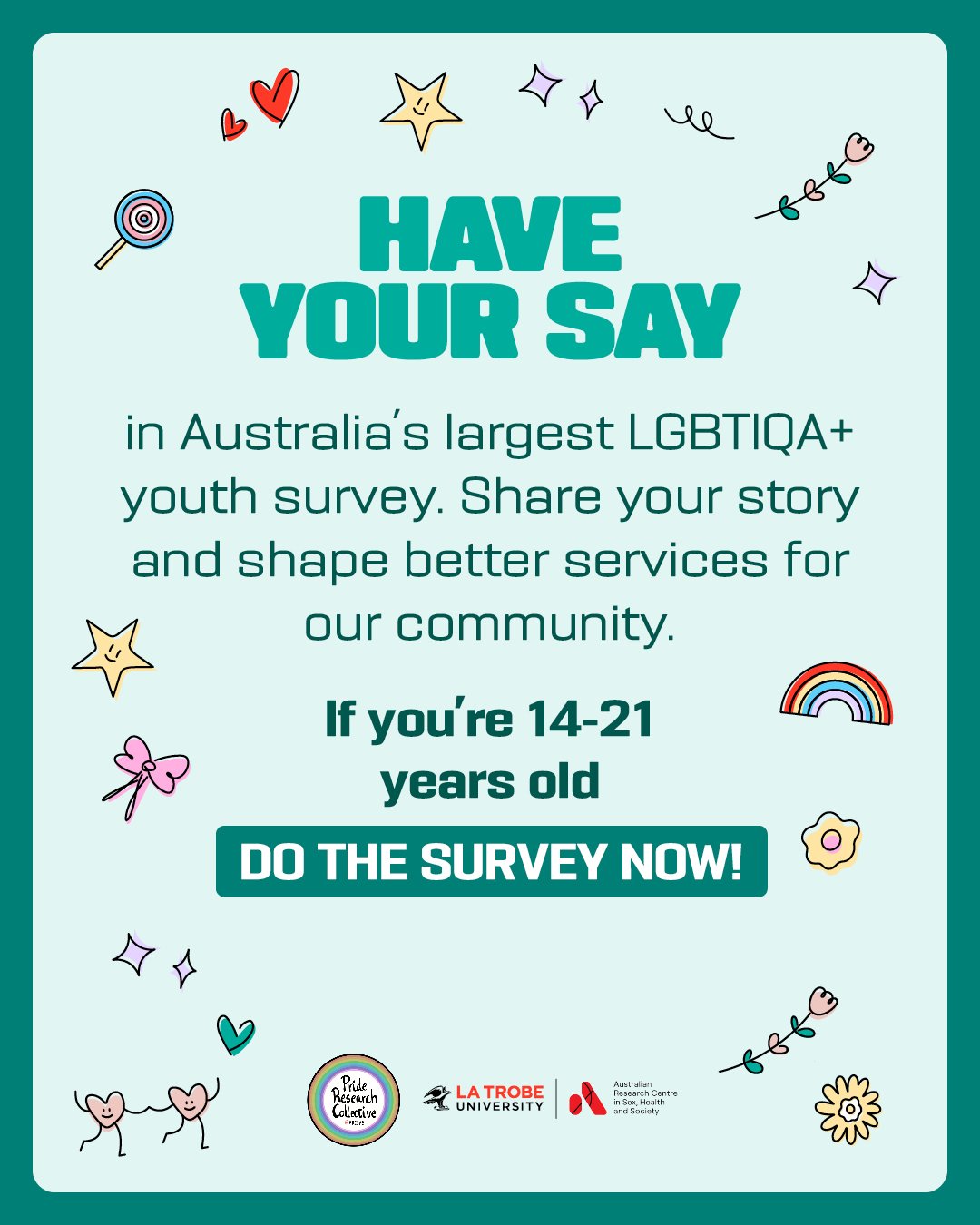
In Our Words is the fifth round of the Writing Themselves In survey, run at the Australian Research Centre in Sex, Health and Society since 1994.
It's Australia’s largest and longest-running national survey of the health and wellbeing of lesbian, gay, bisexual, transgender, non-binary, innate variation of sex characteristics/intersex, queer and asexual/aromantic (LGBTIQA+) young people.
The survey will provide important up-to-date information for health professionals, service providers, community organisations and governments to better understand and support the health and wellbeing of LGBTIQA+ young people in Australia.
Funded by the Australian Government Department of Health, Disability and Ageing, In Our Words (Writing Themselves In 5), alongside our adult survey, Private Lives 4, will contribute critical data to support the implementation of the National Action Plan for the Health and Wellbeing of LGBTIQA+ People 2025–2035.
Last time we ran the Writing Themselves In survey, the results led to real change all across the country. Results from this survey will inform government policies and shape services for LGBTIQA+ young people nationally.
You can read the reports from our last Writing Themselves In survey here, including reports for different states and territories, plus combined data reports on LGBTIQA+ identity and disability, factsheets on Aboriginal and Torres Strait Islander LGBTQA+ health and wellbeing, briefing papers on mental health for different states and intersectional identities, and the major Rainbow Realities report.
Sign up to stay updated on our surveys
Want to hear more about our events, research, training and more?
Researchers
Natalie Amos, Ruby Grant, Jordan Hinton, Shakara Liddelow-Hunt, Ashleigh Lin, Olivia Brozeki, Dan Powell, Joel Anderson, Adam Hill, Adam Bourne
Partners and funding
Writing Themselves In 5: In Our Words is funded by the Australian Government Department of Health, Disability and Ageing.
Participant information archive
What are the benefits?
Your responses will help to inform the work of policy makers, LGBTIQA+ service providers, health professionals and many others who seek to protect and improve the health and well-being of LGBTIQA+ young people in Australia.
What are the risks?
In Our Words is an anonymous, online survey that is optional to complete. Your data will be kept secure and no one will know if you have done the survey. After you complete your survey, you can sign up for future research if you want.
The survey asks some questions about things that may be upsetting, like questions about mental health, suicide, discrimination, and violence. You can skip these questions if you want to, and you can stop at any time.
If you would like to seek support for any reason, please contact the following services:
- QLife: LGBTIQ mental health support, information and referrals through phone counselling or webchat – Ph: 1800 184 527
- Lifeline: Crisis Support – Ph: 13 11 14
- Headspace: Online and phone support. Information and resources on mental health and LGBTIQ+SB people
- BeyondBlue: Mental Wellbeing – Ph: 1300 224 636
- Kids Helpline: Online and phone support and information for young people, 5-25 years – Ph: 1800 55 1800
- 13YARN: Information and support for Aboriginal and Torres Strait Islander people in all states and territories – Ph: 13 92 76
- Yarning Safe’n’Strong: Counselling services for Aboriginal and Torres Strait Islander people – Ph: 1800 959 563
- Brother to Brother: Phone support line for Aboriginal and Torres Strait Islander men – PH: 1800 435 799
 [PDF 719.4 KB]
Videos
Ethics
This study has been approved by the following Human Research Ethics Committees:
- La Trobe University Human Research Ethics Committee: HEC25389
- Australian Institute of Aboriginal and Torres Strait Islander Studies (AIATSIS) Research Ethics Committee: REC-0603
- Thorne Harbour Health Research Endorsement Panel: THH-25-030
- ACON Research Ethics Review Committee: RERC 202522
- West Australian Aboriginal Health Ethics Committee (WAAHEC): HREC1476