
Family, domestic and sexual violence

ARCSHS has cultivated a breadth and depth of expertise in family, domestic and sexual violence over the past decade across a range of contexts and disciplines. We are proud to now formally articulate this as a core theme of our work.
Our research has explored topics such as:
- perpetration of intimate partner violence and sexual violence
- barriers and enablers of professional support service engagement
- frameworks for understanding and preventing violence
- evaluation of violence prevention initiatives.
Our family, domestic and sexual violence knowledge translation work includes:
- the tailoring of core capability-building offerings for the family violence sector
- the development of guidance resources for both prevention and response work.
Our projects include:
- Under Pressure - A study investigating unwanted sexual behaviours against LGBTQ+ people, aiming to generate actionable knowledge and focusing on the social forces, risk factors, and characteristics of those who use sexual violence
- Respectful Connections: - A project researching transgender women’s experiences of technology-facilitated gender-based violence
- Pleasure-centred sexual safety - Moving beyond risk-focused approaches to sexual safety and instead celebrating sexual agency and pleasure for neurodivergent women, and trans and gender diverse people in Victoria.
- Pride in Prevention - A project that focuses on family violence experienced by lesbian, gay, bisexual, trans and gender diverse, intersex and queer communities, and how to prevent such violence from happening in the first place.
- Opening Doors - Ensuring LGBTIQ-inclusive family, domestic and sexual violence services
- Responsive pandemic practice - LGBTIQ+ family violence service innovation in Victoria during COVID-19
- Catalysts of Change - Interventions and service pathways for gay, bisexual, trans and queer (GBTQ) men who have used family violence in Victoria, Australia
Partnership projects
ARCSHS is proud to be part of the Partners in Prevention of Sexual Violence Project, led by the Reducing Gender-based Violence (ReGEN) Research Group and based at La Trobe University's Violet Vines Marshman Centre.
Theme co-convenors:
Belinda O'Connor and Sophie Hindes
Latest updates
Changing with Pride: 
A national framework to prevent violence against LGBTIQA+ people
To stop violence against LGBTIQA+ people before it starts, it is critical to identify and address the underlying drivers of violence – the specific social factors that make violence more likely and enable it to continue.
This framework, created in collaboration by Our Watch and Rainbow Health Australia, describes the drivers of violence against LGBTIQA+ people and how these overlap with the drivers of men’s violence against women.
Pride in Prevention Program Guide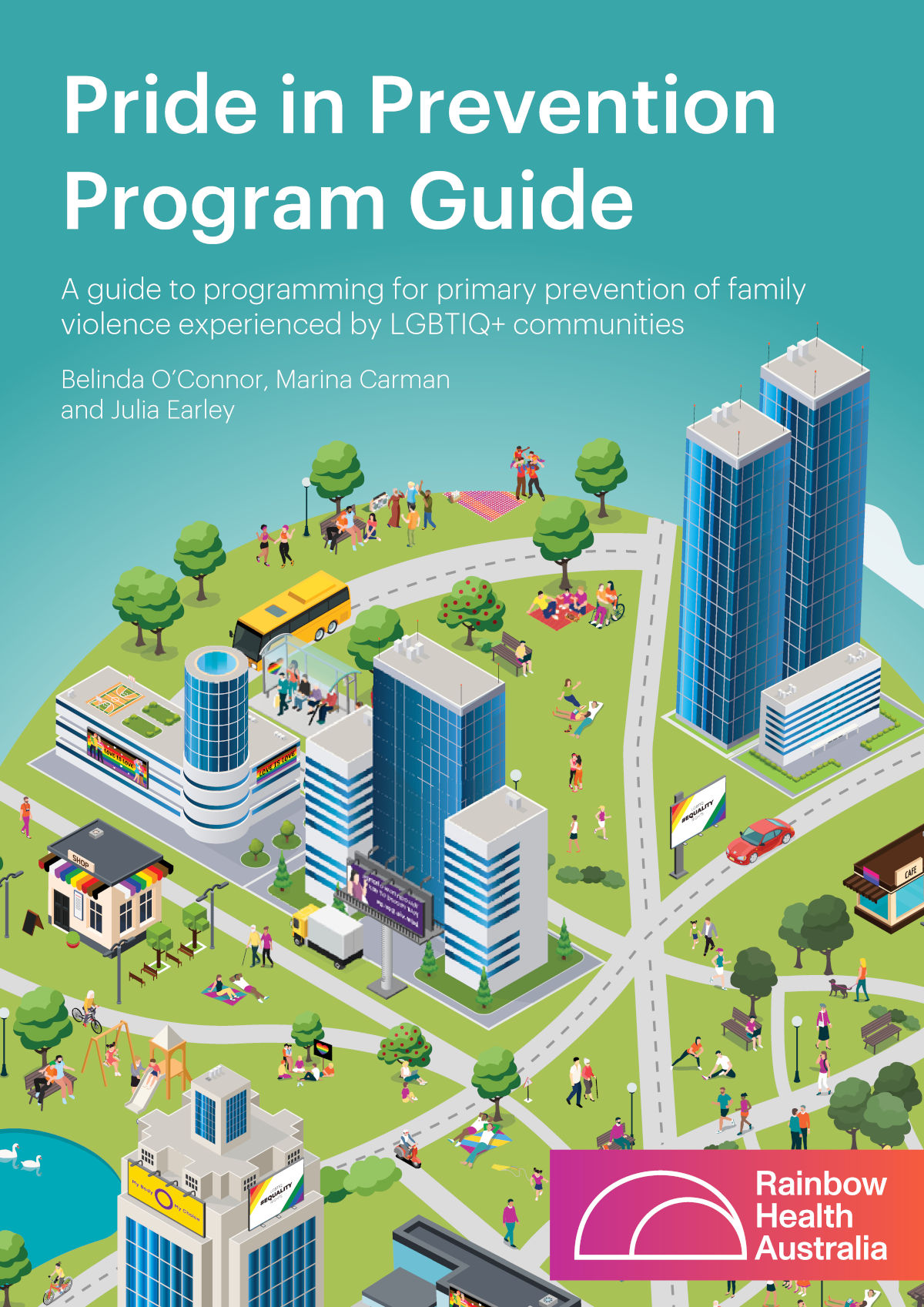
A guide to programming for primary prevention of family violence experienced by LGBTIQ+ communities.
Download the Pride in Prevention Program Guide
Accessible Word version
Explore the Pride in Prevention series
Catalysts of Change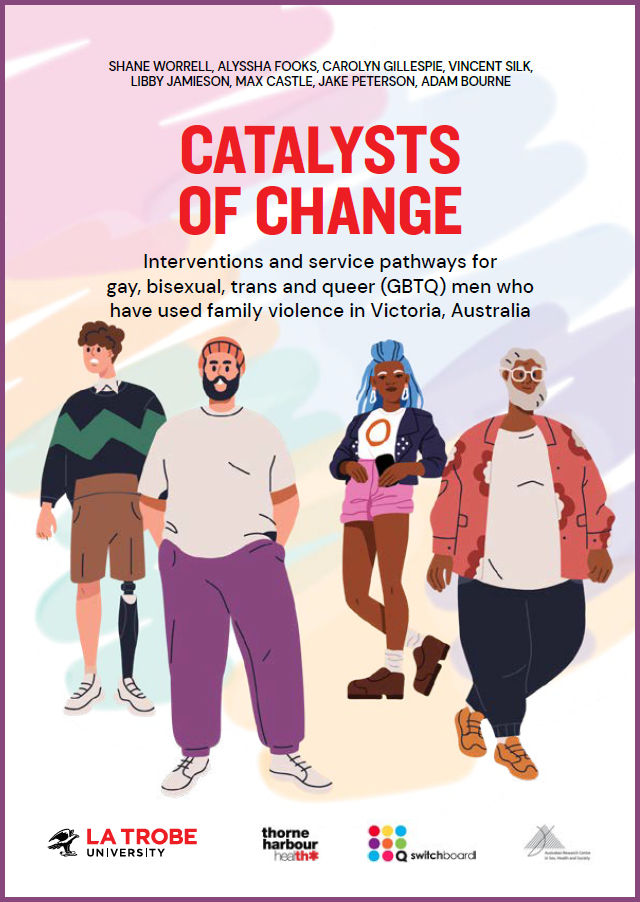
This report explores how GBTQ men who have used violence in an intimate or family relationship are encouraged to change their behaviour and commit to a life of non-violence. Drawing on interviews with users of violence, victim survivors and practitioners (many at LGBTIQ+ community-controlled organisations) in Victoria, Australia, this research identifies how users of violence access services and the approaches utilised by service providers to engage and retain them in behaviour change programs.
Responsive Pandemic Practice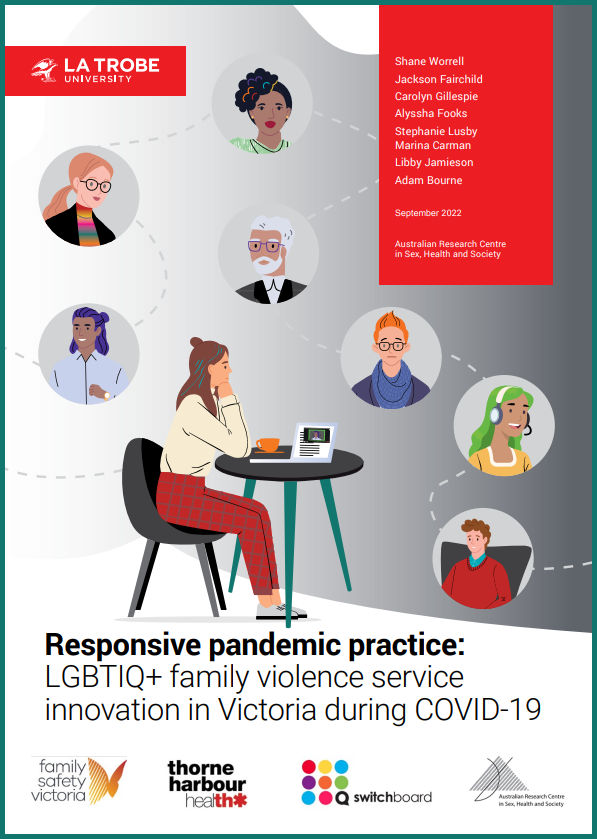
LGBTIQ+ family violence service innovation in Victoria during COVID-19
Thorne Harbour Health and Switchboard Victoria, through its Rainbow Door helpline, were instrumental in LGBTIQ+ family violence services undergoing a major transformation throughout 2020-21 in response to COVID-19 and its associated impacts.
This report explores how these two LGBTIQ+ community-controlled organisations in Victoria, Australia, innovated to provide telehealth and other flexible services to victim survivors and perpetrators despite the suspension of almost all in-person family violence services.
The accompanying Practice guide presents lessons learned from the pandemic response, and how these can be used for the benefit of LGBTIQ+ and family violence services in the future.
Download Responsive Pandemic Practice
Download the practice guide
Opening Doors: Ensuring LGBTIQ-inclusive family, domestic and sexual violence services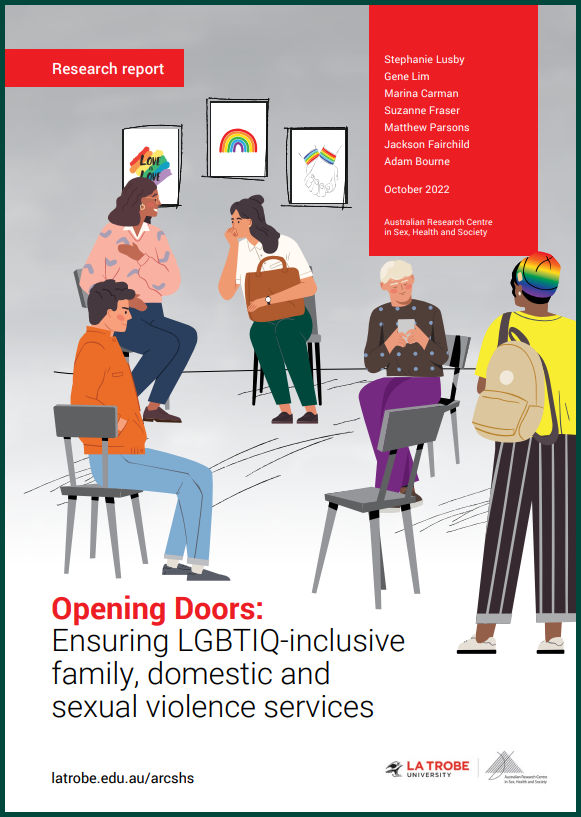
Research report
Findings from a study that considers how to improve family, domestic and sexual violence service accessibility and safety for LGBTIQ people in Australia.
Opening Doors: Ensuring LGBTIQ-inclusive family, domestic and sexual violence services 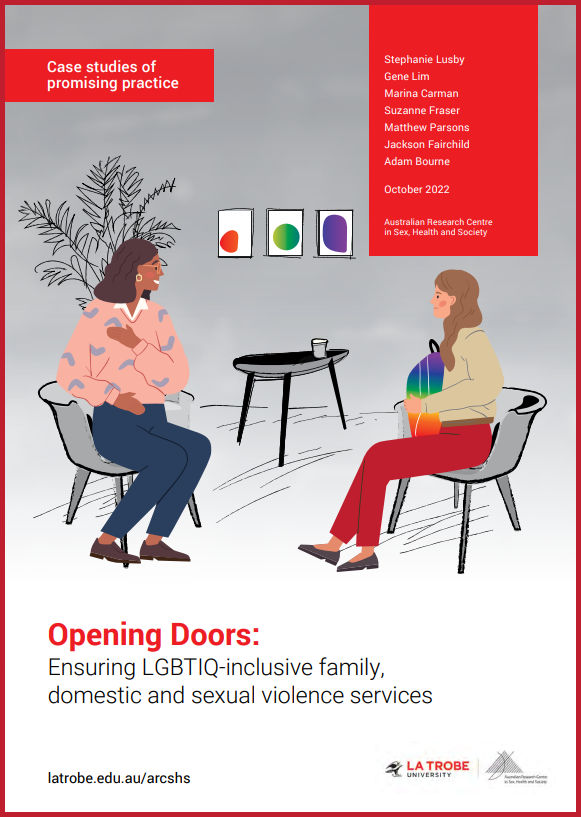
Case studies of promising practice
A detailed exploration of the ways that LGBTIQ community-led services and other FDSV services have approached improving the safety, inclusivity and accessibility of services for LGBTIQ people and communities. These case studies are intended as a resource for organisations and practitioners to help inform their own endeavours towards improving LGBTIQ-inclusive practice.
Opening Doors: Ensuring LGBTIQ-inclusive family, domestic and sexual violence services 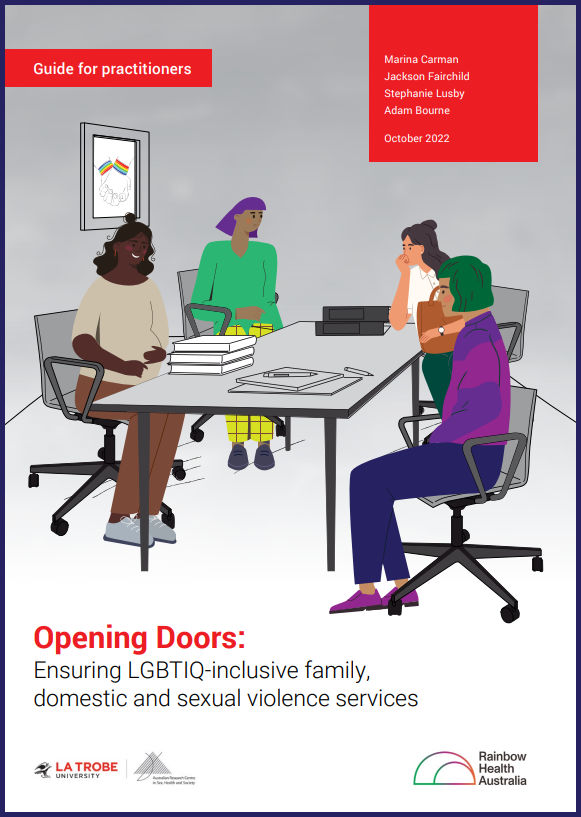
Guide for practitioners
Distills the findings of the research report and case studies to identify key implications for policy, sector-wide improvements, organisational change, LGBTIQ community engagement, workforce training and clinical governance.
Launch: Opening Doors: Ensuring LGBTIQ-inclusive family, domestic and sexual violence services
Held on October 13, the launch of the Australian Research Centre in Sex, Health and Society's 'Opening Doors: Ensuring LGBTIQ-inclusive family, domestic and sexual violence services' research report and accompanying resources. Speakers include:
- Acting ARCSHS Director
- Associate Professor Adam Bourne
- The Hon Amanda Rishworth MP
- Commonwealth Minister for Social Services
- Lead investigator Dr Stephanie Lusby
- Acting Rainbow Health Australia Co-Director Jackson Fairchild
- Jex Burgess
- Lived experience expert, Fahad Jawaid
- Thorne Harbour Health, Sue Webeck
- Domestic Violence Crisis Service ACT and Eloise Layard, ACON