
Building stronger maritime journalism across Southeast Asia
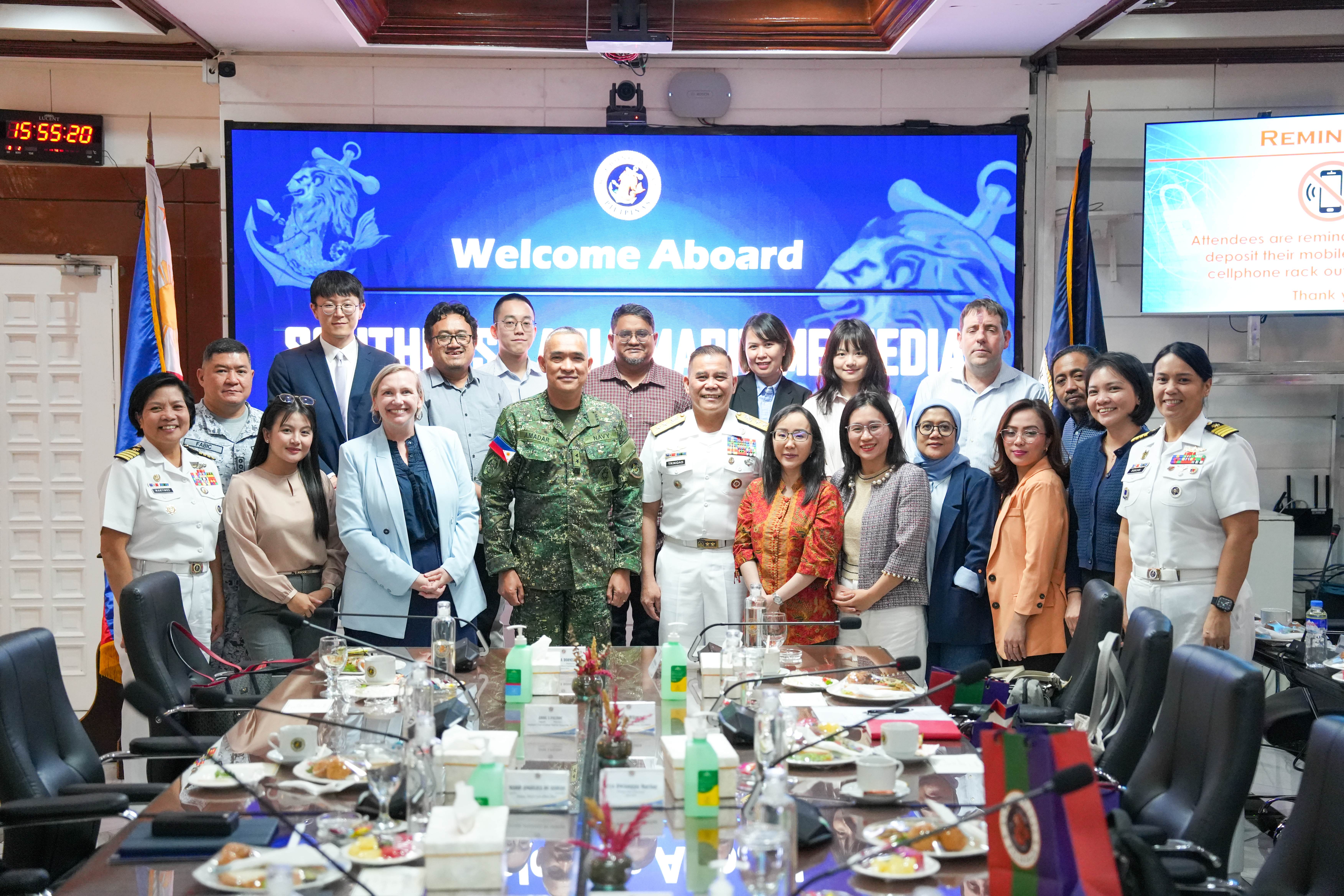
Journalists around the world are navigating increasingly complex geopolitical issues, often while working with fewer newsroom resources. This can make it difficult to help the public understand topics that are technical, contested, and fast‑moving.
Maritime issues in Southeast Asia are a clear example. Journalists in the region often lack access to specialised training, scientific expertise, and government briefings on maritime governance and security. These issues carry significant local and international consequences, and inaccurate or incomplete reporting can lead to public misunderstandings, policy missteps, and poorly informed regulation.
To help address this, La Trobe University’s Centre for Global Security launched the Southeast Asia Maritime Media Visits Project in April 2025, led by Dr Lupita Wijaya.
The project will run for 2.5 years and will work with 36 journalists from Indonesia, the Philippines, Vietnam, and Malaysia, supporting them to better understand and report on maritime governance and security issues.
The initiative draws on Dr Wijaya’s personal experience as a former journalist covering South China Sea disputes, where accessing and interpreting reliable information was often challenging. She recognised that connecting journalists with key stakeholders - and with each other - would lead to stronger reporting and contribute to a more informed and prepared media landscape capable of covering maritime issues with greater accuracy and depth.
“Current regional initiatives addressing maritime issues, such as marine protection agreements and diplomatic dialogues, are often implemented without strategic media engagement,” Dr Wijaya says.
“This limits public accessibility and understanding of these complex issues. As a result, journalists in the region may cover South China Sea topics sporadically or fail to dive beneath the wave tops.”
The program offers field-specific training workshops, partnerships with diverse expert and scholars, along with government officials from Australia and Southeast Asia countries. As part of this initiative, she is also developing a practical toolkit to promote best practices in maritime reporting.
The first group of 12 journalists have produced over 50 news articles and media across major media outlets in Malaysia, the Philippines, Vietnam, and in Indonesia.
These stories have examined issues including maritime environmental protection, the international rules-based order at sea, gender and community perspectives, and the impacts of maritime conflict on traditional fishing communities. Journalists also met directly with and interviewed fishers in the Philippines about how ongoing disputes affect their livelihoods.
“Beyond the numbers, the most important outcome is building something that did not previously exist,” Dr Wijaya says. “That is ensuring journalists know and trust each other. The ocean does not sit within national boundaries- it is inherently transnational. Any problems at sea therefore become transnational and global issues. In Southeast Asia, where exclusive economic zones and maritime boundaries are complex, condensed, and often overlapping, these conditions create shared problems, shared interests, and a need for collective support.”
By strengthening regional connections and access to expertise, the project is helping to build a more informed, connected, and resilient media environment - one better equipped to explain maritime issues that affect communities, economies, and regional stability.
Photo credit: Philippine Navy
Story published April 2026