
March 2026
Thursday 5 March
Welcome to my March blog.
It has been wonderful to see our campuses come to life for O-Week and the start of Semester 1. Well done to the teams that delivered a great program of events and activities to welcome our newest students.
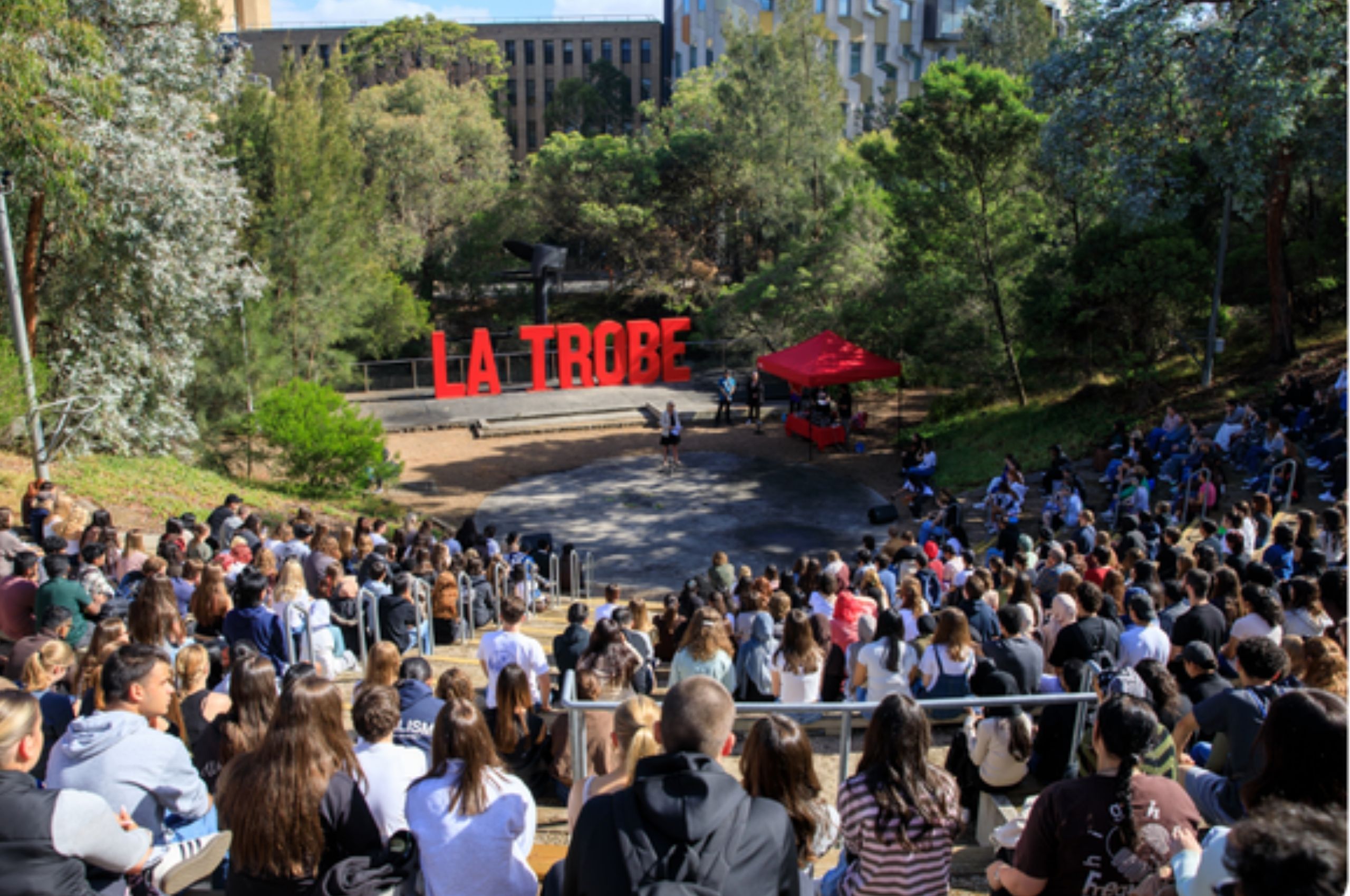
While our teaching staff are gearing up for another semester, it has also been a busy time for professional staff managing functions like admissions and enrolments, timetabling and ASK La Trobe. These teams do an outstanding job in supporting learning and teaching across La Trobe.
I was in Canberra last week for the annual Universities Australia (UA) conference, which brings together colleagues from universities across Australia with policy makers and commentators. It was fantastic to see La Trobe’s Olga Tennison Autism Research Centre (OTARC) shortlisted for the Shaping Australia Community Champion Award, and while OTARC did not win on the night, it was in excellent company alongside other hugely impressive projects. These awards really do showcase why university research matters, and I was proud to see OTARC nominated for having such a positive impact by centring Autistic voices in its work.
The UA conference is a timely opportunity to consider Government priorities and policy settings that will shape our sector in the year ahead. The Universities Accord (Australian Tertiary Education Commission) Bill 2025 that seeks to formally establish the Australian Tertiary Education Commission (ATEC) passed the House of Representatives last month, and the Government will negotiate with the Greens to pass the legislation in the Senate. The Greens have indicated they will seek changes to the Job-Ready Graduate legislation, including revisions to student contribution amounts, in return for supporting the Bill.
One of ATEC’s roles is to oversee the introduction of a managed growth funding system that aims to increase opportunity for students from disadvantaged and underrepresented backgrounds. 2026 is a transition year before the new system comes into effect, and La Trobe has been allocated significant growth for commencing domestic and international student enrolments in 2026. Achieving our load allocations for 2026 is a key priority and will help drive progress toward the growth ambitions outlined in the University’s 2025-2030 Strategic Plan. Importantly, our Strategy remains strongly aligned with the Government’s mission to raise higher education participation to 55 per cent of the working-age population by 2050, including amongst rural and regional communities.
The Government is also focused on implementing recommendations from the Final Report of the Expert Council on University Governance that was released by Education Minister Jason Clare last October. Work is underway to assess La Trobe’s policies and processes to ensure we comply with new governance principles that will be written into Commonwealth regulation through the Higher Education Threshold Standards. We are also committed to the actions set out in La Trobe’s Anti-Racism Action Plan 2025-2030 and will carefully review the national report Respect at Uni: Study into antisemitism, Islamophobia, racism and the experience of First Nations People that was released last month to determine whether any of La Trobe’s actions need to be updated.
Minister Clare has also established a Better Regulation Working Group that has been tasked with streamlining processes and improving efficiency in the higher education sector, which will be co-chaired by UA and the Department of Education. It will work alongside the Government’s programs on university governance and better integrating Australia’s tertiary education system to make it easier for students to move between Vocational Education and Training (VET) and higher education.
In his speech to the UA conference gala dinner last week – which you can read here – Minister Clare reinforced the Government’s Accord agenda, particularly ATEC’s mandate and the introduction of needs-based funding, as well as the importance of good governance and addressing racism at universities. The Minister also stated that 2026 is a year when “the big reforms to break down the barriers that stop kids from disadvantaged backgrounds getting into university and getting through, get switched on”. He also said something that resonates strongly with our core mission at La Trobe: “I don’t want us to be a country where your chances in life depend on how rich your parents are, where you grew up, what school you went to, or the colour of your skin.” I know this sentiment echoes the values of everyone at La Trobe – it is certainly heartening that our Federal Education Minister, like us, believes that everyone should have access to the life-changing opportunities afforded by higher education. In terms of a concrete and very welcome measure, Minister Clare announced that Commonwealth Supported Places for students from low socio-economic backgrounds and studying at rural and regional campuses will be demand-driven from next year.
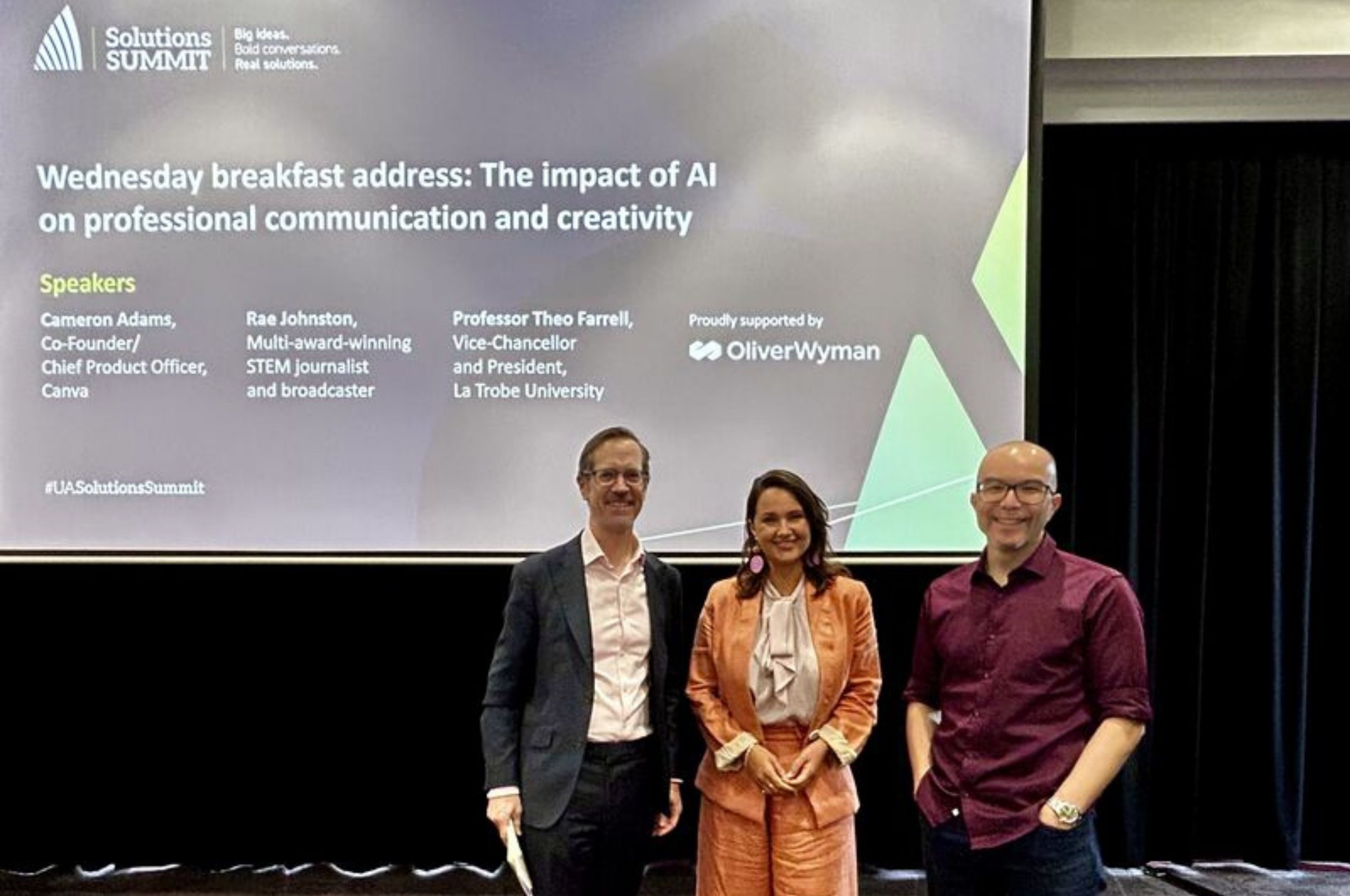
Meanwhile, the Victorian Government has announced a Parliamentary Inquiry into the governance of Victorian universities, which will focus on staff and student representation on governing councils. A Victorian state election will be held in November. The University works with the State Government on a range of projects impacting La Trobe – from Indigenous education and implementation of the Treaty for Victoria to our campus masterplan and improved public transport, and support for international education – and we will promote La Trobe priorities in the lead up to the election. Additionally, I was recently appointed Chair of the Victorian Vice-Chancellors’ Committee, which meets regularly with the Minister for Skills and TAFE and officials from the Department of Education and advocates on higher education issues within the State.
I anticipate interesting discussions with the Victorian VC Committee during this election year. For now, I’d like to share some recent activities and achievements from across the University.
AI and digital innovation
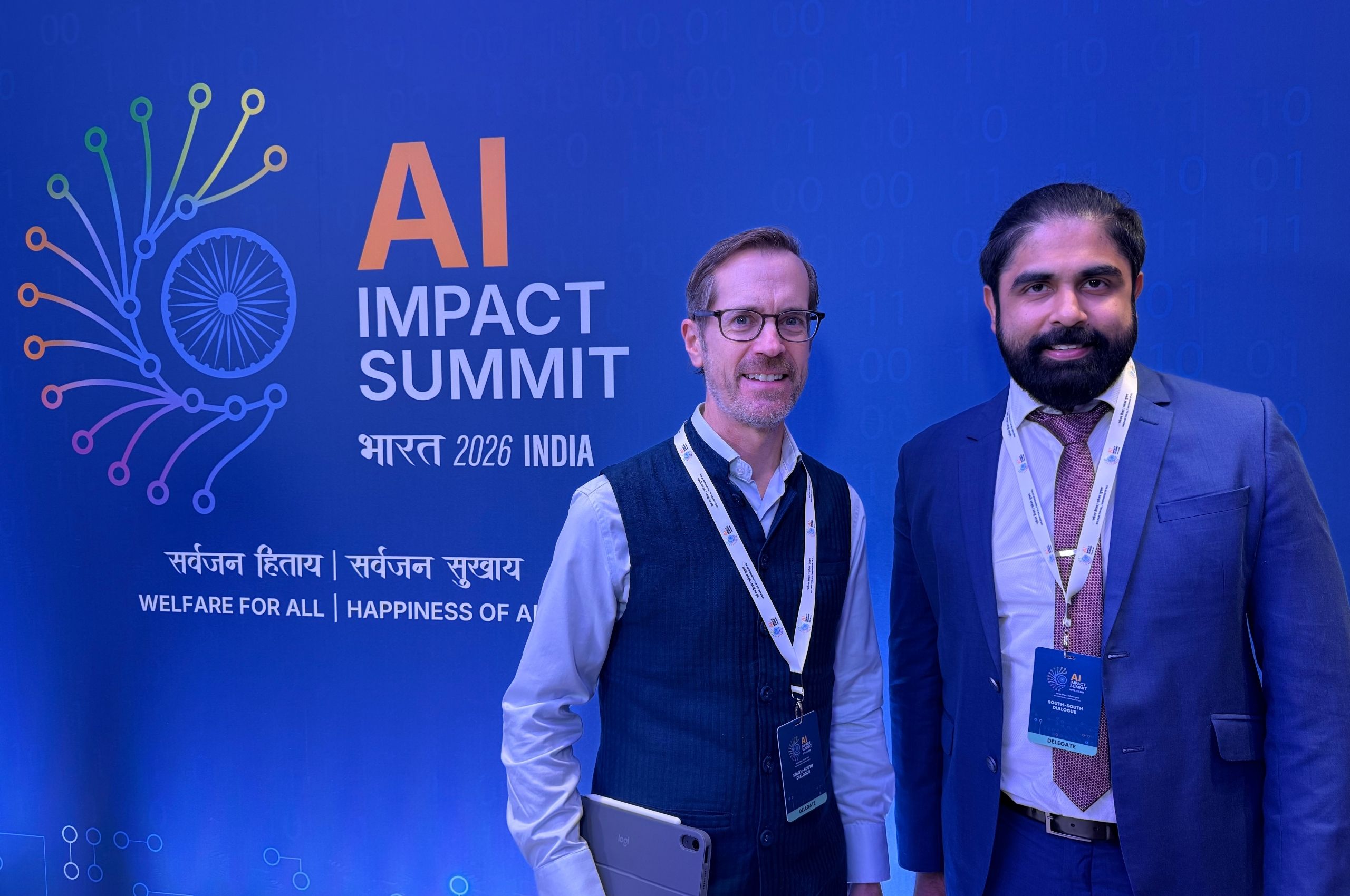
I travelled to New Delhi in late February with La Trobe’s Professor of AI and Analytics, Daswin De Silva, to attend the India AI Impact Summit 2026 hosted by Indian Prime Minister Narendra Modi. It was invaluable to learn more about the ways that universities, government agencies and industries around the world are using AI, and we participated in an excellent session hosted by the independent think tank Carnegie India that explored AI use cases across agriculture, healthcare, and education.
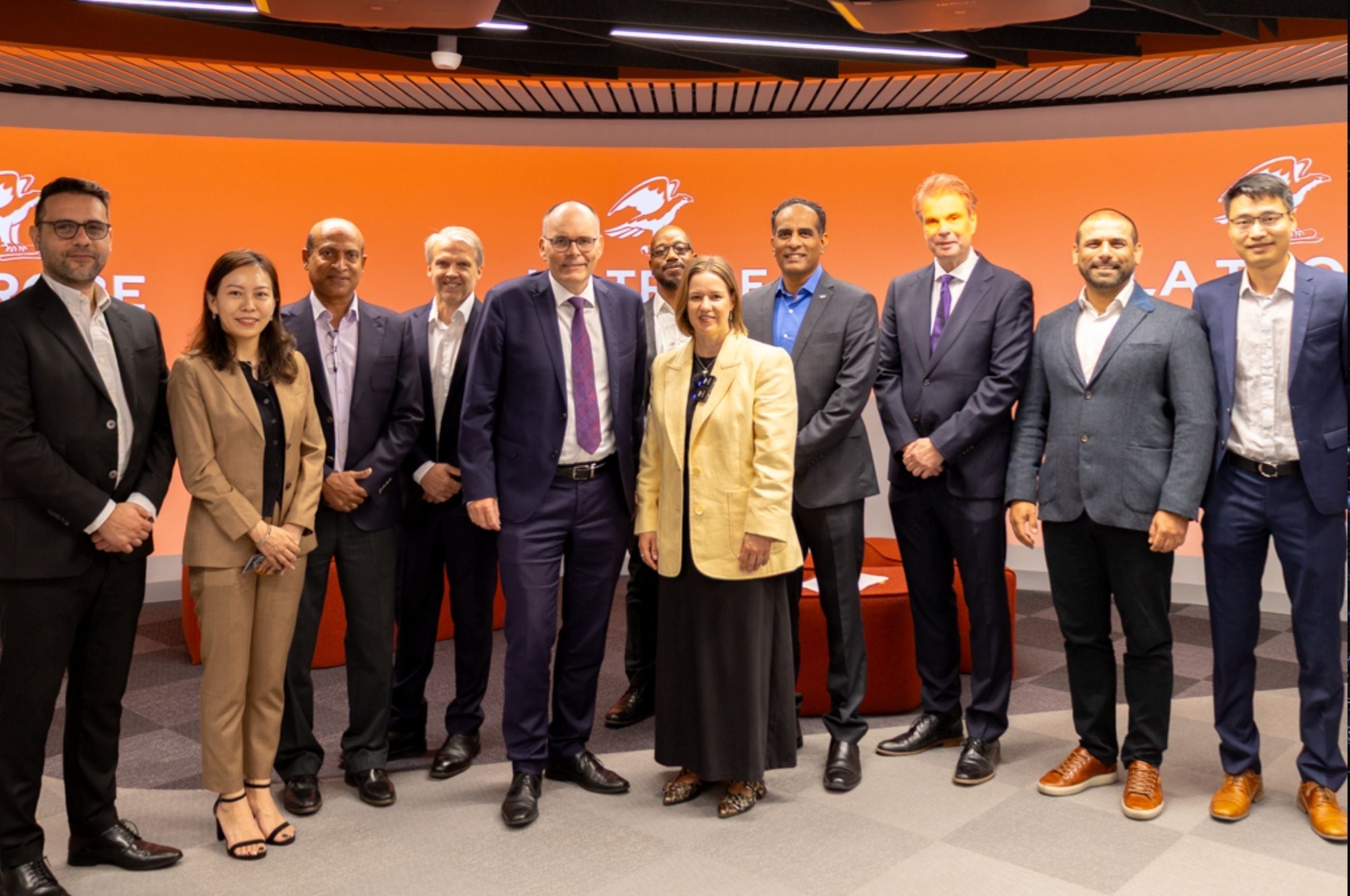
There is much to learn from the experiences of others and, in this spirit, before heading to India I hosted a delegation from the University of Southern Denmark at our Bundoora campus who were interested in hearing about La Trobe’s experience in developing our Responsible AI Adoption Strategy and governance framework, our new collaboration with OpenAI, and AI-enabled research at La Trobe, including our Australian Centre for AI in Medical Innovation (ACAMI) powered by Australia’s first NVIDIA DGX H200 supercomputer.
On 13 March, there is an opportunity for La Trobe staff to hear how AI has been embedded at scale at Arizona State University (ASU). ASU consistently ranks as the world’s most innovative university; with almost 200,000 students, it is also one of the largest in the world. ASU is a pioneer in AI and educational innovation. We’re presenting an ‘In conversation’ with Lev Gonick, Enterprise Chief Information Officer at ASU. Lev oversees all enterprise infrastructure, applications, services and analytics at ASU and chairs Arizona's Research and Education Network. He will talk about ASU’s experience implementing AI at scale and lessons for La Trobe including effective AI governance and adoption, and ASU’s experience in leveraging AI to provide tailored student support. Staff can attend in-person at the Agora Theatre at the Bundoora campus, participate in online sessions streamed to regional campus meeting rooms, or join via Zoom from any device.
The University’s expertise in digital innovation has also been recognised recently with La Trobe selected to lead a major national project that aims to optimise energy use and emissions of Australia’s data centres using next generation quantum and AI technologies. A $1.1 million grant awarded by the Federal Government National Critical Technologies Challenge Program will support La Trobe researchers to work with The University of Western Australia’s Centre for Quantum Information, Simulation and Algorithms and industry partners Fujitsu, NextDC and AQ Intelligence to develop ways to manage heating, ventilation and cooling systems more efficiently.
Finally, it was terrific to see La Trobe’s Centre for Technology Infusion (CTI) announced as the winner of the 2026 Excellence in Research and Development Award from ITS Australia, the national peak body for advanced transport technology. CTI was recognised for a project showing how motorcycle rider safety can be improved by using advanced, interconnected technology systems that enable real-time communication between vehicles, infrastructure, and other road users including pedestrians. Congratulations to project lead and Deputy Director of the Centre, Erik van Vulpen.
Education innovation
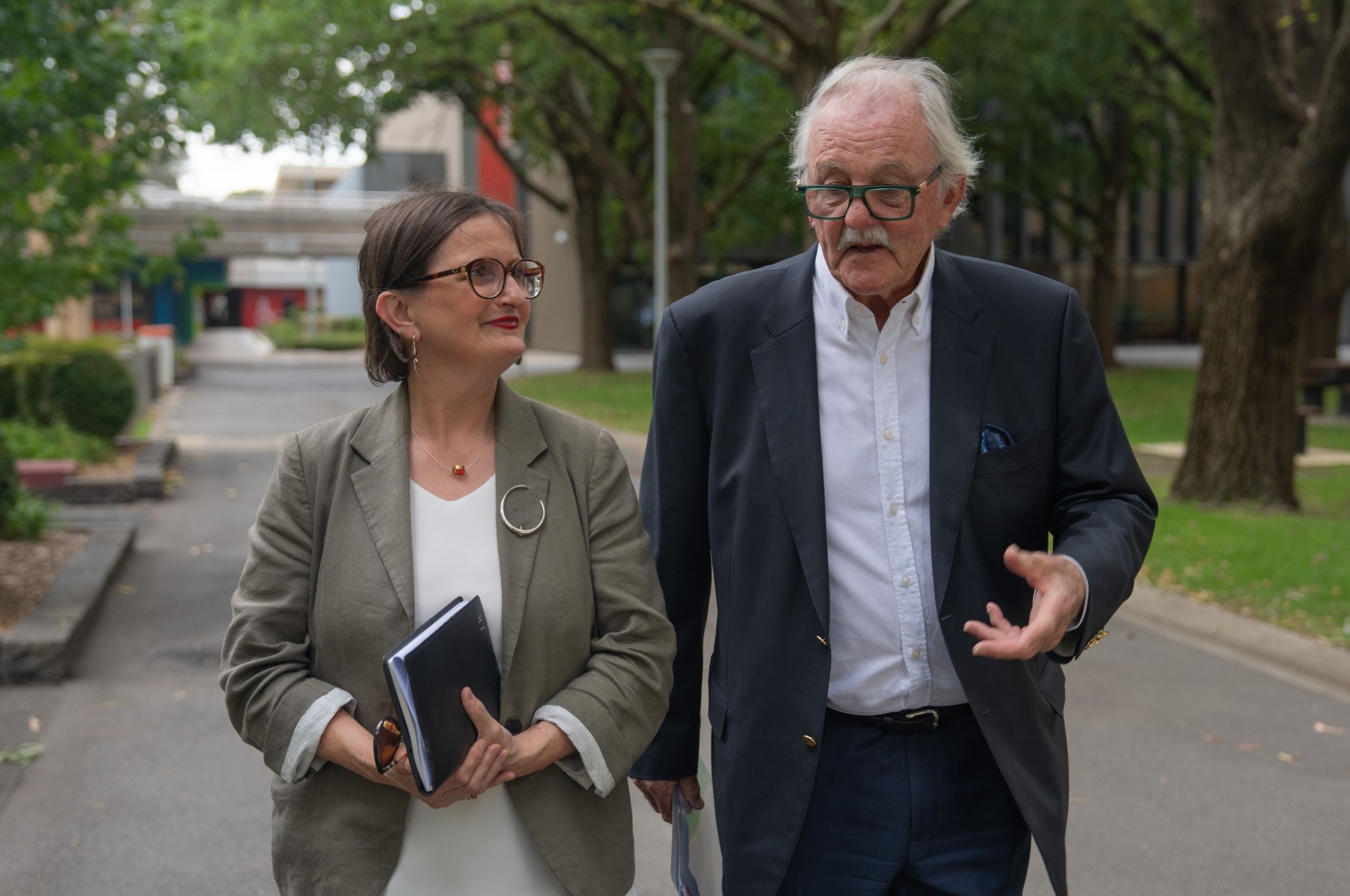
The Bertalli Family Foundation have been generous supporters of the School of Education’s work on explicit education, particularly in remote and disadvantaged areas, including the Science of Language and Reading (SOLAR) Lab that has retrained thousands of teachers in evidence-based literacy. I am enormously grateful to the Foundation for its new $2.5 million gift to support the Science of Mathematics Education (SOME) Lab that was launched by the School last year to support evidence-based mathematics teaching using explicit learning methods that allow students to learn in a structured way.
It was also very pleasing that Neville Bertalli acknowledged the reforms La Trobe is leading in teacher education when making this gift, stating that “La Trobe University has demonstrated national leadership in evidence-based education and the SOME Lab builds on a body of work we are proud to continue supporting”.
Teaching excellence
Congratulations to Carina Chan, Katja Petrovic and Matthew Wade on receiving Citations for Outstanding Contributions to Student Learning in the 2025 Australian Awards for University Teaching (AAUT) that were announced at the UA conference in Canberra last week.
This is the most prestigious recognition of significant contributions to teaching and learning in Australian higher education – well done to these exceptional La Trobe teaching scholars.
In closing
Thanks again to everyone who made O-Week so successful this year – and good luck to those teaching Semester 1.
I look forward to talking with you at our first all-staff webinar of the year on 17 March, which we’ll be broadcasting from Bendigo.
Best wishes,
Theo