
Gender equality, disability and social inclusion
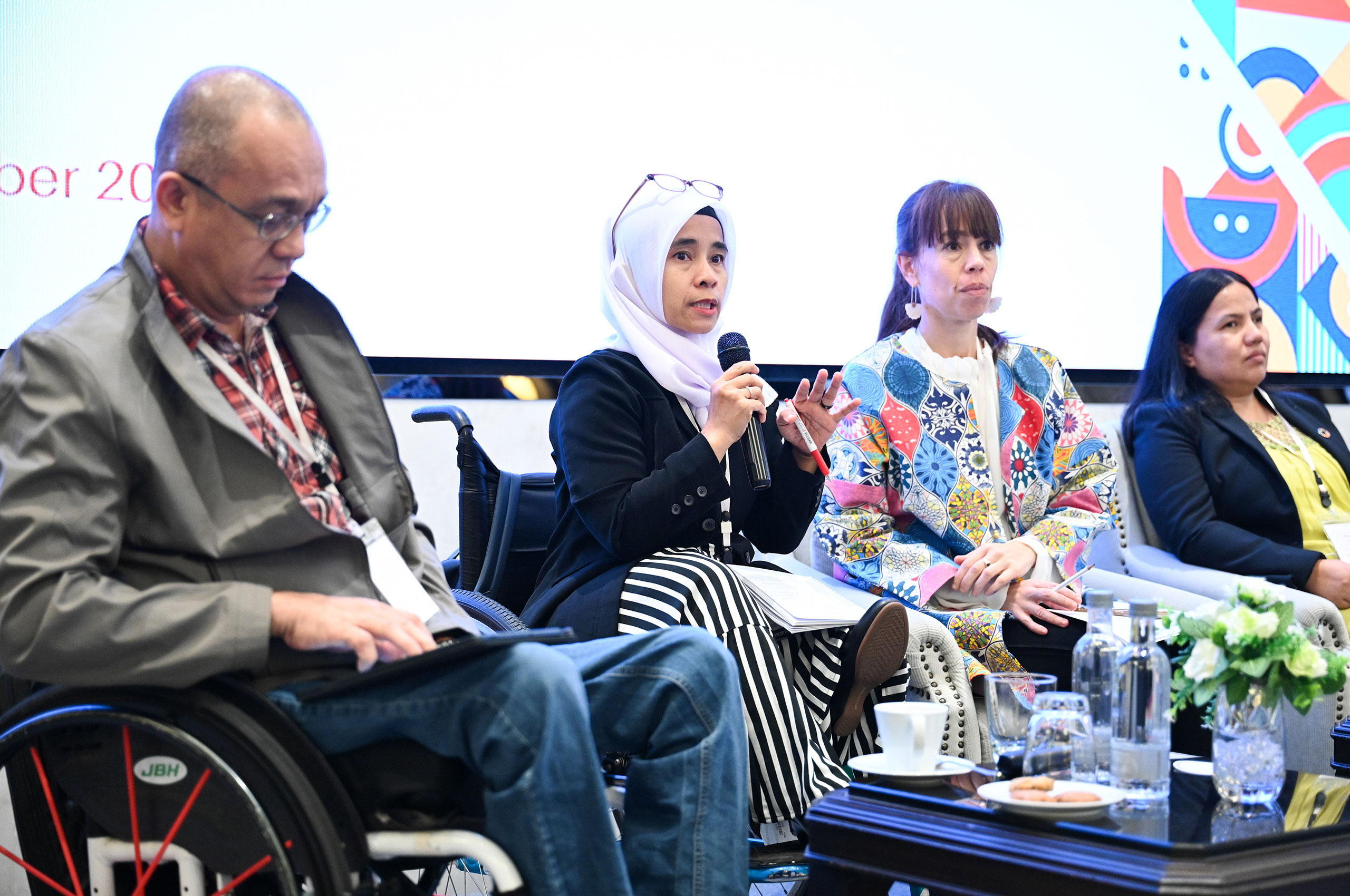
Inequality and exclusion are at the heart of many development challenges, but development interventions often make assumptions about the needs and interests of socially excluded groups and what they can do.
Across the globe, women, youth, persons with disabilities and other socially excluded groups can and do take a leading role in driving more inclusive development. But their contributions are often undervalued in narratives about how developmental change happens.
Our work aims to deepen understanding of the role played by these groups, exploring how they conceptualise and practice leadership and how they work in networks and coalitions to address systemic injustices and advocate for their rights. We seek to work collaboratively with members of these groups, to ensure our work is informed by their lived experiences and unique insights.
Featured projects
Other projects
The CHSSC provides research and learning support to the DFAT-funded Balance of Power (BOP) initiative that is being delivered by DT Global.
The BOP initiative seeks to shift the attitudes and norms that prevent women from being perceived as legitimate leaders in Fiji, Tonga and Vanuatu. Central to the approach of BOP is a focus on working through the values and culture of the specific context, bringing together stakeholders who are intrinsically motivated to work as part of locally led coalitions for reform.
The CHSSC supports BOP to design research strategies, acts as a critical friend to program staff, provides peer review and research training and supports research uptake.
The CHSSC’s contribution to this project is led by Director Lisa Denney and Senior Research Fellow Mardi Grundy.
The CHSSC is working with the Pacific Community (SPC) in 2024-25 to prepare a Pacific Youth Development Framework (PYDF). The framework aims to increase investment in youth across development sectors in Pacific countries and enhance regional accountability to the region’s youth and to youth-related international commitments such as the Sustainable Development Goals and the UNDHR.
Work includes: i) a desk review of existing youth accountability mechanisms at the global level; ii) consultation with key regional stakeholders; iii) preparing a first draft of the framework; iv) facilitating consultation on the draft including through providing rapporteur services to two high level regional meetings. A final version of the framework will be completed in 2025 and presented for endorsement at the Pacific Island’s Forum Leaders Meeting in Honiara, Solomon Islands.
This work is led by CHSSC Research Fellow Aidan Craney and supported by Adjunct Research Fellow Allan Illingworth.
The CHSSC is contributing to a four-year (2022-2025) research project focused on youth leadership and civic engagement in the Pacific, funded by an ARC Discovery grant and The Asia Foundation.
With approximately two thirds of people in the Pacific aged under 35, the research aims to better understand pathways and barriers to their individual and collective leadership development. The project will provide insights into how young people in the Pacific navigate the challenges and opportunities available for them to develop as leaders and will engage directly with policy making and programming decision-makers to help them develop positive and appropriate interventions.
Since 2022, the project has been collecting case studies of youth leaders from different disciplines/sectors in Fiji, Tonga and Vanuatu. In 2024, the project focused on working directly with The Asia Foundation, the Pacific Community and National Advisory Committees to develop strategies to ensure the findings from the project will have positive implications practically, academically and in the communities within which the project is taking place.
In 2025 the project will begin to publish findings and continue to work with governments and other development industry actors to work towards improving youth policy and programming.
The CHSSC’s contribution to this project is led by former Director Professor Chris Roche and supported by Research Fellow Aidan Craney. They are working with the project’s Chief Investigator Professor Helen Lee from La Trobe University, Associate Professor Patrick Vakaoti from the University of Otago, Dr Mema Motusaga, La Trobe PhD Scholar Kolaia Raisele and staff from the Pacific Community and The Asia Foundation.
In 2022-2026, the CHSSC is partnering with DT Global to provide support for monitoring and evaluation, research, learning and knowledge dissemination activities in the DFAT-funded Women Leading and Influencing (WLI) program. WLI is a four-year $8m program which offers a range of developmental leadership offerings to Pacific scholars studying at Australian universities and institutions.
Our support includes the development, implementation and ongoing refinement of tools and approaches for capturing the impact of the program and identifying lessons learned through implementation as well as conducting research and analysis to support program delivery and contribute to the body of knowledge on women's leadership in the Pacific.
Some of the highlights from our work to date include:
- Supporting Women's Leadership During COVID-19: Women Leading and Influencing in the Pacific, a study of how the program supported participants and alumni to exercise their leadership in the COVID-19 response.
- Approaches to Engaging Men in Support of Women’s Leadership in the Pacific, a review of effective approaches to working with men based on literature and consultations with Pacific stakeholders. A short article based on the review - Gender equality, the Pacific way – was published in the Lowy Institute Interpreter and co-author Mercy Masta was interviewed for the Development Intelligence Lab’s podcast ’The Readout’.
- Case studies of WLI alumni leading change in their countries and communities.
- A series of practice briefs on WLI’s approach to supporting developmental leadership.
- Co-design and delivery of a six-month online leadership development program – LeadershipConnect – in collaboration with The Asia Foundation Pacific.
- An online event co-hosted by WLI, Australia Awards Africa, and Australia Awards in Indonesia, which brought together disability leaders from Africa, Southeast Asia, and the Pacific to share their experiences of leading change.
The CHSSC’s work is currently led by Senior Research Fellows Elisabeth Jackson and Mardi Grundy.
The CHSSC and La Trobe University’s Judith Lumley Centre are partnering with the United Nations Population Fund (UNFPA) to strengthen the ability of health systems to respond to women and children experiencing violence in the Asia-Pacific.
In 2021 the team began working with the Ministry for Health, National Institute for Health and non-government organisations in Timor-Leste to develop a national in-service training package for health service providers on health-sector response to gender based violence (GBV), co-design approaches to capacity building based on international best-practice, mentor a group of national trainers as they roll out capacity building in district health systems and evaluate outcomes for shared learning.
This work led to the publication of Gender-based Violence and Healthcare in Timor-Leste, a practical guide for health professionals in Timor-Leste which brings together evidence and best practice from the World Health Organisation and carefully adapts it to the context of Timor-Leste, drawing on research with mid-wives and community leaders and the experience of women survivors of violence.
The lessons from the work in Timor-Leste have now informed the development of a similar GBV-focused health care worker curriculum and the integration of GBV into existing nursing and community health worker curricula in PNG.
The CHSSC’s contribution to this project is led in Timor-Leste by CHSSC Adjunct Research Fellow Dr. Kayli Wild and Honorary Associate Amina de Araujo; and in PNG by CHSSC Director Lisa Denney in collaboration with Felicity Young and Professor Leesa Hooker from JLC and PNG consultant Pamela Kamya.
Between 2020 and 2023, the CHSSC partnered with Bandung Independent Living Center (BILiC) in Indonesia to explore how persons with disabilities’ identities and life histories shape their leadership practice.
Funded by the Developmental Leadership Program (DLP), the research drew on in-depth interviews with 55 disability leaders from both rural and urban areas across Indonesia, examining how they understand leadership, how they become leaders, what strategies they use to advocate for change, and what this means for how development organisations can support persons with disabilities to lead change.
Six members of the team were persons with disabilities who themselves have a strong leadership identity and are influential within the Indonesian disability movement. Their lived experiences helped shape the design of the research and the interpretation of the findings.
Key publications from the research include:
- A report outlining the findings of the research, Finding Self, Leading Others: Leadership Journeys of Persons with Disabilities in Indonesia (available in both English and Indonesian).
- An executive summary of the report (available in both English and Indonesian).
- A short interview: ‘I Had to Learn to Advocate for Myself’: In Conversation with Indonesian Disability Activist Nur Syarif Ramadhan.
- A blog, Postcard from Flores: Conversations with Indonesian Disability Activists
The project was co-led by Senior Research Fellow Elisabeth Jackson and Adjunct Research Officer Eka Liu in collaboration with Ishak Salim, Cucu Saidah, Joni Yulianto, Nur Syarif Ramadhan, Yuyun Yuningsih, Robandi, Panji Surya Putra Sahetapy, Sen Sendjaya and Erin Wilson.