
Strengthening disability‑inclusive counter‑trafficking efforts across Southeast Asia
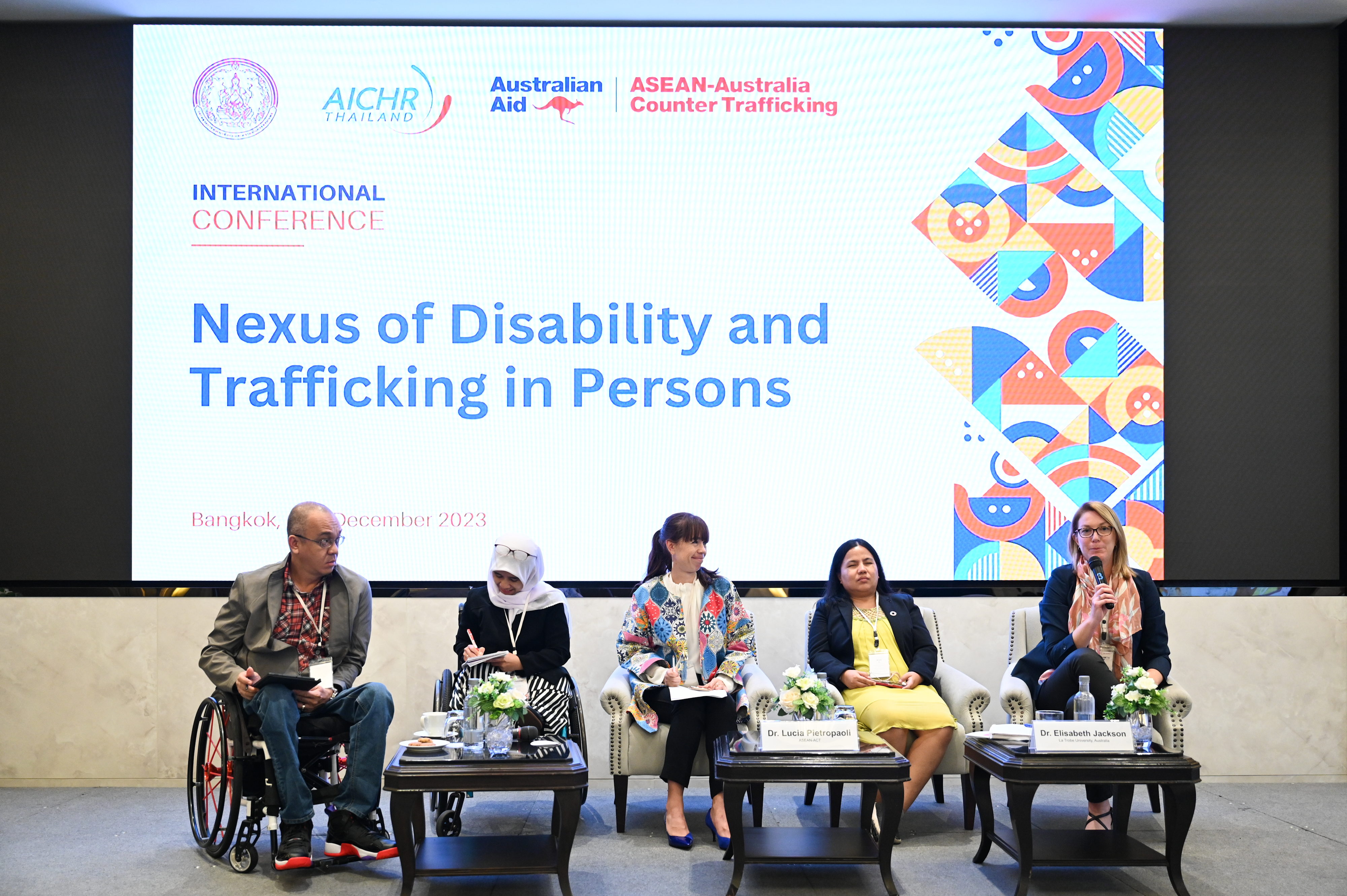
People with disabilities are at significant risk of human trafficking across Southeast Asia, yet for many years their experiences and specific vulnerabilities were not well understood. Research led by Senior Research Fellow Elisabeth Jackson at La Trobe University’s Centre for Human Security and Social Change (CHSSC) has begun to close this gap.
People with disabilities are at significant risk of human trafficking across Southeast Asia, yet for many years their experiences and specific vulnerabilities were not well understood. Research led by Senior Research Fellow Elisabeth Jackson at La Trobe University’s Centre for Human Security and Social Change (CHSSC) has begun to close this gap.
Since 2022, CHSSC has partnered with the ASEAN-Australia Counter Trafficking program to examine the connection between disability and trafficking across ASEAN countries. This work is the first study in the region – and one of only a handful globally - to document the lived experiences of trafficking survivors with disabilities and the barriers they face when seeking justice and appropriate support.
The research shows that disability interacts with other forms of disadvantage such as poverty, or educational opportunities - reducing personal choice and increasing vulnerability to exploitation. It also finds many people also acquire disabilities during or as a result of exploitation, and that limited understanding of disability means that survivors with disabilities are often never formally identified by authorities or service providers, which prevents access to essential support.
Dr Jackson recalls the case of a woman who ended up in Thailand from Laos when she was 17.
"With her hearing impairment, she had struggled to find work in Laos. Her aunt told her that she could find her a job in a restaurant in Thailand. Instead, the aunt took her to a karaoke bar where she was forced into sex work. Although she has since escaped, she has not returned home, and makes her living selling souvenirs in Bangkok," Dr Jackson says.
Screening processes frequently fail to recognise invisible disabilities, and frontline workers often lack the skills or training needed to respond effectively. Shame, fear of authorities, and the danger of being returned to unsafe environments contribute to widespread underreporting.
Dr Jackson wants this research to make the invisible visible.
"Making people with disability more visible in counter-trafficking efforts will mean bridging the gap between organisations working to prevent and respond to trafficking and those which represent and serve the needs of people with disabilities," she says.
The study is already informing national and regional policy and practice. In 2025, the ASEAN‑Australia Counter Trafficking program supported the development of new disability‑inclusive resources in Vietnam to guide the implementation of its 2024 counter‑trafficking laws. In Indonesia the research contributed to disability‑inclusive updates to trafficking guidelines and national action planning. In the Philippines the research has helped connect different agencies together, for example people with disabilities organisation Life Haven are now regularly engaged in key sector meetings and contributing to disability‑inclusive guidelines for screening trafficking victims, as well as supporting the review of police standard operating procedures.
Regionally, ASEAN bodies are progressing toward formal endorsement of a policy brief on disability and trafficking, which will give ASEAN governments a framework to strengthen accountability for disability‑inclusive counter‑trafficking policy.
Internationally, the study was presented at the OSCE Anti Trafficking Alliance - highlighting the need for disability‑inclusive responses and in 2025, the findings informed a Briefing Paper for the U.N. Special Rapporteur on trafficking in persons, especially women and girls, and the U.N. Special Rapporteur on the rights of persons with disabilities.
Dr Jackson adds this work has been collaborative by nature; "We've worked with partners on the ground across Southeast Asia to make sure this research reflects the real realities people face - and crucially, is useful to those organisations and bodies who are best placed to make needed changes in this space."
Through this ongoing work, CHSSC and its partners are ensuring that people with disabilities are recognised in regional and global responses to trafficking and that their rights and needs are placed at the centre of future reforms.
Published April 2026
photo credit - ASEAN-ACT