
La Trobe partnership drives cleaner construction
Major infrastructure projects in Victoria are required to reduce emissions in line with the Victorian Government’s target of net zero by 2045, but there is limited real-world evidence about the performance of low carbon technologies during large construction projects.
The M80 Ring Road Completion in Melbourne’s north is part of Victoria’s Big Build and connects Plenty Road to the North East Link tunnels at Watsonia. Spanning around 14 kilometres, it offers a real-world environment to test low carbon technologies, new energy systems and alternative fuels aimed at reducing construction emissions.
A collaboration between La Trobe University and the M80 project examines how cleaner energy systems perform during construction. Led by Associate Professor Toong Khuan Chan and Dr Elsuida Kondo from La Trobe’s Department of Engineering, the research assesses technical performance, practical challenges and the potential for wider adoption across Victoria’s infrastructure sector.
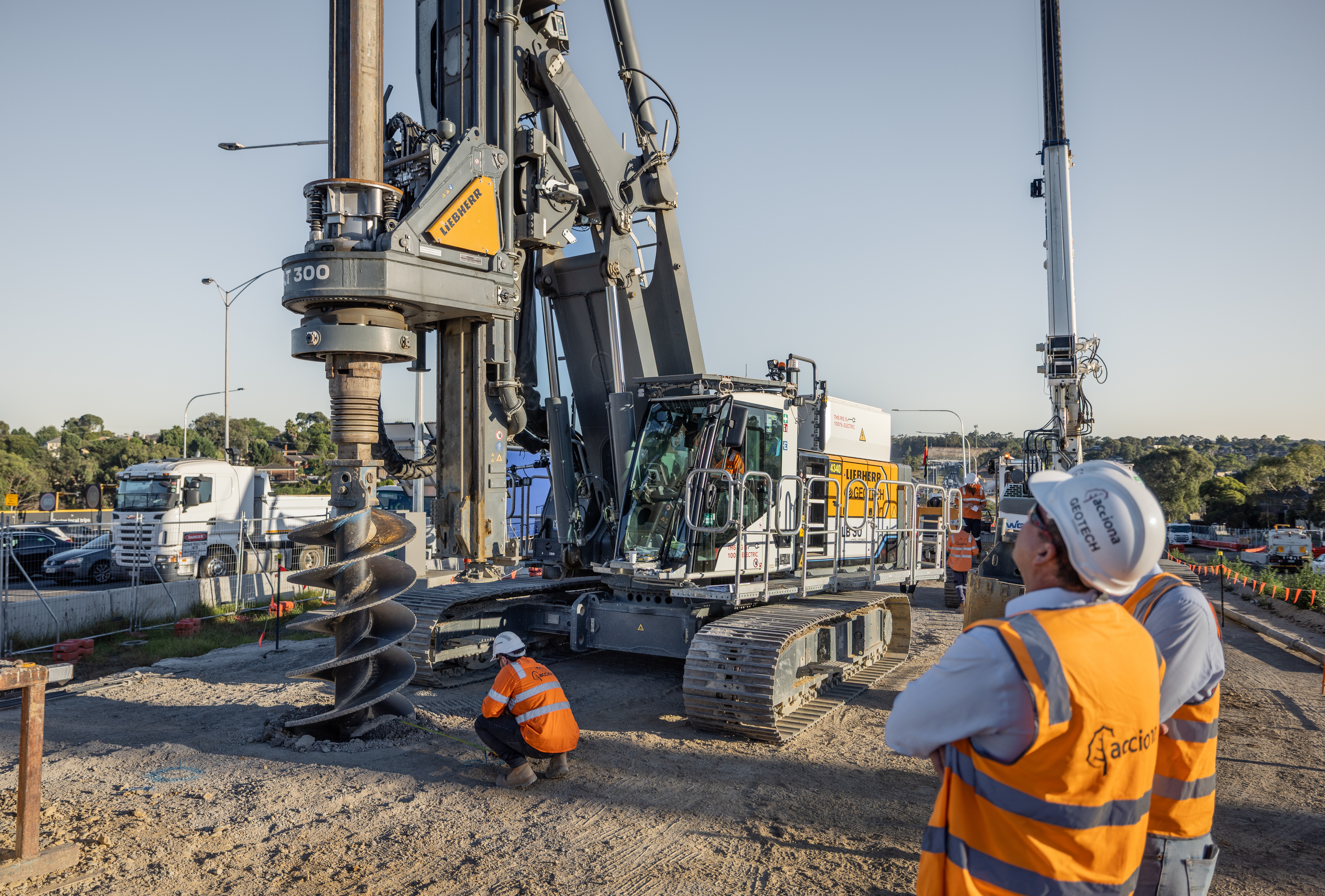
In 2025, the M80 project trialled hydrogen generation, solar battery units, and rooftop solar systems installed on temporary site structures and facilities along the path of the road. The electric construction equipment trialled as a substitute for diesel machinery included a forklift, boom lift, tipper trucks, and a piling rig. These trials delivered measurable reductions, including more than 12 tonnes of carbon dioxide saved in one month and substantial cuts in diesel use. The results show that electric construction machinery and renewable energy can reduce emissions while maintaining productivity.
The project also supported one of Australia’s first major trials of a renewable hydrogen generator for temporary site power. This demonstrated the feasibility of hydrogen supported operations and provided insights into approvals, safety, logistics, and integration with existing equipment.
La Trobe researchers analysed energy use, cost performance, operator experience, and industry readiness across these trials. Their findings are informing a transition pathway from 2025 to 2060, outlining when low carbon technologies are likely to become viable for adoption across the civil construction sector.
On February 26, 2026, the findings were presented at an Engineers Australia event focused on sustainable construction, marking the release of the project’s Decarbonisation Report.
The Decarbonisation Report is available here: https://doi.org/10.26181/31390234
Published February 2026