
CONSERVING A CALLISTEMON THAT SURVIVES WITHOUT SEX
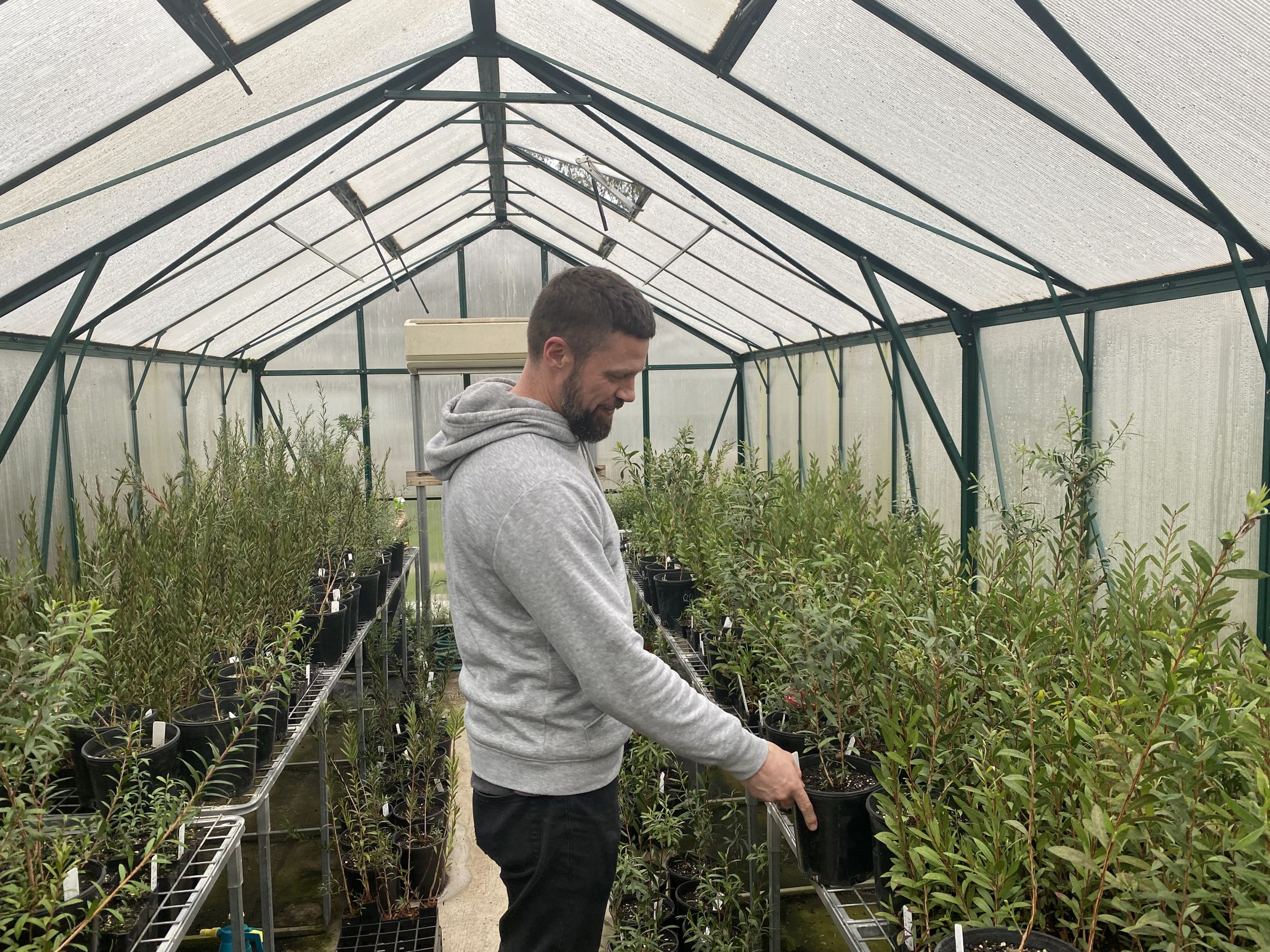
On the granite rock bars along Victoria’s Betka River, a critically endangered plant is now surviving mainly through cloning - a fragile strategy in a landscape increasingly shaped by bushfires and climate change.
The Betka Bottlebrush (Callistemon kenmorrisonii) grows in only two locations in Far East Gippsland's Wingan State Forest. Fewer than 100 stems of the plant survive in the wild on rocky granite riverbanks, and in Victoria it is listed as Critically Endangered.
La Trobe research has now changed how scientists count and manage the species- shaping conservation decisions.
After the 2019–20 Black Summer bushfires swept through the region, La Trobe University researchers Mark Clifton and Dr Susan Hoebee partnered with Envite Environment and the Friends of Mallacoota to find out whether the species had made it through.
Former La Trobe student Bryce Watts-Parker was critical to the early effort, connecting research teams to secure emergency grant funding that made rapid action possible. He was employed by Envite Environment to undertake post-fire surveys in 2021 where he found the plants had resprouted, collected specimens and noted that there were no new seedlings establishing. This served as a warning sign for the bottlebrushes long-term recovery.
The team published their first genomic study of Callistemon kenmorrisonii in Conservation Genetics in 2025. The results were surprising. Despite producing seed that germinates readily, the plant mostly makes asexual copies of itself, through a phenomenon known as apomixis. In addition to this, many stems that look like separate plants are genetically identical. Sometimes more than forty stems share a single genotype.
These findings changed how scientists count and manage the species. Earlier estimates based on stem counts had substantially overestimated the number of genetically distinct individuals. This low genotypic diversity may increase vulnerability to future threats such as myrtle rust, a fungal disease spreading southward through Australia.
These important findings are now shaping conservation decisions, including whether the species needs to be moved to safer locations as an insurance measure.
The researchers describe the area of East Gippsland where Callistemon kenmorrisonii grow as 'a bottlebrush hotbed of evolution.' Their research is also shedding light on two related threatened species from the same region: Callistemon forresterae and Callistemon nyallingensis. With funding from the Hermon Slade Foundation and the Holsworth Student Endowment, what began as an Honours project for Clifton has grown into a PhD.
Community involvement has been at the heart of this project. Four workshops were held between 2021 and 2025, bringing together local residents, land managers and conservation practitioners. Plants propagated using the genomic research are now available from the Friends of Mallacoota nursery and have been planted in the Mallacoota Endemic Gardens, where the Betka Bottlebrush features on the gardens' logo.
This work shows what is possible when science meets community action. Now a plant once known only to specialists can find its way into the gardens, and the lives, of the people who share its environment, ensuring its survival.
Published 1 April 2026
Image supplied by Susan Hoebee