
Research at the Holsworth Biomedical Research Centre
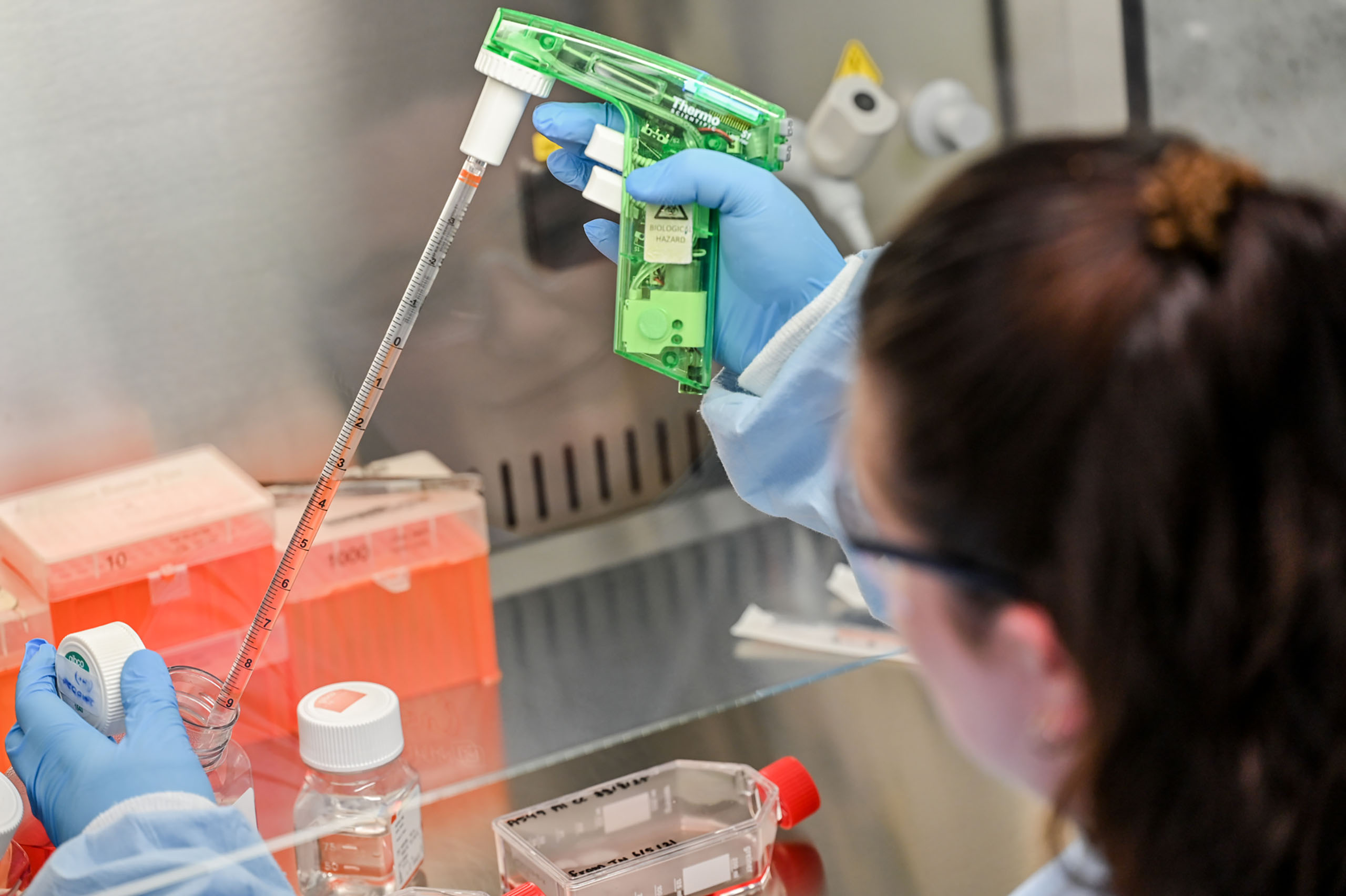
Our research affects health policy, clinical practice, disease prevention, and wellbeing in Australia and beyond.
Our goal is to lead, conduct, and share outstanding biomedical research. We aim to improve health outcomes, inform therapies, and support healthier communities, especially in rural and regional areas.
Our Research Focus
At the Holsworth Biomedical Research Centre, we are dedicated to advancing knowledge and driving change across three key areas: Inflammation & Infection, Exercise & Behaviour Adaptation and DNA & Genetic Disease.
Residents of rural and remote Australia face disproportionately high rates of chronic disease—including cardiovascular conditions, cancer, diabetes, obesity, and poor oral health—driven in part by chronic inflammation and high prevalence of metabolic syndrome. These interconnected health burdens, highlight the urgent need for research focused on understanding and improving health outcomes in regional communities.
Explore our Research areas and projects below to learn more about the impactful work we are doing in these fields.
Inflammation and Infection
Food as medicine
We are working on ways that nutritional supplements can boost metabolism in healthy individuals and could be used as an adjunct to diet and exercise to help promote weight loss, without the need for prescription medication. Particularly, we are targeting brown adipose tissue (BAT) as it is a specialized tissue for wasting stored energy (body fat) as heat. An inverse correlation occurs between the amount of BAT a person has and the likelihood of the development of obesity. Further, activation of BAT has been shown to have positive effects on glucose sensitivity (i.e. an anti-diabetic effect).
Dr Christine Kettle, Prof. Helen Irving, Dr Tata Santosh Rama Bhadra Rao, Dr Nivan Weekakkody
Inflammation and Pain
Acute inflammation and pain form powerful protective responses against infections and is essential for injury repair but can be overactive. We are working to develop new ways so that patients can fine tune these immune responses effectively to limit the undesirable effects of pain and inflammation with less need to travel to metropolitan areas, so promoting better health outcomes.
Cassandra Cianciarulo, Siti Saleha Binte Mohamed Yakob Adil, Anushka Date, Prof. Helen Irving, Dr Tata Santosh Rama Bhadra Rao, Dr Hong Trang Nguyen, Dr Terri Meehan-Andrews, Dr David Morton, Dr Anita Zaccharias, Prof. Joesph Tucci
Oral Health and Cancer
We are working on alternatives to antibiotics that provide bacterial-specific targeting. Our innovative projects involve bacteriophages (phages) which are viruses that attack bacteria. Phages have been used in therapy in Eastern Europe for over a hundred years and are used in therapy in Australia and other countries upon compassionate grounds when patients are infected with bacteria with resistance to multiple antibiotics. Our goal is to uncover new, targeted therapies that are more effective and less disruptive than current treatments.
Siti Saleha Binte Mohamed Yakob Adil, Syeda Areeba Rehan, Dr Mwila Kabwe, Dr Elizabeth Sari, Dr Terri Meehan-Andrews, Prof. Helen Irving, Prof. Joseph Tucci
Exercise and Behaviour Adaptation
Cardiac arrhythmias in recreationally active people
This project examines how high-volume exercise affects heart rhythm in recreationally active adults. Training far beyond recommended levels may trigger arrhythmias or reveal hidden cardiovascular risk, yet recreationally active adults are not routinely screened. This study will establish the true prevalence of exercise-related arrhythmias and generate evidence to guide future screening, risk management, and prevention strategies in non-elite athletes.
Dr Daniel Wundersitz & Professor Michael Kingsley
Physical activity coaching for older adults in rural and regional areas
The Healthy4U program is a telephone-based coaching service that supports people to increase their physical activity using personalised, evidence-based behaviour change strategies. After proving effective in improving health outcomes for hospital patients, this project will expand Healthy4U into a wider range of rural and regional settings, focusing on adults aged 50 and over. Using implementation research and co-design with local communities and health services, the project will test how the program can be delivered at scale, embedded sustainably, and made accessible to those who need it most.
Professor Michael Kingsley, Associate Professor Byron Perrin & Dr Stephen Barrett
The optimal model of prescribing and delivering exercise-based cardiac rehabilitation within regional and rural Australia
Aiming to improve exercise-based cardiac rehabilitation for people living in regional and rural Australia, this research addresses gaps in access to services and resources, where rates of cardiac events are higher than in metropolitan areas. Current rehabilitation programs often lack individualised exercise prescription, and minimal guidance exists on the optimal exercise dose to reduce cardiac risk. By combining technology-enabled telehealth, evidence-based exercise prescription, and behaviour change strategies, the project will identify and test the most effective and practical models for delivering cardiac rehabilitation.
Associate Professor Brett Gordon & Dr Blake Collins
Integrating Mini-Bikes into the Workplace: Pilot Intervention and User Perspectives
Mini exercise bicycles offer a low-cost, portable approach to increasing physical activity in workplace settings. In collaboration with Maryborough District Health Service, this project will examine the physiological and biomechanical responses to mini-bike use, explore barriers and enablers through co-design workshops, and pilot an intervention integrating short bouts of cycling into daily work routines. The study aims to provide evidence on the feasibility, effectiveness, and implementation of mini-bikes to promote workplace activity.
Associate Professor Rodrigo Rico Bini
E-bikes and behaviour intervention to improve human health and function in sedentary adults
E-bikes offer a promising strategy to increase physical activity and improve cardiovascular and mental health, yet uptake in Australia remains low. This project will investigate whether combining e-bike access with a co-designed behavioural support intervention can help sedentary adults achieve sufficient activity levels for measurable health benefits. By comparing e-bike use with and without behavioural support, the study aims to inform strategies to optimise e-bike adoption, maximise health outcomes, and guide future policy and community-based initiatives.
Associate Professor Rodrigo Rico Bini
DNA and Genetic Disease
DNA Replication stress structures
This project aims to uncover the intermediate structures that DNA replication forks form as they progress from fully functional to broken. A secondary aim is to understand how these structures are influenced by cell and organism health, and whether they can be targeted to control DNA damage. Building on previous work on broken DNA, the research will combine advanced imaging and experimental approaches to characterise these intermediates and explore ways to manipulate them. The goal is to generate new insights into DNA stability, helping to prevent disease and improve cellular health.
Associate Professor Donna Whelan, Dr Elizabeth Rzoska-Smith, Abbey Milligan & Madison Osborn
Crosstalk between DNA Damage and the Cytoskeleton
This project investigates a connection between two important parts of the cell: DNA repair and microtubules, the structural “scaffolding” inside cells. The aim is to understand how these systems communicate, and whether one controls the other or if they influence each other in a loop. This knowledge could reveal ways to use existing drugs to improve DNA stability and prevent disease. Combining expertise in DNA and cell structure, this work aims to uncover fundamental insights into cell health and disease prevention.
Associate Professor Donna Whelan, Dr Elizabeth Rzoska-Smith, Abbey Milligan & Madison Osborn
Long noncoding RNA
This project explores long noncoding RNAs (lncRNAs) as tools for earlier cancer diagnosis and more precise, effective treatments, with a focus on improving outcomes in rural populations. Using advanced cell culture, knockdown experiments, and super-resolution imaging, the team is investigating NAMPT-AS1 in triple-negative breast cancer. Findings aim to identify novel lncRNA targets, advance mechanistic understanding, and build a pipeline for future discovery and translational research collaborations.