Pioneering research is underway to expand treatment options for chronic infections, inflammatory diseases, and oral and gastrointestinal cancers at the Holsworth Biomedical Research Centre, La Trobe Rural Health School.
Increasingly, antibiotic resistance complicates the management of persistent infections and life‑threatening diseases. By harnessing viruses, called bacteriophages, that selectively target and eliminate harmful bacteria, this research has the potential to provide a cost‑effective and powerful alternative to patients.
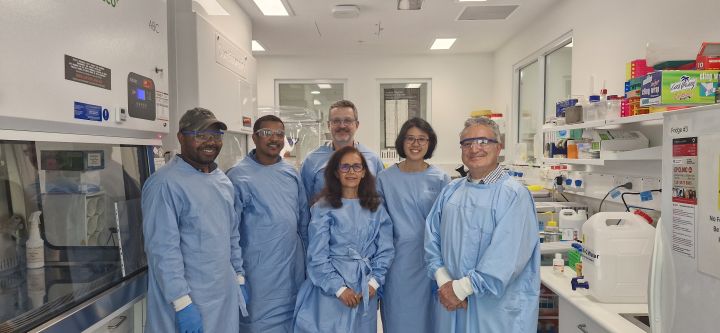
Led by Dr Mwila Kabwe and Professor Joseph Tucci, the research team is focused on the potential of bacteriophages to improve health outcomes for rural communities, who often experience higher rates of chronic conditions and greater barriers to prevention and treatment.
“This latest research opens a new way to improve cancer treatment by working with the microbes that already live inside tumours. It’s not just about developing another drug; it’s about understanding why treatments work for some patients and not others.
“By using bacteriophages to gently rebalance the tumour microbiome, we aim to boost the effectiveness of existing therapies and help patients achieve better outcomes with fewer side effects,” said Dr Kabwe.
Working with partners La Trobe Institute for Molecular Science and the Olivia Newton‑John Cancer Research Institute (ONJCRI), the team discovered a specialised bacteriophage that not only removes the harmful bacteria but also helps restore cancer cells’ sensitivity to treatment. When paired with chemotherapy, it delivered a powerful synergistic effect, dramatically increasing cancer cell death.
Birhanu Ayelign, ONJCRI researcher, explains the challenge of treatment resistance faced by gastrointestinal cancer patients:
“Lack of response to standard chemotherapy is common in gastrointestinal cancers, with approximately 30–60% of patients showing primary resistance or developing resistance during treatment, depending on cancer type and disease stage.”
Dr Michael Buchert, Head of the Biomarker & Tuft Cell Laboratory at ONJCRI, said:
“If proven safe and effective, bacteriophages could be administered orally, intravenously, or directly into tumours to target tumour‑associated bacteria and modulate the microbiome. They could also be engineered or selectively activated within the tumour microenvironment to release signals or cancer therapies.”
With harmful bacteria present in more than 70% of gastrointestinal cancer patients, and even higher rates in rural areas, this breakthrough offers real potential to improve outcomes for regional communities.
The next steps are progressing to animal studies and future clinical trials.
Read more about this exciting research and its impact on future cancer therapies: