
Bureau of Meteorology
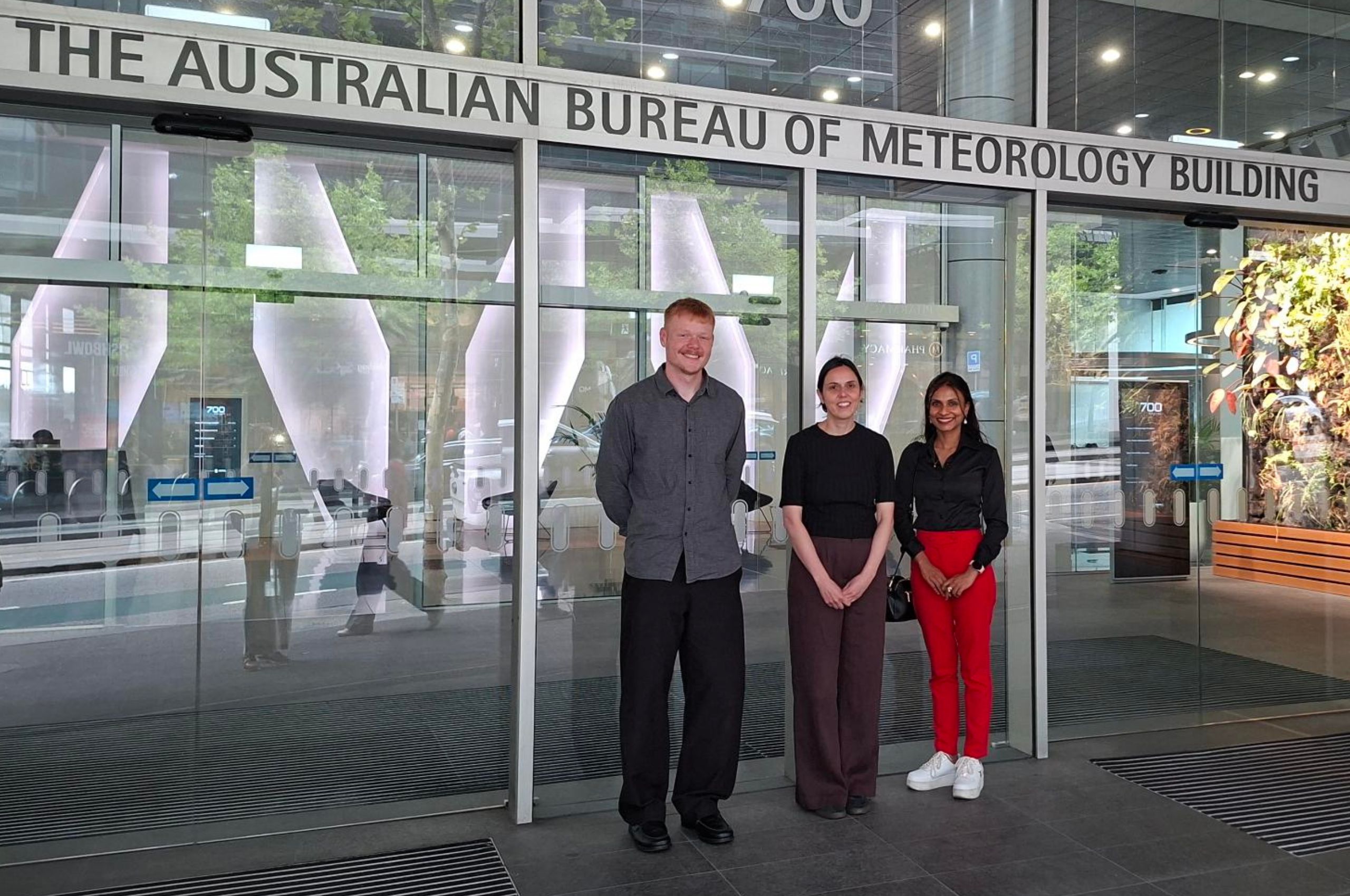
Testing AI forecasting with the Bureau of Meteorology.
Partnership at a glance
- La Trobe University partnered with the Bureau of Meteorology for a summer industry placement in data science
- The student project focused on testing and calibrating emerging AI-based weather forecasting models
- The work contributed to research exploring possible future operational forecasting systems at the Bureau
- The placement established a new collaboration between La Trobe and Australia’s national weather agency
- Both student and organisation gained practical value, confidence and pathways for future collaboration
Case study
The Bureau of Meteorology is exploring new approaches to weather forecasting that use artificial intelligence (AI) – a different approach to traditional forecasting, which is based on modelling how the atmosphere behaves. As this area develops quickly, Bureau researchers are working to understand how these new AI tools might be used in real forecasting systems.
To support this work, the Bureau partnered with La Trobe University to host a data science student placement over summer. The placement focused on testing and calibrating AI-based forecasting models and exploring how their outputs could be used within forecasting workflows. It was the first placement of its kind between the two organisations.
The collaboration was initiated by Bureau research scientist Belinda Trotta, herself a La Trobe alumnus. “I wanted to continue that relationship,” she says. “I know La Trobe has strong students.”
For Master of Data Science student Felix Esperson, the Bureau opportunity stood out straight away, particularly because of its alignment with his software engineering background. He joined the weather agency three days a week in his final semester, working on how outputs from new models could be used in a practical forecasting setting.
“This wasn’t a simulated project,” Belinda adds. “It was research we genuinely wanted to do.”
Felix was given responsibility for designing and building the technical workflow, including converting model outputs into usable formats, checking how well the forecasts performed, and documenting results. The structure of the project gave him direction, but he was responsible for deciding how the technical work was carried out.
By the middle of the placement, Felix was largely working independently. “By around week four or five of the 12-week internship, I was making most of my own decisions about how to move the project forward,” he says.
Growing real-world experience
Working on a live research project introduced Felix to a different kind of learning environment. Instead of working towards predefined answers, he had to make decisions when outcomes were uncertain.
“The main thing I gained was confidence that the skills from the degree actually translate into something useful in the real world,” he says. “Especially when there’s uncertainty about what the results might look like.”
For the Bureau, the placement delivered tangible research outcomes within a short timeframe. “Felix did a huge amount of work – more than I would normally expect for a student placement,” Belinda says. “He produced a research report that will be published in the Bureau of Meteorology’s official research series.”
The partnership also strengthened connections between the Bureau and La Trobe University, creating a structured way for students to contribute to Bureau research and build relationships with researchers working in public sector science.
“This kind of collaboration fits really well with how we work with universities and partners like CSIRO,” Belinda says. “It also helps build longer-term connections and our future talent pipeline.”
For Felix, the placement helped clarify his next steps. “Data science is a broad degree,” he says. “This helped me build experience in the area I’m interested in. I’ll be applying for public sector roles working with environmental and spatial data.”
His advice to other students considering placements is practical: prioritise opportunities to work on real projects, and be ready to work independently. “Having experience building larger projects beforehand helps with confidence,” he says.
For Belinda, the message to other organisations thinking about student placements is simple. “I’d absolutely recommend it. Felix was far more independent than I expected. The main thing is planning ahead – there’s some lead time before a student can start.”
To learn more about accessing student talent and work-based learning opportunities, contact our La Trobe Talent team on latrobetalent@latrobe.edu.au
For general industry engagement enquiries, visit La Trobe Industry or email industry.engagement@latrobe.edu.au