
Academic Integrity for Graduate Researchers
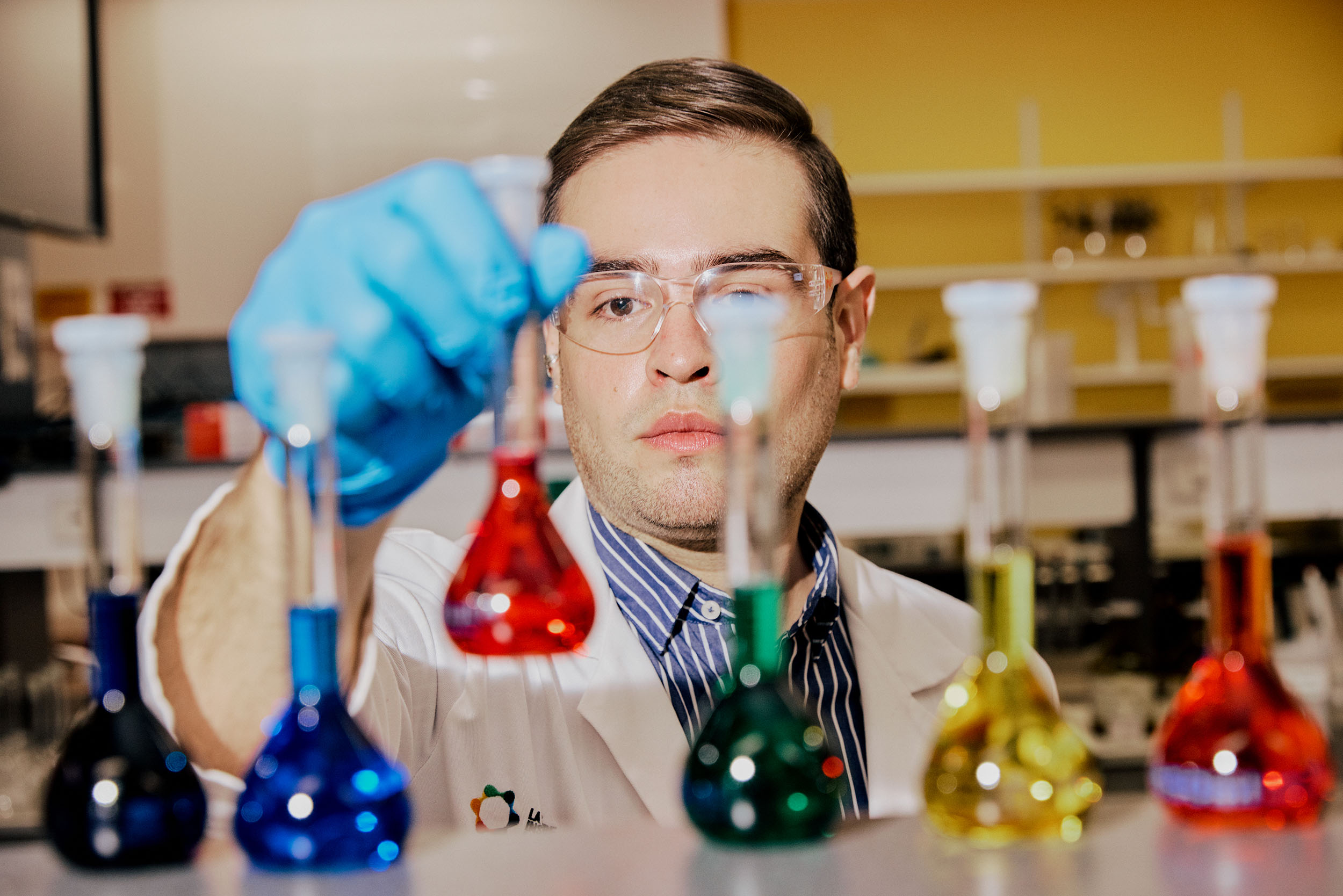
La Trobe University is committed to excellence in research and to the values and principles which underpin research integrity – honesty, objectivity, duty of care, fairness, accuracy, reliability and responsibility.
To support the University’s values of openness and honesty, our researchers need to be familiar with referencing and publication standards in their discipline.
These resources aim to help staff and higher degree by research candidates stay up to date with the practices and expectations of their discipline and properly manage dissemination of their research. Explore the available resources below.
Academic integrity and research integrity are related concepts, but they refer to different aspects of the academic and research environment.
Academic integrity refers to the principles that guide students in their educational pursuits and includes the work they submit for coursework and assessments, whereas research integrity relates to the responsible conduct of research and the dissemination of research findings.
Both forms of integrity are interconnected, contributing to the overall culture of excellence and trust in the academic and research community.
Plagiarism
Plagiarism directly impacts the credibility and reliability of educational and research activities, so it’s important to avoid plagiarism to uphold academic and research integrity.
Plagiarism occurs when you use someone else’s words, theories, data or concepts without attributing the original source.
Plagiarism can include:
- Direct copying - using text or visual content without using quotation marks or properly citing the source
- Mosaic or patchwork plagiarism - combining sentences from different sources or using someone else’s text as a scaffold for your own work, creating a new text that appears to be original
- Presenting someone else's ideas, concepts or arguments as your own without acknowledging the source
- Self-plagiarism - reusing your own work without proper citation or permission
Plagiarism and Research Integrity
The La Trobe Research Integrity Policy states that La Trobe researchers and research trainees are expected to adhere to responsible research practices as prescribed by the Australian Code for the Responsible Conduct of Research (Research Code).
According to Researcher Responsibility 4 of the Research Code, researchers must ensure that they ‘cite and acknowledge other relevant work appropriately and accurately’ . This responsibility extends beyond citing the work of others. Your publications and thesis should also accurately represent the development of your ideas and any previous publications related to your research. See the self-citation and self-plagiarism section for more information.
Embedding integrity in the process of publishing research outputs is an essential aspect of research integrity. All researchers, including staff and higher degree by research candidates, have a responsibility to be familiar with correct citation practices as followed in their disciplines, and abiding by these practices. Accurate citation according to the norms of your discipline and avoiding plagiarism are essential components of upholding research integrity.
If you have any questions or concerns about plagiarism and how it relates to research integrity, please reach out to the Research Integrity Hub by sending an e-mail to researchintegrity@latrobe.edu.au.
Training and support
La Trobe resources
- Growing Researchers Online (GRO): Research Integrity is an introductory module on research integrity, which outlines key concepts and questions.
- The La Trobe Academic Integrity Module is available to all students and staff through the LMS. It is not compulsory for higher degree by research candidates, but is recommended for those who completed undergraduate study elsewhere in Australia or overseas to ensure familiarity with La Trobe’s expectations. It is also recommended for HDR candidates who completed their previous degree more than five years ago.
- La Trobe’s Research Integrity Policy and Higher Degree Student Research Misconduct Procedure can help you understand what is expected of a researcher at La Trobe and the procedures and consequences when things go wrong.
- There are guides on how to reference and acknowledging sources correctly online if you need to brush up on your core skills.
- The Library has a range of self-guided modules and a referencing tool.
- Training sessions in a wide range of academic skills, including on using the citation manager Endnote occur regularly. See the Researcher Development Program for what’s on and how to sign up.
External resources
- The U.S. Office of Research Integrity provides many useful resources including “Avoiding Plagiarism, Self-plagiarism, and Other Questionable Writing Practices: A Guide to Ethical Writing” (updated 2015). Note that information about copyright laws and regulations given through this site is based on U.S., not Australian legislation. It may still be relevant, especially to journal and book publication where publishers are based in the U.S.A.
- This opinion piece gives one perspective on the kinds of self-citation that are acceptable and unacceptable in biomedical publications. It may also be a helpful discussion of key concepts for researchers in other disciplines. Thurman, Robin H., Frank A. Chervenak, Laurence B. McCullough, Sana Halwani, and Dan Farine. “Self-plagiarism: a misnomer.” American Journal of Obstetrics and Gynecology, 214.1 (2012): 91-93
- The Purdue Online Writing Lab (OWL) has an online module “Avoiding Plagiarism” which includes examples and exercises.
Referencing your own previously published work is known as self-citation. It is important to give citations when ideas, data, etc have been discussed in your previous publications. Correct self-citation conveys the level of originality in a publication accurately and enables readers to understand the development of ideas over time.
Avoiding self-plagiarism
Academic publication takes many different forms. Researchers will often write up their findings for more than one publication, for example in a thesis and a journal article, or a blog post and book chapter. This is not necessarily a problem, but researchers need to consider their choices carefully. Reusing text word-for-word in multiple pieces of writing is known as self-plagiarism. This may seem like a contradiction because a researcher cannot ‘steal’ their own ideas. Citations, however, are not just about giving credit for ideas, they also enable readers to trace the development of an idea over time and honestly represent the originality in a piece of writing.
Norms about what is an acceptable way of acknowledging that you have previously published research have changed significantly, even in the past decade. It is important that researchers are aware of what is considered good practice in their disciplines. A supervisor, mentor, or peers may be able to offer advice.
There is no definitive rule about when it is acceptable for a researcher to re-use text word-for-word. You should consider this carefully on a case-by-case basis taking into consideration:
- the norms of your discipline
- the conventions of the genre you are writing in (e.g. journal article, blog, thesis etc)
- the expectations of editors, publishers, examiners, and readers
- copyright regulations and authorship.
There are three key questions you should ask yourself:
- does the piece of writing represent its own level of originality accurately?
- is that level of originality appropriate to the type of publication?
- who has the right – ethically (authorship) and legally (copyright) – to reproduce?
Many journals have a specific policy about reusing text, such as from a PhD thesis, in the ‘Instructions to Authors’ section (or similar) of their webpage. You should contact editorial staff of any publication to clarify any questions before submitting.
The La Trobe guide, Interpreting iThenticate Reports: a Guide for Researchers [DOC 711KB], includes a discussion of the expectations of different genres of writing, and suggestions on how iThenticate can help manage self-citation and avoid self-plagiarism.
Discipline approaches to self-plagiarism
Some style guides have a statement and/or guidelines relating to self-citation or self-plagiarism which may be helpful:
From the MLA Style Manual and Guide to Scholarly Publication. Modern Language Association of America: New York, 2008. Third edition. pp. 166-167.(Humanities):
'Whereas reprinting one’s published work, such as having a journal article appear in a subsequent book of essays, is professionally acceptable […] professionals generally disapprove if previously published work is reissued, whether verbatim or slightly revised, under another title or in some other manner that gives the impression it is a new work. Although not the same as plagiarizing someone else’s writing, self-plagiarism is another type of unethical activity. If your current work draws on your own previously published work, you must give full bibliographic information about the earlier publication.'
From the Publication Manual of the American Psychological Association. American Psychological Association: Washington, D.C., 2010. Sixth edition. p. 16.(Social Sciences):
'Just as researchers do not present the work of others as their own (plagiarism), they do not present their own previously published work as new scholarship (self-plagiarism). There are, however, limited circumstances […] under which authors may wish to duplicate without attribution (citation) their previously used words, feeling that extensive self-referencing is undesirable or awkward. […] The general view is that the core of the new document must constitute an original contribution to knowledge, and only the amount of previously published material necessary to understand that contribution should be included, primarily in the discussion of theory and methodology.'
Reusing published material in Masters and PhD theses
Including previously published material (text, ideas, data, even a whole publication) in a Master's or PhD thesis is very common. You should consider the key questions about self-citation above when doing so, and ensure compliance with La Trobe requirements. Every thesis should clearly state what material has been previously published and where.
If you paraphrase or quote short sections of your own text, you should reference it as you would the work of another scholar.
You may insert a whole publication or publications into your thesis if appropriate to the argument and structure. You should discuss this with a supervisor as early as possible. If a thesis chapter is substantially based on research reported in a previous publication, full citation details should be included in the preface or each relevant chapter. The full reference should also appear in the bibliography of the thesis.
Publications may form the majority of your thesis. In this case framing material should also be included to show how the different publications are thematically linked.
You must have written permission from the copyright holder to include previously published material. In many cases the publisher, not the author, is the copyright holder and permission must be sought.
If a co-authored publication is included in a thesis you must:
- have made a leading and significant contribution to the publication
- provide details of your contribution to each publication in the thesis
- provide verification of your contribution from co-authors.
The Schedule for Presentation of Theses for Higher Degree by Research offers a guide to what you must do if previous publications are included in your thesis.
For examples of La Trobe theses written to the highest standard see the Graduate Research Awards page.
iThenticate is a powerful text-matching tool which researchers at all career stages can use to help manage self-citation and correct attribution of sources. It can also be used to help ensure copyright compliance and in reference checking. Access and familiarise yourself with the platform that will help you identify any areas of concern.