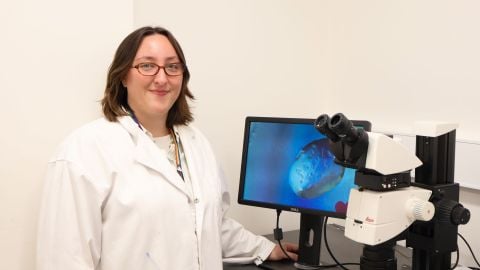
A review led by Associate Professor Steve Murphy, Head of the Department of Learning Sciences and Emerging Technologies, has highlighted the often-overlooked strengths of rural STEM education.
“Rural STEM education is often framed in negative terms when compared to metropolitan schools,” he says. “Yet rural spaces can be excellent places to teach STEM.”
To explore this disconnect, Associate Professor Murphy conducted a review of research that draws on the strengths of rural places, and uncovered some distinct, place-based advantages.
“Rural industries, environments and communities can meaningfully enhance STEM education,” he says. “For example, natural landscapes can become living laboratories for environmental and field-based science, and local industries provide real-world problems that make STEM concepts tangible and relevant.”
The review also found that rural STEM programs are most effective when they are led or co-led by rural educators, rather than external experts.
“Finally, while using local resources can place additional demands on rural STEM teachers, our review shows the effort is worthwhile, with strong student engagement and learning outcomes.”
Associate Professor Murphy says the next step will be the development of a rural STEM education AI toolkit.
“The aim is to develop AI protocols and processes that rural STEM educators can use to make the most of local STEM learning opportunities.”