What is your area of research, and why are you passionate about it?
My research focuses on investigating how cells respond at a molecular level to physical and biological stimuli—from how plants can sense and respond to drought conditions, to how human immune systems provide an innate defence against infection. Using a computational method called molecular dynamics, we visualize the dynamic structures of proteins to understand how they transform when exposed to different stimuli. I am passionate about my research field because it uncovers the hidden 'architecture' of life. It’s often a multidisciplinary puzzle that requires knowledge in biology, chemistry, and physics and more, which means I get to stay in touch with experts in many different fields – something I find incredibly rewarding.
What impact do you hope to have through your work?
Our vision is to translate molecular-level insights into solutions for global challenges, and I hope my research could lead to meaningful impact in health and agriculture. By uncovering how proteins function as biological sensors, our work will provide the essential blueprint for developing more smart and powerful biological systems. For example, one of my projects investigates how plants how crops perceive drought stress. We hope that in the future, this work could contribute to the agricultural sector and help ensure future food security by paving the way for the development of tougher crops that can better withstand drought and severe weather conditions – especially important in Australia.
You did your PhD at LIMS. What is it about LIMS that made you want to return and establish your own lab?
I was at LIMS from 2015 – 2020 – just before COVID – and returning here now is like coming home after five or six years of travelling. Many of the people who were there when I studied my PhD are still around. Scientifically, not only are the research facilities here excellent, but it’s also an amazing place where you can focus on your research. There are so many world-leading scientists at LIMS who not only are leaders in their area, but are also wonderful mentors. I’m looking forward to learning from them, collaborating with them, and bringing some exciting research outcomes together with them.
How did you feel when you heard that you had received the LIMS Hoogenraad Fellowship?
It is an immense honour to be recognized by the community at LIMS, but on a personal level, this fellowship means even more. I am greatly honoured to receive a Fellowship that’s named after Professor Nick Hoogenraad, because he is the reason why I did my PhD at LIMS in the first place. When I was an undergraduate student at Nanjing University, Professor Hoogenraad visited and gave a talk to introduce LIMS and I was really interested in the research themes he said that LIMS was prioritizing. So, I decided to do my PhD here – and when I landed in Melbourne, Professor Hoogenraad was the one who picked me up from the airport. He’s an inspiration for the younger generation of scientists. Being awarded the LIMS Nick Hoogenraad Fellowship feels like a mandate to uphold the high standards he set for this institution.
How will the Fellowship help you to further your research and achieve the impact you hope to have?
The Fellowship will really open up opportunities for me, as it offers the freedom to evolve my research into something even more collaborative at LIMS. While it directly supports the expansion of my ARC DECRA project, the value also lies in the platform it provides for the multi-disciplinary 'big ideas.' At LIMS, there are so many people across different scientific disciplines whose research topics overlap with my own in different ways, and I am looking forward to collaborating with colleagues from diverse backgrounds for tackling more complex but interesting biological problems. Finally, Melbourne is a vibrant city, and I feel very excited about the opportunity to connect and collaborate with colleagues at other institutions from across the city.
--
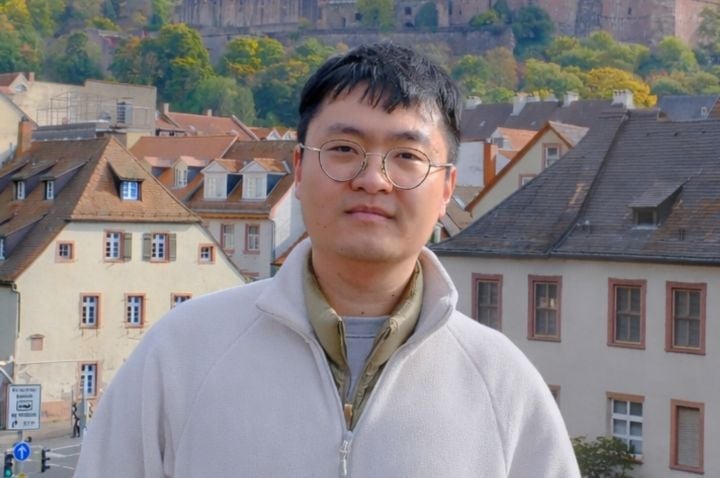
Dr Ruitao Jin is a computational chemist, and our incoming LIMS Nick Hoogenraad Fellow. He completed his PhD under Professor Brian Smith at LIMS in 2020, and since then has conducted research at Deakin University and the Australian National University. He currently holds an Australian Research Council Discovery Early Career Award (ARC DECRA), and has published research in leading journals including Nature and Plant Cell.
He is also a member of La Trobe’s School of Agriculture, Biomedicine and Environment (SABE).