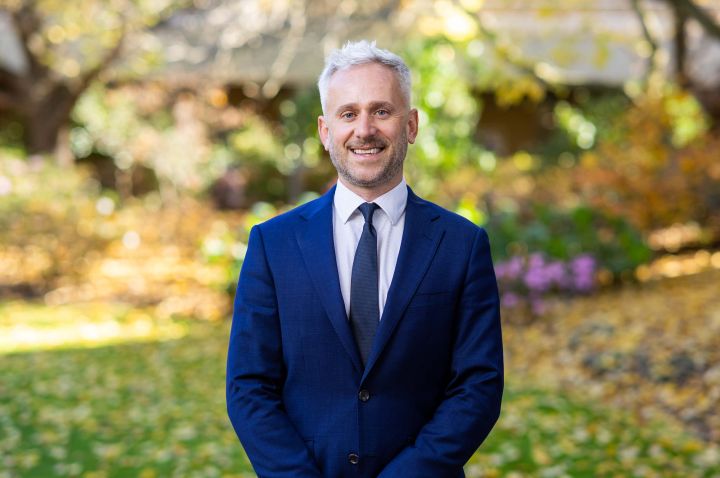
Professor Lorne Neudorf, Dean of La Trobe Law School, believes that “success begins with our students.”
“In just under 35 years, La Trobe Law School has established a strong reputation for the quality of its graduates, who benefit from exceptional employment outcomes and have gone on to become leaders at state, national and international levels,” he explains.
The School’s strong employability focus has been key to its success.
From second year onwards, students undertake Work Based Learning. Their first exposure to the law is often at one of La Trobe’s Law Clinics, where they develop practical skills before progressing to other workplaces such as legal aid, courts, government departments or corporate legal teams.
Then there is the deeper intellectual engagement with the law. Students are taught by a cohort of outstanding legal academics who, in their own work, “contribute to the public good by examining, debating and addressing complex social challenges through rigorous scholarship and critical thinking.”
In his own words, Professor Neudorf tells us more about why La Trobe has a “law school on the move” – one that opens doors for its students, transforms lives and has a positive impact on the communities it serves.
Inclusive education
“I was the first in my family to attend university and experienced first-hand the transformative power of legal education,” says Professor Neudorf. “At La Trobe, we are committed to ensuring that same opportunity is available to every one of our students.”
“We are a diverse and welcoming law school that develops not only strong technical legal expertise, but also an enduring social conscience. Our students graduate with an appreciation of how the law impacts the lives of real people and the communities in which they live and work.”
“La Trobe’s Bendigo campus plays an important role in graduating law and criminology professionals who serve regional communities that are often underserved in these areas. At the same time, our growing Juris Doctor attracts students from across Australia and internationally, creating a vibrant learning environment.”
Career-ready experience
“Clinics are central to the educational experience at La Trobe Law School,” explains Professor Neudorf.“The La Trobe Law Clinic, in partnership with Whittlesea Community Connections, gives students the opportunity to work in practice areas related to civil actions, divorce, and wills and wishes. It is located in the heart of the community it serves, providing free legal services to those most in need.”
“Our Compliance, Policy and Risk Clinic, in collaboration with Kaizen Synergy Law Firm, helps not-for-profit organisations with regulatory compliance, policy development and risk management, ensuing that clients can focus their time and energy on their important work.”
“Finally, our Forms and Advocacy Assist Service, located at Prace, helps residents of Darebin, Whittlesea and Banyule complete government forms relating to Centrelink, housing, fines, insurance and other essential services.”
“Our clinics allow students to work with real clients on real problems. These experiences build practical skills, professional judgment and confidence. Students develop expertise in client communication, drafting, ethical decision-making and problem-solving in real-world settings.”
“Students support individuals who would otherwise struggle to access services. They see first-hand how law operates in everyday life, and gain an understanding of the impact of law on individuals and communities, equipping them with the contextual understanding of law and policy needed to drive positive change.”
An AI-first mindset
“We are embedding AI progressively across our degrees so that students learn not only how to use these tools, but how to use them responsibly,” explains Professor Neudorf. “AI literacy is embedded in teaching and assessment, ensuring students graduate with the practical experience and critical thinking that employers expect.”
“My own research has examined how AI models can assist with legal scrutiny performed by parliamentary committees. In February, I delivered a public lecture at the Australian Parliament House where I presented the results of an experiment testing the performance of different AI models in relation to this kind of highly technical legal work.”
“For staff, we are developing an AI mindset that encourages experimentation, critical evaluation and collaboration. Our aim is not simply to adopt technology, but to shape emerging professional standards for its effective use and ensure it is deployed in ways that promote the public good.”
Socially responsible research
“Because of their expertise, our academics are frequently invited to make submissions to parliamentary inquiries and law reform processes, which can have a direct impact on the future direction of the law,” Professor Neudorf continues.
“For example, in December, I worked alongside one of my students on a submission to a New South Wales parliamentary inquiry, demonstrating how research can translate into meaningful engagement with law reform while mentoring the next generation of lawyers.”
“We see scholarship not as abstract, but as work that should inform law and policy, empower communities and strengthen institutions.”
Roadmap for 2026
“This year, our priorities are focused on impact and opportunity,” says Professor Neudorf. “We are expanding Work Integrated Learning and placement partnerships to strengthen employment outcomes.”
“At the same time, we want to create new opportunities for students to engage directly in research, including through a new law journal and research assistant roles.”
“We are also working to strengthen our thought leadership and community impact, including regionally through La Trobe’s Bendigo campus.”
“The thing I am most proud of is how far we have come in such a short period of time. We are now ranked third in Victoria out of eight law schools, reflecting the incredible dedication of our staff and students.”
“We are building a law school culture that is diverse, welcoming and committed to social justice. That mission is twofold. It is about giving students real-world experience and confidence, particularly those who are first in family or from non-traditional backgrounds. It is also about strengthening our research impact, with our academics influencing law and policy at state, national and even international levels.”