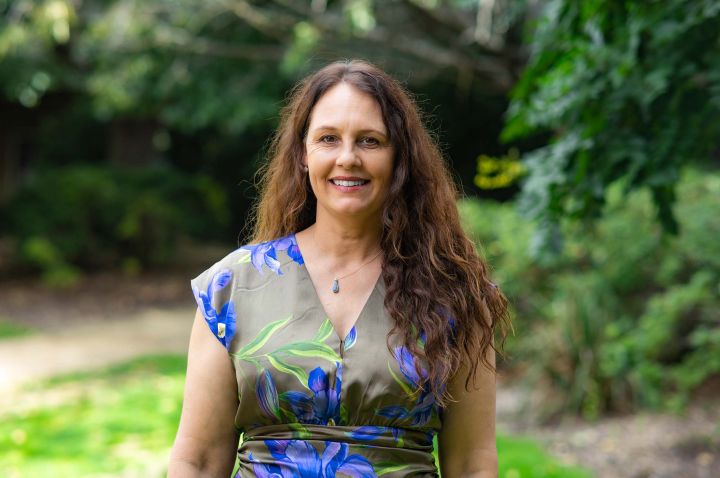
Professor Monica Thielking is Dean of the School of Psychology and Public Health, which brings together La Trobe’s expertise in psychology, public health, mental health, health promotion, digital health and social policy.
The School boasts a research powerhouse that includes the Australian Research Centre for Sex, Health and Society; the Olga Tennison Autism Research Centre; the Centre for Alcohol Policy Research; The Bouverie Centre and the newly established Summer Foundation Disability Research Centre.
“Educating the next generation of health and wellbeing professionals sits at the heart of our mission. And, research underpins our ambition to make a lasting difference,” Professor Thielking says.
The School has reach, relevance and real-world impact that will be further enhanced by La Trobe University’s Health Innovation Strategy – a $170 million investment in teaching, research and infrastructure to boost Australia’s healthcare workforce by an extra 4000 professionals by 2030.
With construction of an $82 million clinical teaching building underway, Professor Thielking believes it will transform both education at La Trobe’s Bundoora campus and healthcare in Victoria more generally.
In her own words, Professor Thielking tells us more about Health Innovation, the impact of translational research and harnessing the opportunities of Artificial Intelligence (AI).
Building innovation
“La Trobe’s investment in an $82 million clinical teaching building is a powerful signal of the University’s commitment to health innovation that is both socially responsible and future focused.” Professor Thielking explains.
“The model brings together education, research and service delivery in a way that directly addresses workforce shortages while improving access to care for communities experiencing long public waiting lists.”
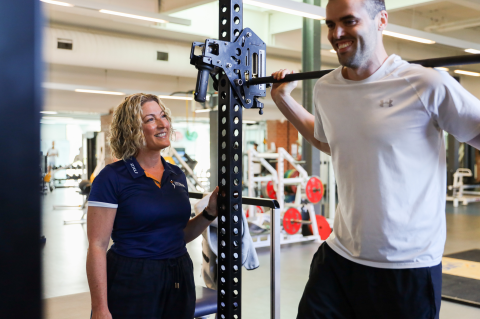
“For the School of Psychology and Public Health, this initiative aligns strongly with our vision of a ‘School of Wellbeing,’ where learning and impact are deeply connected. This facility enables our postgraduate psychology students to train in authentic, interdisciplinary clinical environments while contributing a meaningful service to the community.”
“It also provides a platform for applied research, service evaluation and translation, allowing us to generate data that improves care pathways and informs policy. Importantly, it strengthens partnerships with health services and government, ensuring our graduates are job-ready and our research responds to real-world needs.”
Meaningful change for communities
“The work of our research centres is a critical part of the University’s commitment to health,” says Professor Thielking.
“Collectively, the Australian Research Centre for Sex, Health and Society; the Olga Tennison Autism Research Centre; the Centre for Alcohol Policy Research; The Bouverie Centre and the Summer Foundation Disability Research Centre address some of society’s most complex challenges including substance use and addiction, family violence, mental health, sexual health, homelessness, and health and housing equity.”
“These centres inform policy through rigorous research, long-standing relationships with government and industry, and a clear commitment to knowledge translation. Their work regularly contributes to national frameworks, clinical guidelines, service reforms and public debate, ensuring that policy decisions are informed by robust evidence.”
“As Dean, my role is to create the conditions for research excellence to flourish. This includes supporting clear strategic direction, investing in early- and mid-career researchers, enabling interdisciplinary collaboration, and ensuring our centres have the governance, infrastructure and partnerships required for sustained impact.”
“I also prioritise a culture of integrity, curiosity and collegiality where high performance is matched by care for people, and where excellence is understood not only in terms of metrics, but in meaningful change for communities.”
AI-enabled
“La Trobe University’s AI-first strategy presents a significant opportunity for higher education to lead, not just in capability, but in responsibility,” says Professor Thielking.
“In the School of Psychology and Public Health, we are embedding AI into teaching, research and leadership in ways that prepare graduates for an AI-enabled workforce, while maintaining strong ethical and professional standards.”
“In teaching, we are integrating AI literacy into psychology and public health curricula so that students understand how to work alongside AI tools – critically, safely and effectively – within health and human-centred professions. This includes understanding bias, data governance, clinical decision-support and the limits of automation in care contexts.”
“Our goal is to graduate students who are confident users of AI, not passive consumers.”
“For staff, we are supporting an AI-mindset through professional development, communities of practice and clear guidance on ethical use in assessment, research design and administration. In research, AI is being leveraged to enhance data analysis, modelling and translation, particularly in population health and service evaluation.”
“Importantly, the School contributes to setting industry standards by emphasising responsible AI, grounded in transparency, equity and wellbeing. In health, trust matters, and we see ourselves as shaping how AI is used.”
View to 2026
“In 2026, the School’s leadership team is focused on high-impact priorities that position us strongly for the next phase of growth and impact,” says Professor Thielking.
“First, we are implementing the School’s 2027–2030 strategic plan, ensuring clear alignment with La Trobe’s Education 2030 and Research 2030 agendas, and translating strategy into practical outcomes for staff and students.”
“Second, strengthening research performance and impact remains a key priority. This includes targeted support for early- and mid-career researchers, strategic investment in our research centres, and deeper integration of industry and community partnerships to enhance translation, income and policy influence.”
“Third, we are prioritising staff and student wellbeing as a foundation for excellence. This involves building inclusive leadership capability, improving systems and processes, and fostering a culture of connection, recognition and accountability.”
“Finally, we are focused on innovation in teaching – particularly through AI-enabled learning, clinical education and regional engagement. Expanding access for First Nations and regional students and communities across Victoria is central to our mission.”
“Together, these priorities reflect a commitment to sustainable growth, quality and impact, ensuring the School continues to lead in shaping healthier individuals, families and communities.”
“As Dean, I am proud of the depth of purpose that underpins everything we do. There is a strong, shared commitment among staff to making a meaningful difference—to students, to communities, and to the health system more broadly. We make a strong and valuable contribution, but do so in a way that aligns with our values and long-term vision.”