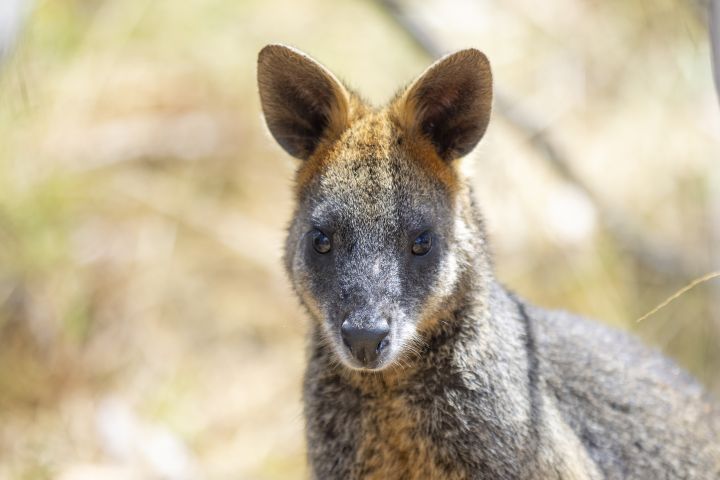
Swamp Wallabies (Wallabia bicolor) bring a suite of benefits that complement the role of the Eastern Grey Kangaroos already on site. Kangaroos are grazers whereas the wallabies are primarily browsers. This means they feed on shrubs and understorey plants, helping to regulate midstorey vegetation, support plant regeneration and create a more structurally diverse habitat. They also use denser woodland and wetland edges that kangaroos typically avoid, extending ecological activity into underutilised parts of the landscape. Additionally, they disperse seeds from a range of shrubs and herbaceous plants, further contributing to biodiversity.
The Sanctuary’s predator proof fencing makes it a safe environment for re-establishing native mammals that have been absent from the sanctuary as the area had previously been quite degraded. Bringing back species like the swamp wallaby restores missing ecological interactions and strengthens the long-term resilience of our local environment.
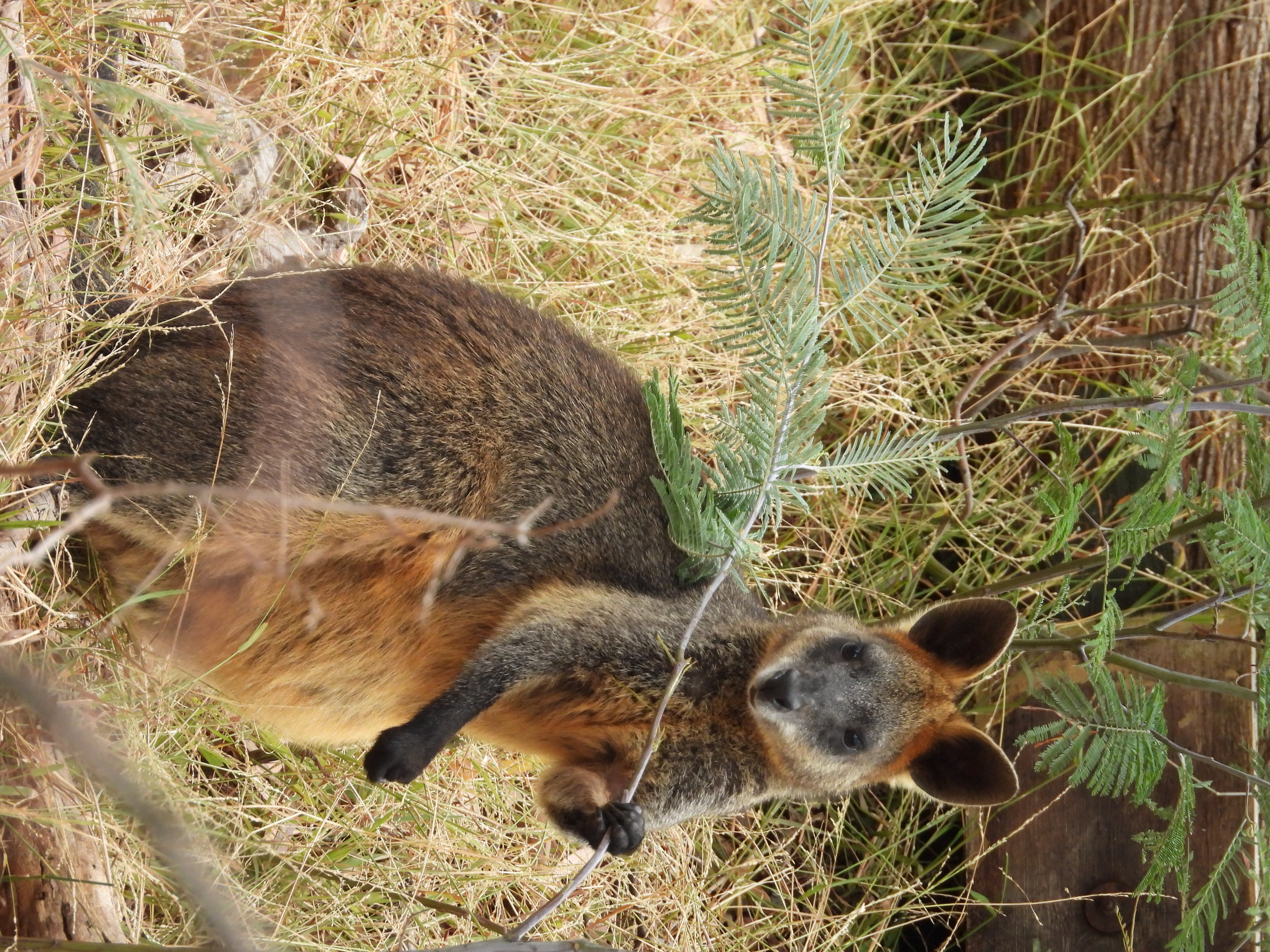 Why they matter ecologically
- Browsers, not grazers – Swamp wallabies mainly eat shrubs, leaves, ferns and young saplings
- Understorey shapers – Their feeding influences shrub density and plant regeneration
- Habitat creators – By maintaining vegetation structure, they support birds, reptiles and small mammals
- Seed dispersers – They help spread native plant seeds through their scats
- Functional diversity – They add a different ecological role alongside kangaroos, strengthening ecosystem resilience
- Nutrient cycling - Through dispersing their faeces around the Sanctuary, swampies will redistribute nutrients across the habitat, contributing to soil fertility
Fun facts about Swamp Wallabies
- Their scientific name bicolor refers to their darker body and lighter face/underside, which is designed to camouflage in the darker bush
- They are called the swamp wallaby as an ode to their swampy odor
- Female swamp wallabies are one of the few mammals capable of becoming pregnant again while already carrying a developing embryo (a reproductive strategy called embryonic diapause)
- They have a gestation period of 35 days before the joey moves to the pouch for about nine months
- In fight, flight or freeze, they freeze first, relying on their dark colouring to camouflage into the bush, they will then flee the threat
- They are good swimmers
- You will often see them in the wild (maybe here too) with nicks out of their ears from getting clipped on shrubs whilst moving through the bush
If you would like to spot the Swamp Wallabies, the Wildlife Sanctuary is open for self guided walks 7 days, 10am-3pm (closed Saturdays in summer and winter).
Please help us keep our animals wildlife. Do not approach or try to feed them.