What is your area of research, and why are you passionate about it?
Influenza is a deadlier disease than people might realise. The 1918 Spanish Flu pandemic was estimated to have killed an estimated 40 – 100 million people worldwide, and influenza viruses still claim more than half a million lives each year. We’ve had very limited novel influenza virus vaccine technologies come through in the last 30 years, so my research investigates how our immune system fights influenza to inform future vaccine design, as well as exploring other approaches on how we can save lives from this disease.
What impact do you hope to have through your work?
I hope that my work helps to save lives, and through a variety of ways. By informing future vaccine strategies or other treatment strategies, we might be able to come up with new ways to fight or prevent infection. But to do this, I believe working with communities is important to understand their needs and priorities, so we can make sure that our research has real-world impact.
You mentioned the importance of working with communities to shape research. Why is it so important?
Sometimes as scientists, we can get stuck in our silos of expertise and forget the bigger picture – which sometimes looks like not understanding the needs and priorities of the communities who are likely to be impacted by our research. By working with communities, we can maximise the impact our science has – and what’s impactful for communities isn’t always what we, as scientists, think it will be.
How did you feel when you heard you had received the LIMS Innovation Fellowship?
I was ecstatic. The opportunity to undertake my research under the LIMS Bruce Stone Fellowship is a remarkable privilege, and the support I will receive will really help propel my research. I’m also very honoured to be able to do this research under the name of such a prominent and prolific researcher who had enormous impact.
How will the LIMS Bruce Stone Fellowship help you to further your research and achieve the impact you hope to make through your work?
The LIMS Bruce Stone Fellowship not only means I can continue my biomedical research, but also offers the opportunity to expand into looking for “One Health” approaches to combatting influenza by collaborating with experts in other fields and more deeply engaging with communities. One of the things I love about La Trobe and LIMS is the collegial, community atmosphere where collaboration is encouraged. Being able to reach out directly to other academics who are experts in their fields is transformative for all research – for me, it has allowed me to pioneer this work, and to push forward where it would not have been possible in other places.
--
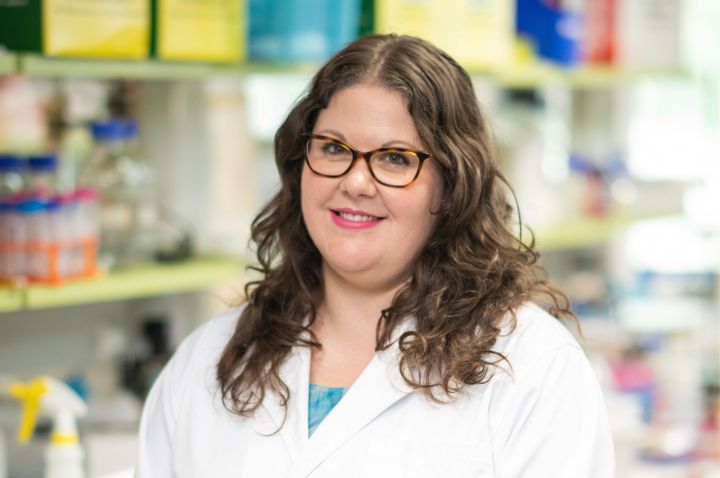
Dr Emma Grant leads the Immune Responses against Pathogens Group at the La Trobe Institute for Molecular Science (LIMS). Prior to receiving the LIMS Bruce Stone Fellowship, Dr Grant was an ARC DECRA Fellow
Find out more about Dr Grant: