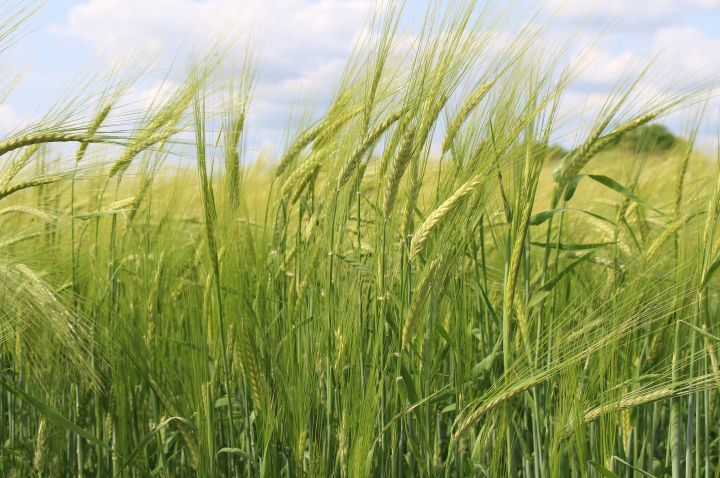
Cereal grains are vital to global food security and contribute more than $17.5 billion to Australia’s economy each year. Despite careful management, fungal diseases cause around 20% yield losses each year and reduce grain quality.
They cost farmers millions of dollars in lost yield and chemical control measures but also poses a significant threat to food security.
A new study led by Research Assistant, Dani Wiles, and supervisor, Peter Dracatos, is tackling this problem in barley crops.
“Leaf rust is a fungal disease that attacks barley plants and causes major losses,” she explains. “While breeding disease-resistant crops is the most sustainable approach, rapidly evolving pathogens make it a never-ending challenge, leaving growers increasingly reliant on costly and ineffective fungicides.”
Dani’s research focuses on developing stronger, more resilient barley varieties by identifying and combining naturally occurring resistance genes.
“This approach reduces reliance on chemicals, boosts productivity and supports sustainable food production,” she says.
To protect crops from these fungal diseases, breeders need reliable molecular tools to track resistance genes.
“The discovery of the Rph7 gene, which provides effective resistance to leaf rust in barley plants, was a major breakthrough, but its use in breeding has been limited.”
“In collaboration with researchers from the La Trobe Institute for Molecular Science, we applied a fluorescence-based genotyping tool to develop a reliable marker for the Rph7 resistance gene.”
“It enabled us to clearly distinguish resistant barley lines carrying the Rph7 gene from susceptible ones, providing diagnostic capabilities.”
Dani says this research bridges the gap between gene discovery and applied crop improvement, advancing efforts to develop durable, disease-resistant cereal varieties.
“It has immediate applications in barley breeding, enabling precise and cost-effective selection of resistant lines while saving time and resources.”
This research was funded by the Grains Research and Development Corporation, and was a collaboration between researchers from the La Trobe Institute for Molecular Science and the La Trobe Institute for Sustainable Agriculture and Food.