The ACRF Centre of Precision Medicine was officially opened at the Olivia Newton-John Cancer Research Institute (ONJCRI) this month. This groundbreaking Centre was established with a $2.1 million grant from Australian Cancer Research Foundation (ACRF) awarded in 2022.
This cutting-edge Centre will use a theranostic, or “detect and treat” approach. This means advanced imaging is combined with precisely targeted treatments using safe, medical-grade radioactive substances that can both find and treat tumours.
At the heart of the Centre is a cutting-edge radiochemistry lab that will support the development of radiopharmaceuticals for the diagnosis and therapy of cancer, ensuring that patients have access to emerging therapies as they are developed.
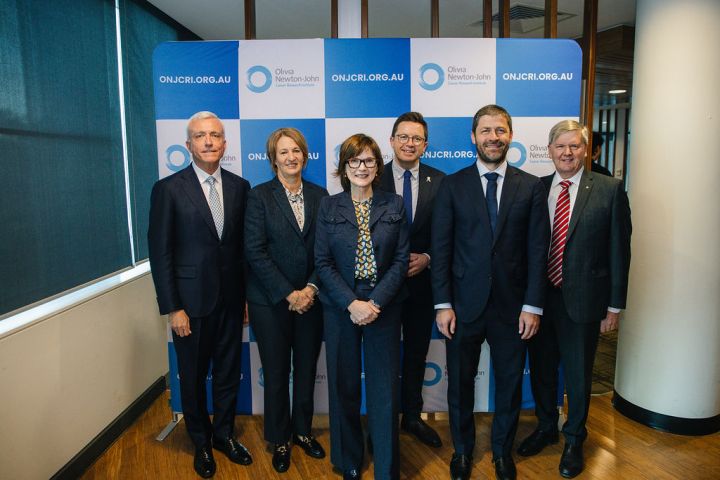
The centre was opened by Hon Mary-Anne Thomas, Victorian Minister for Health and for Ambulance Services, at an event hosted by ONJCRI CEO Professor Marco Herold and ACRF Chair Dr Tim Cooper AM.
CEO of ONJCRI, Professor Marco Herold, said: “The ACRF Centre for Precision Medicine gives our researchers, clinicians, and partners the tools to develop and apply highly targeted diagnostics and treatments. It is embedded in a translational research environment, located in a health precinct, and purpose-built to bring scientific innovation closer to clinical care.”
Director of the new Centre, Clinician-Scientist Professor Andrew Scott AM, said:
“The ACRF Centre for Precision Medicine is a unique and exciting capability for translation of discoveries into the clinic and provides a key technology for theranostics for multi-centre clinical trials across Australia.
It links outstanding researchers in cancer biology, drug development, radiochemistry and molecular imaging of cancer, and will lead to novel therapeutic approaches and clinical trials.”
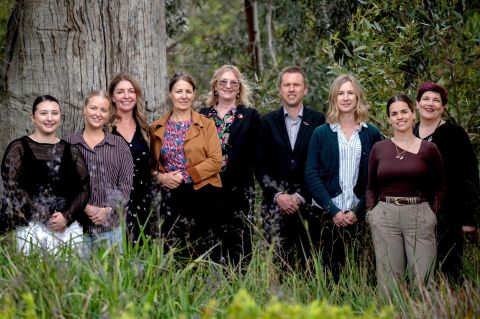
It is hoped new approaches like this can help patients like Chantelle Courtney, who was diagnosed in January 2020 with Grade 2 oligodendroglioma, a type of brain cancer. At the time, her youngest child was only seven weeks old, and her eldest had just turned seven.
“In those early days, the biggest questions weighed heavily on me. How long would I live? How quickly would my cancer progress? How would cancer and treatment impact who I was? They were questions no specialist could clearly answer – and ones I still carry with me,” Chantelle said.
Treatment began soon after. Chantelle underwent nearly 30 rounds of radiotherapy and seven months of chemotherapy. Unfortunately, her body did not tolerate the treatment well.
Precision oncology can benefit a significant proportion of cancer patients by determining the most effective treatment based on their cancer’s profile, rather than a one-size-fits-all approach, which can also improve the tolerability of the treatment.
“ACRF is proud to enable transformative research that will be conducted at the ACRF Centre for Precision Medicine, accelerating translation of discoveries into the clinic to ensure optimal outcomes for cancer patients,” said Kerry Strydom, ACRF CEO.
Chantelle said: “Living with cancer means facing a lot of unknowns. Medical research helps me turn some of that uncertainty into hope. Even the smallest of breakthroughs may offer new treatment options and the possibility of more time with my family.
“At some stage, my brain tumour is likely to grow again, and I’ll need further treatment. I hold onto hope that new research and clinical trials will lead to alternatives; options that are more effective and gentler than the treatment I went through the first time.”
“Cancer research gives people a reason to keep hoping that life will get better."