
Research programs and projects
Explore how our key research priorities come to life through research projects that aim to make the greatest impact for people with aphasia.
AI
Involvement of people with aphasia and clinicians in development of AI tools: A scoping review
We aim to describe how often and how well people with aphasia and clinicians are involved in development of AI tools.
People With Aphasia and Artificial Intelligence: Lived Experiences, Current Use, and Imagined Futures
We are interviewing people living with aphasia about technology and AI - how they use it now and what they'd like AI to do in future. Results will help us understand how people with aphasia want technology to help them in future.
Team: Matthew Berryman (lived experience researcher), Annie Hill, John Pierce
AI research agenda for aphasia
Develop a research agenda for Artificial Intelligence in Aphasia.
Team: Collaboration of Aphasia Triallists (CATs) working group, led by John Pierce
Living with Aphasia
Communication Connect
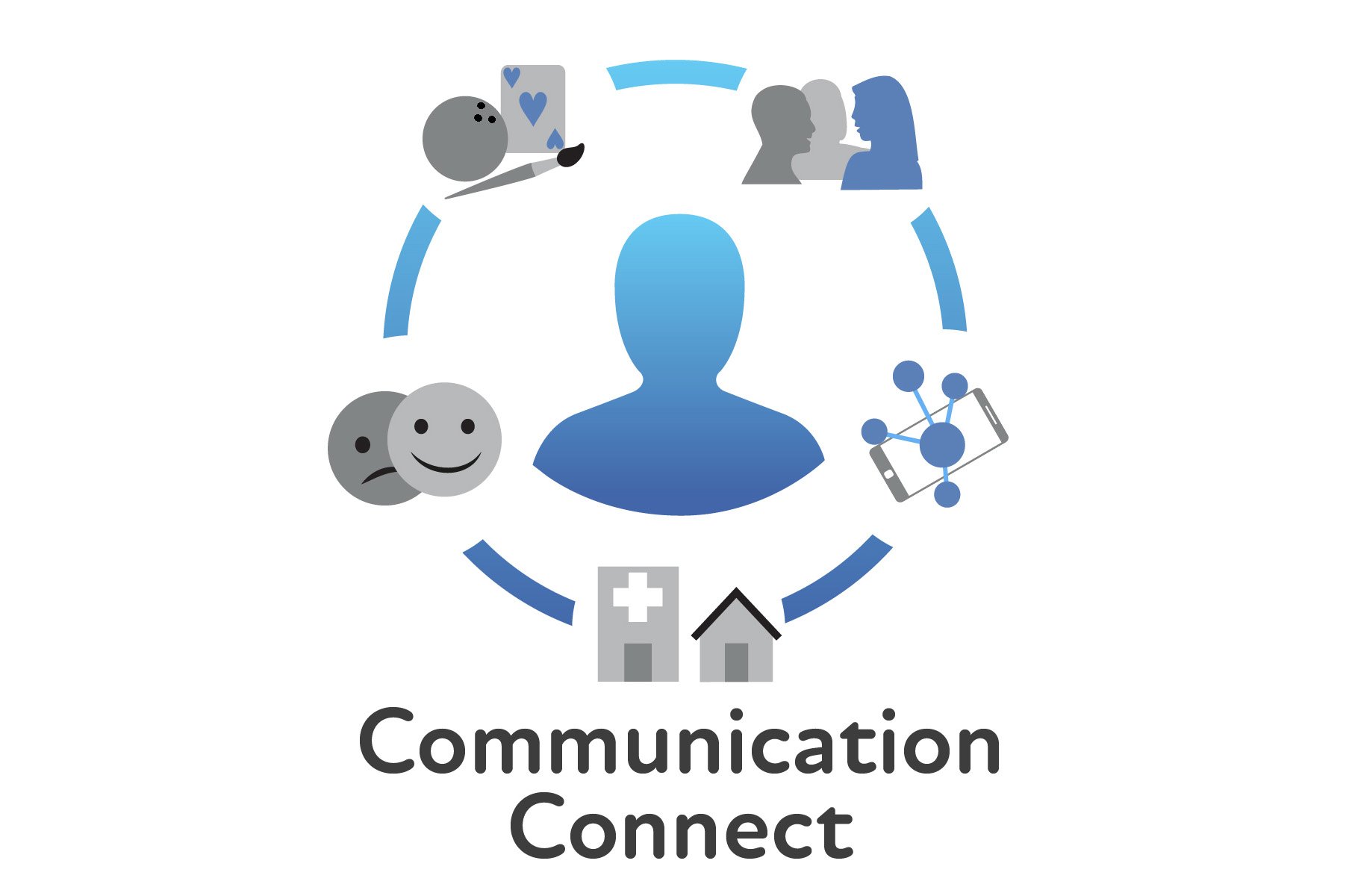 Improving long term communication and mental health outcomes following stroke and brain injury - an NHMRC Ideas Grant.
Communication Connect is a digital platform that has been co-designed with people living with communication disability, carers and clinicians. Communication Connect is a comprehensive, multicomponent, technology-enabled program of care providing resources, support and self-management. It is underpinned by artificial intelligence-enabled data management and resources.
Learn more about Communication Connect
Team: Miranda Rose, Dave Copland, Leanne Togher, Ian Kneebone, Emma Power, Damminda Alahakoon, Dana Wong, Annie Hill, Tim Usherwood, Brooke Ryan, Richard Lindley, Dominique Cadilhac, Leonid Churilov, Kelvin Hill, Tracy Sheldrick, Michelle Attard, Ciara Shiggins, Rachael Rietdjik, Lucie Lanyon.
Communication Connect: The development and testing of a technology-based intervention program for carers in post-stroke aphasia (PhD Project)
Enable carers to identify and solve their own challenges independently and to provide personalised psychoeducation. Test the acceptability, feasibility, and preliminary efficacy of the technology-based intervention for carers.
Team: Nelson J. Hernandez (PhD student), Miranda Rose, John E. Pierce, Dana Wong.
Communication Connect: Adaptation to the Malaysian context (PhD Project)
To adapt the Health Professionals’ Portal of Communication, Connect to the Malaysian context..
Team: Shu En Lee (PhD student), Annie Hill, Miranda Rose, John E. Pierce, Fatimah Hani Hassan.
Interventions to improve language and communication in aphasia
M-MAT Tele

M-MAT Tele is a group therapy that aims to improve talking for people with aphasia.
Multi-Modality Aphasia Treatment (M-MAT) is a group-based aphasia intervention delivered face-to-face which focuses on improving spoken communication. Spoken output is facilitated through practice of speech, drawing, reading, writing, and using gestures. It is an intensive treatment with individuals receiving 30 hours of therapy spread across 5 weeks. Treatment is delivered in a group of 2-3 people with aphasia.
Learn about the M-MAT Tele Project
Co-constructed Discourse
Team: Marcella/Miranda/Leanne/Gillian/Kristina (PhD student)
Co-design of dance intervention for stroke survivors with and without aphasia
Dance has been shown to have many health, emotional and social benefits and has been successfully used as a rehabilitation intervention with other populations such as people with Parkinson’s disease. The objective of this project is to collaborate with people who have had a stroke, dance teachers, physiotherapists and speech-language pathologists to co-create a dance intervention which is suitably safe and beneficial to people post-stroke.
Contact: Annie Hill
Team: Annie Hill, Morgan Perry, Hayley Rees
Gesture in Aphasia
Analyse the impact of M-MAT and CIAT Plus on spontaneous gesture during word retrieval tasks.
Team: Miranda Rose, Mike Dickey, Kazuki Sekine, Jessica Whitting (Honours Student) & Nicola Cleary
Student TeleCHAT Project
To develop and evaluate the delivery TeleCHAT in a student-led clinic.
Team: Annie Hill, Dave Copland, Jade Dignam, Kistine Shrubsole, Robyn O'Halloran, Lucie Lanyon, Kate Bridgman, Rachel Davenport, Shane Erickson
CanCommunicate: An intervention for brain cancer-related communication impairments
Test effectiveness of CanCommunicate, an intervention for brain cancer-related communication impairments.
Team: Emma Finch, Sonia Brownsett, Tamara Ownsworth, John Pierce, Jennifer Fleming, Emmah Doig, Mark Pinkham, Rachel Wenke, Clare Burns, Leisa Turkington, Anna Farrell, Chung Kai Chan, David Copland, Rosalind Jeffree, Steven McPhail
Communication for Health Equity
Inclusive conversations for safer medicine use
We are developing evidence-informed online learning modules for pharmacists to improve medication conversations with patients who have communication support needs. We will assess the feasibility, acceptability and preliminary efficacy of the modules before making them available to all pharmacists through the Pharmaceutical Society of Australia.
This project is being led by Professor Robyn O'Halloran and is a collaboration between La Trobe University, Deakin University, Western Health, Western Health Lived Experience Advisor Program and the Pharmaceutical Society of Australia.
The Australian Government Department of Health and Aged Care under the Quality Use of Diagnostics, Therapeutics and Pathology program, have provided $870K in funding to support the project for 2025 – 2027.
Team: Robyn O’Halloran, Miranda Rose, Rebecca Sullivan, John Pierce, Marcella Carragher, Julia Gilmartin Thomas, Hanan Khalil, Tanya Ramadan, Natali Cvetanovska, Jo Watson, Deanna Guy, Namita Warrior, Nikita Dalla Venezia
Alfred SPEAK - scoping review
To descibe the research on interventions directed at the hospital environment to improve healthcare participation of people with CSNs.
Team: Robyn O"Halloran, Roz Shand, Chloe Bennet, Janine Standen, Karen Roberts, Martin Checklin
Alfred SPEAK - evaluation of online learning
To investigate the feasibility of online modules to improve disability awareness.
Team: Robyn O"Halloran, Chloe Bennet, Janine Standen, Karen Roberts
Alfred SPEAK - Interviews with staff on implementation
To explore staff perceptions of factors influencing implementation of supports to people with CSNs in hospital.
Team: Robyn O'Halloran, Karen Roberts,Jo Shorland
HealthTalk Connect - Epworth (PhD Project)
To investigate the utility of HealthTalk Connect - a novel, digital communication aid - on acute and rehabilitation wards.
Team: Edwina Lamborn (PhD), Robyn O'Halloran, Marcella Carragher, Miranda Rose
NOVELL redesign- Using virtual reality to co-design inpatient stroke rehabilitation facilities
Team: Lucie Lanyon, Ciara Shiggins, Ruby Lipson-Smith, Michael Green (Honours Student), Robyn O'Halloran
Assessing Pain in People with Aphasia
Evaluate observational tools for measuring pain in stroke survivors including those with aphasia, cognitive impairment and low consciousness.
Team: Queenie Leung, Ian Kneebone, John Pierce, Matthew Doane, Caleb Ferguson
An accessible mood assessment tool for people with cognitive and communication impairment after acquired brain injury
Develop an accessible assessment tool for people with mild through to severe cognitive and communication impairment after brain injury.
Team: Dana Wong, Emma Power, Rene Stolwyk, Jon Evans, Shirley Thomas, Riccardo Sacripante, F. Gracey, Riccardo Sacripante, Ian Kneebone, Alexandra Rose, Joshua Blake, John Pierce
Communication on Disability and Falls
Adverse events in hospital
To find out whether people who have difficulty communicating are more likely to experience harm while in hospital.
Team: Robyn O'Halloran, Miranda Rose, Katherine Harding, Anita Lal, Rebecca Sullivan, Julie Considine, Penny Casey, Samantha Siyambalapitiya, Mimi Ermert, Pier Moro.
Falls in patients with communication difficulty
To find out whether people who have difficulty communicating are more likely to experience harm while in hospital by measuring the risk of falls in people with communication difficulties after a stroke using national health data.
Team: Rebecca Sullivan, Robyn O’Halloran, Katherine Harding, Xia Li.
Tailored Supported Communication Falls Response Plan: A pilot falls intervention study
To find out if supporting patients to communicate with doctors and nurses after a fall and giving falls prevention education is helpful, and works in the hospital setting.
Team: Rebecca Sullivan, Robyn O’Halloran, Katherine Harding, Penny Casey, Kaitlin Russell, Ian Kneebone, Catherine Rampant, Anita Lal.
A systematic review of the prevalence and associates of falls related psychological concerns post stroke.
To understand how common fear of falling and other fall-related concerns are in adults recovering from a stroke.
Team: Samantha Allen, Peter Stubbs, Rebecca Sullivan, Michelle Courtney Harris, Deb Debono, Roshan Nair, Nimish Biloria, Nicholas Hart, Ian Kneebone.
Exploring the roles of speech-language pathologists and falls
To investigate how speech pathologists can support safer care and reduce the risk of falls.
Team: Rebecca Sullivan, Natalie Douglas, Megan Schliep.
FISS trial
A randomised controlled trial to evaluate the clinical and cost effectiveness of the Stroke Action Falls rehabilitation program compared to usual care alone to reduce Falls In Stroke Survivors: the FISS-Australia trial.
Team: Annie Hill, Kathryn Harding , Emmah Doig , Nadine Foster, Pip Logan, Catherine Sherrington, Mark Chatfield, Jacqueline (Jacki) Liddle , Stephen Isbel, Tracey Coman
Aphasia and CALD (Cultural and Linguistically Diverse)
International Aphasia Apps: Environmental Scan of aphasia therapy software and apps for languages other than English
Outline the publicly available aphasia therapy apps and software in the most widely spoken languages, and highlight any gaps.
Team: Tanya Van Prooyen, Samantha Siyambalapitiya, Annie Hill, Marcella Carragher, Maria Kambanaros, Lucie Lanyon, Chelsea Larkman, Kathleen Mellahn, John Pierce
Investigating CALD adaptations in ICAPs - Honours Project
To explore how Intensive Comprehensive Aphasia Programs (ICAPs) are being adapted for CALD populations.
Team: Jorja Byrson (Honours Student), Annie Hill, John Pierce, Kathleen Mellahn
Assessment
Outcome measurement for clinical trials
Aphasia-DOOR: Your Voice in Measuring Research Success 
We want to make a better way to check if aphasia therapy really helps.
The problem: Many tests check only ONE thing. But aphasia affects many parts of life.
We are working with people who have aphasia to create a better way to measure treatment success.
Learn about the Aphasia DOOR Project
Team: Annie Hill, Miranda Rose, John E. Pierce, Marcella Carragher, Lucie Lanyon, Robyn O’Halloran, Leonid Churilov, Lisa Anemaat, Scott Harding, Kate Lawlor. RAs: Morgan Perry, Queenie Hung and Hayley Rees
Mild Aphasia
To co-design better assessments and interventions for people with very mild/subclinical aphasia.
More information available here
Team: John Pierce, Emma Power, Lucy Dipper, Annie Hill, Marcella Carragher, Dana Wong, Leonid Churilov, Achini Adikari, Miranda Rose, Matthew Berryman
Implementing Evidence into Practice
Bridging the divide between best-evidence & practice: addressing the communication needs of stroke patients using a collaborative knowledge translation approach (St Vincent’s and LTU collaboration)
To map current acute aphasia management at St V’s against current clinical guidelines, identify gaps, prioritise these gaps, develop an intervention to improve implementation of guidelines, and evaluate the effect.
Team: Renee Clapham (St Vincent’s), Kathryn McKinley (St Vincent’s), Robyn O’Halloran (LTU), Marcella Carragher (LTU), Marissa Stone (St Vincent’s), Mary-Anne Candy, Phil Candy, Kathleen Mellahn (St Vincent’s)
Contact: R.OHalloran@latrobe.edu.au
Aphasia Treatment TransLatIon Network (ATTAIN)
Objective is to transform aphasia care and drive system-wide evidence translation from hospital to home, regardless of postcode. We will do this by developing and delivering effective and sustainable digitally enabled hub and spoke aphasia services that address unmet needs and improve outcomes for people living with aphasia. The overall aims of the project are to:
1. Translate evidence-based treatments into co-designed packages based on identified consumer priorities and unmet needs.
2. Build an integrated data hub for measurement and iterative and ongoing improvement of evidence-based practice and outcomes.
3. Implement and evaluate the delivery of locally-tailored aphasia treatment packages in a range of health services through a scalable digital hub and spoke network.
Contact person: Annie Hill, Principal CI at LTU
Team: Annie Hill, Miranda Rose, David Copland (CIA), Kirstine Shrubsole, Sarah Wallace, Jade Dignam, Emma Power, Tash Lannin, Dominique Cadlihac, Ian Kneebone, et al.
Community Aphasia Groups
Community Aphasia Groups: Peer-led CAG (Hub and Spoke model) at Grampians Health
To proliferate high-quality, evidence-based peer-led aphasia groups within hub-and-spoke model.
Team: Miranda Rose, Michelle Attard, Cassie Wilcox, Lucie Lanyon, Kathryn Pettigrove (PhD student) & Grampians Health SP.
Facilitation of community aphasia groups
To investigate the impact of a targeted training package on SLPs’ competence to facilitate community aphasia groups and train other (peer volunteer) facilitators.
Team: Kathryn Pettigrove (PhD Student) Lucette Lanyon, Miranda Rose and Michelle Attard.


COMPARE Aphasia Therapy Research Trial 
COMPARE was an NHMRC-funded randomised controlled research trial that compared the outcomes of two different treatments for people with aphasia.
Outcomes of the trial have now been published and resources are available now.
Learn about the Hub
Learn more about our collaborative hub aiming to make advancements in the understanding and research into aphasia.
Connect with us
Join us: receive latest news and be involved with aphasia research and community activities.
Contact us: collaborate with our team or learn more about aphasia.