
Maria Jelinic group
AtheroImmunology and Inflammation
Imagine a future where heart attacks and strokes are no longer among the leading causes of death. Our research is working towards this goal by uncovering new ways to prevent coronary artery disease, a condition in which fatty deposits and inflammation slowly build up in the arteries, often without warning, until a sudden and life‑threatening event occurs.
For many years, research has focused on calming inflammation by suppressing the immune system. While effective in some ways, these strategies can weaken the body’s natural defences and increase the risk of infection. Our team takes a different approach. Instead of targeting the immune system itself, we focus on damaged and stressed cells within artery plaques that provoke harmful immune responses.
By understanding how these stressed cells communicate with immune cells, we aim to stop the destructive interactions that make plaques unstable and lead to heart attacks and strokes, without compromising normal immune protection. Using patient‑derived samples, advanced laboratory techniques, and powerful data analysis tools, our work is paving the way for targeted treatments that could transform the prevention and treatment of heart disease.
Research Areas
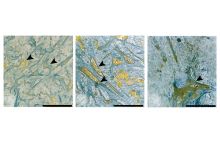
Cells that form the fibrous cap of artery plaques, known as vascular smooth muscle cells, play a vital role in keeping plaques stable and preventing heart attacks. In advanced coronary artery disease, these cells are exposed to long‑term stress and biological ageing, which can impair their protective function. Our early studies of human coronary arteries show that many smooth muscle cells in the fibrous cap are highly stressed and aged, and display surface signals that can attract and activate destructive immune cells.
In this research area, we aim to understand when and where these stress signals appear during plaque development, and how they relate to the presence of immune cells that can damage the fibrous cap. By studying more than seventy human coronary artery samples spanning different stages of disease, we are building a detailed map of plaque progression. Using advanced molecular and imaging techniques, we track stress signals, smooth muscle cells, and immune cells within plaques to identify the key stages at which plaques become vulnerable to rupture. This work will help pinpoint new targets for therapies designed to prevent plaque rupture and heart attacks before they occur.
When immune cells attack diseased or damaged cells, they form close contact zones known as immunological synapses. These structures have been studied in detail in cancer, where they are known to control how immune cells recognise and kill their targets. However, in cardiovascular disease, and particularly in atherosclerosis, these immune cell interactions have received very little attention.
Most cardiovascular research has focused on the overall impact of immune cells on plaque growth, without considering how specific cells within plaques actively shape immune responses. In this research area, we focus on how cytotoxic immune cells interact directly with vascular smooth muscle cells in the fibrous cap, the cells that are essential for keeping plaques stable. We aim to identify the key surface molecules that allow immune cells to attach to, communicate with, and kill these target cells within plaques.
Using human coronary artery cell culture systems developed in our laboratory, together with advanced protein profiling techniques, high‑resolution imaging, and targeted gene‑silencing approaches, we are defining how stress signals and other surface proteins organise at the immune cell contact site. By mapping these killing interactions in detail, this work will reveal new targets to block immune‑driven damage to artery walls and help prevent plaque rupture and heart attacks.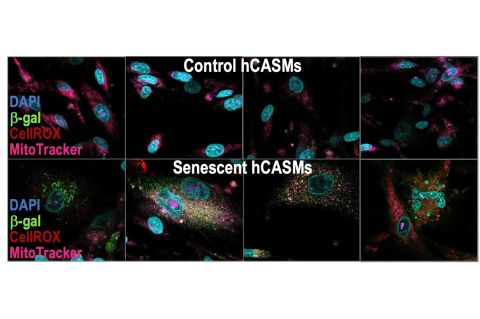
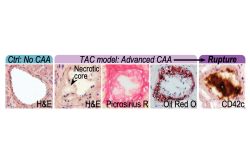
Our preliminary studies of human coronary artery disease show that highly stressed and senescent vascular smooth muscle cells in the fibrous cap display specific surface signals, known as MICA and BTN3A1. These signals are known to activate a specialised group of immune cells capable of killing stressed cells. In advanced disease, we have also found that the mouse equivalent of these stress signals is closely associated with these immune cells inside unstable artery plaques, suggesting a direct role in plaque damage.
In this research area, we aim to test whether these stress signals actively drive plaque progression, rupture, and heart attacks. Using our specialised experimental model of plaque rupture, we directly block the mouse equivalents of these stress signals using targeted gene‑silencing approaches. We then assess how this affects plaque stability, the occurrence of heart attacks, and overall survival. This work will provide critical evidence linking stress signals on artery wall cells to immune‑driven plaque rupture, and help identify precise molecular targets for therapies designed to prevent heart attacks.
Meet the team
Group leader
Adjunct researcher
- Professor Alex Bobik
- Dr Jaclyn Swan
PhD researcher
Masters researcher
- Brooklyn Hutton (July 2027)
Honours researcher
- Arun Amedoski

Publications
Find a full list of publications on: