
About the Department of Learning Sciences and Emerging Technologies
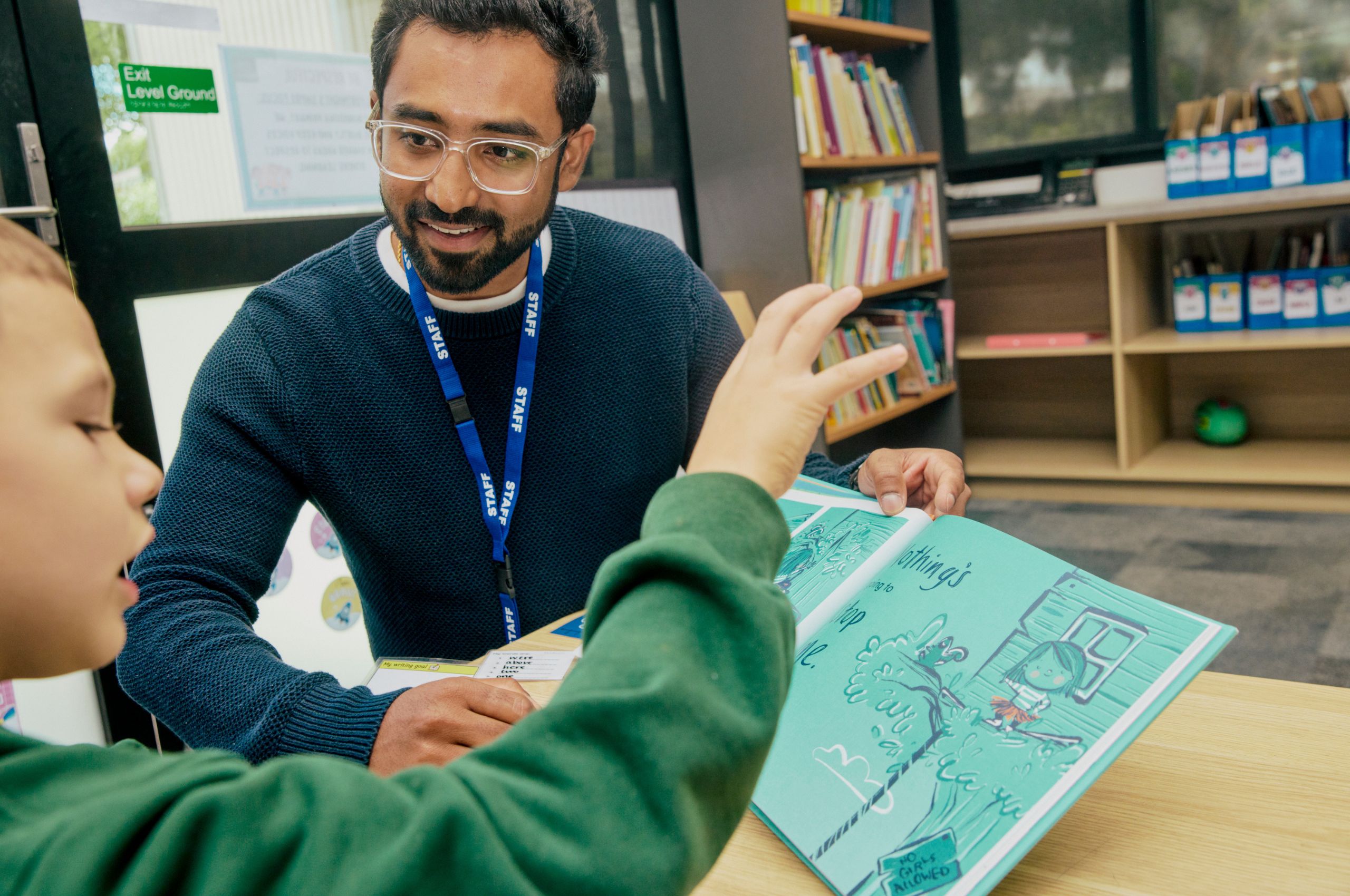
The Department of Learning Sciences and Emerging Technologies is focused on understanding how people learn and translating that knowledge into innovative, technology-enhanced education that improves learning at scale.
Our Department is part of La Trobe's School of Education.
Education systems are being reshaped by rapid technological change, research in learning sciences and growing expectations for effectiveness, adaptability and equity. In this environment, evidence about how people learn, and how technology can support learning, is critical to shaping future-focused education systems.
We bring together learning sciences, AI and digital transformation to advance evidence-driven learning environments and next-generation pedagogies. Our work spans cognition and learning, AI-informed learning design, interdisciplinary STEM education and educational data science. Our Science of Language and Reading (SOLAR) Lab and Science of Mathematics Education (SOME) Lab draw on educational psychology, neuroscience and speech pathology to improve teaching and learning in literacy and mathematics.
Our approach is human-led and AI-enhanced. We use AI to strengthen teaching, learning design and system capability, applying technology responsibly to support deep learning, personalisation and effective instructional practice.
We work with educators, learners and education systems across metropolitan, regional and rural contexts. Through research, teaching and partnership, we are building the next education system, integrating technology to widen equitable access to high-quality learning and drive effective, inclusive outcomes.

Our work is about understanding learning deeply and using that knowledge, alongside emerging technologies, to lead education that is evidence-informed, effective, equitable and future-leading.
Education pathways for learning sciences, STEM and emerging technologies
The Department of Learning Sciences and Emerging Technologies prepares educators, designers and leaders to understand how learning works and apply that knowledge in contemporary, technology-enhanced education settings.
Our courses are grounded in rigorous research on learning and cognition and shaped by applied, real-world practice. Students engage with learning sciences, educational psychology, AI, digital learning design and data-informed decision making, developing the skills needed to design effective learning experiences across classrooms and disciplines, organisations and systems.
We provide flexible, hybrid pathways (incorporating on-campus and online experiences and opportunities) and employment-based models that enable learners to balance study with professional and personal commitments. Our programs support aspiring educators, career changers and experienced professionals seeking to strengthen learning design capability or lead innovation in education.
Graduates are equipped to work confidently across diverse education settings, using evidence and emerging technologies effectively to improve learning, expand access and support future-ready education systems.
Research for meaningful change
We are the university where world-class research and professional practice come together to redefine what it means to teach and learn. Grounded in evidence, equity and innovation, our research closes the gap between what is known and what is done in classrooms, schools and education systems.
Partnering with educators, schools and government, our research drives system-level improvement and enables practice at scale, shaping equitable, future-ready classrooms informed by evidence and strengthened through the responsible use of AI.
Research in the Department of Learning Sciences and Emerging Technologies focuses on how people learn and how evidence, data and emerging technologies can be used to improve learning outcomes at scale. Our work spans learning sciences, cognition, educational psychology, STEM education, AI in education, digital transformation and learning analytics, with a strong emphasis on translating research into practice.
Through collaborative projects, translational research and thought leadership, the Department contributes research with real-world impact that strengthens practice, workforce sustainability and education systems in Australia and beyond.
Flagship initiatives
La Trobe's School of Education is leading the national shift towards evidence-informed education, with a proven ability to move research into classrooms and sustain it at scale.
The SOLAR Lab leads research, professional learning and system partnerships in evidence-informed literacy instruction. Grounded in the science of language and reading, SOLAR translates rigorous research into practical tools, short courses and postgraduate programs that embed explicit reading instruction in classrooms. Through national partnerships with schools and systems, La Trobe’s SOLAR Lab has already equipped more than 12,500 educators with the evidence-informed expertise to lift literacy outcomes at scale.
The SOME Lab is Australia’s first dedicated hub for evidence-informed mathematics education. Focused on explicit instruction and strong numeracy foundations, SOME integrates research, classroom implementation and workforce development to translate evidence into practical tools that strengthen teacher expertise and lift mathematics outcomes across primary and secondary education.
Many schools want to shift to explicit instruction but face uncertainty about where to begin, how to sustain change and how to measure impact. Momentum Schools is a research initiative, supported by the Bertalli Family Foundation, that connects high-performing schools that have successfully embedded explicit instruction with schools beginning their journey. Through structured networks and shared implementation insights, Momentum supports schools to adopt evidence-informed teaching practice in line with the Victorian Government’s direction on structured phonics and explicit instruction.
In response to teacher shortages and the resulting disruption to student learning, particularly in regional and rural communities, La Trobe launched Nexus – an employment-based pathway that enables mid-career professionals and education support staff to train as teachers while working in the schools that need them most. Grounded in workforce research and system partnership, Nexus builds sustainable local teacher pipelines by preparing educators in context, in community and in practice – strengthening retention and continuity where it matters most, with more than 80 per cent of graduates remaining in their placement school for at least a year after graduation.
Research centres
Our staff make key contributions to La Trobe University's research centres.
The Olga Tennison Autism Research Centre works with autistic people and their families to produce high-quality research to facilitate positive developmental outcomes in the lives of autistic people, from infancy through to early childhood and beyond; enable autistic people to realise their full potential throughout their life course; and support families as their young autistic children grow and develop.