
7th National survey of secondary students and sexual health

The Australian National Survey of Secondary Students and Sexual Health (SSASH) survey is a national study exploring the sexual health and well-being of school-age young people in Australia.
The study explores young people’s experiences of sex, relationships, sexual health and school-based relationships and sexuality education (RSE).
SSASH helps to inform progress against the National STI Strategy with respect to prevention of STIs, and the effectiveness of STI education, among young people. Findings have also been used to inform state/territory sexual health and STI prevention strategies, service provision, sexual health promotion and education.
The study has been the basis for the development of classroom resources to support RSE including the national Talking Sexual Health materials, the Western Australian Growing Developing Healthy Relationships materials, the Victorian Catching On Early / Catching On Later materials and the 1998 Keep It Simple Safe Sex (KISSS) guide for young people, the most widely distributed Commonwealth health resource in its time.
The study was established in 1992 and there have been a total of seven iterations of the survey since then, most recently in 2021.
Reports
7th National survey of secondary students and sexual health (SSASH 7) 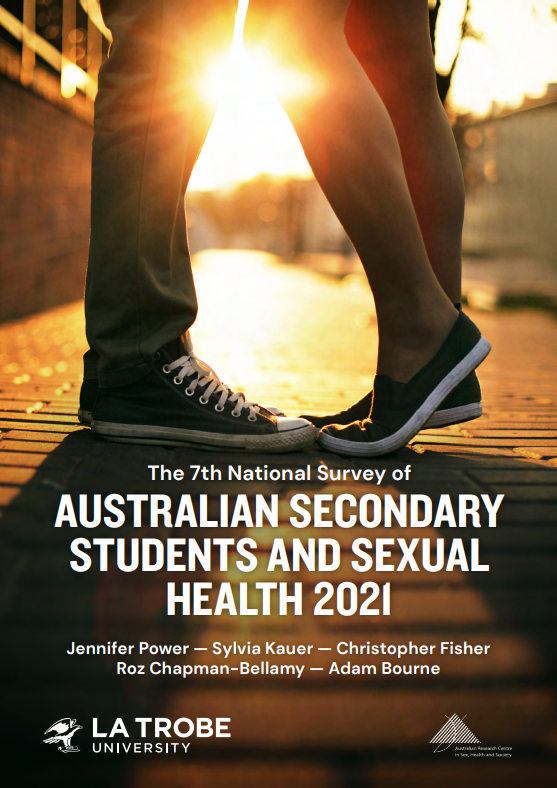
Our flagship national study exploring the sexual health and well-being of school-age young people in Australia, including experiences of sex, relationships, sexual health and school-based relationships and sexuality education (RSE).
The Australian Secondary Students and Sexual Health Survey 1992-2025: Impact report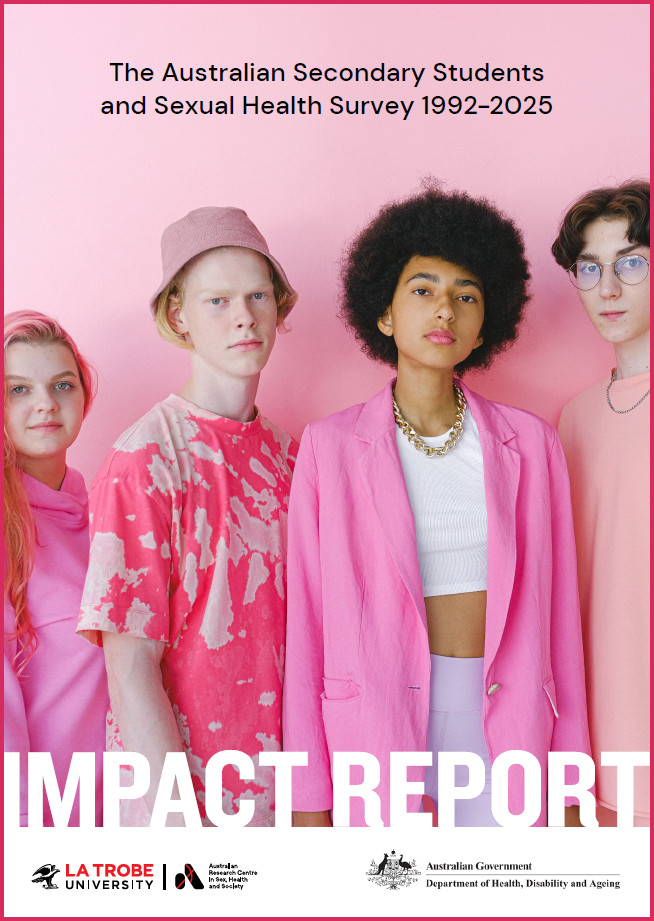
This report aims to describe the significance and reach of the SSASH survey, to demonstrate how it has contributed to better understanding of the sexual health needs of secondary-school aged young people.
Related publications
- Acceptance and use of condoms among school-aged young people in Australia
Despite availability of vaccines or medical prophylaxis for some sexually transmissible infections (STIs), promoting condom use remains an important public health strategy for the prevention of STIs. Recent research shows that regular condom use among young people in Australia has declined over the past decade, while the rate of common STIs has increased. - Sexting and sexual behaviour in Australian adolescents
Previous studies have tried to determine the relationship between sexting and risky behaviour to discover whether sexting fits into a deviance or normalcy discourse. This study investigated the relationship between sexting and sexual risk behaviours, contraception use and gender. - Digital sexual literacy: the potential for online spaces to support sexual literacy among young people
Health literacy is defined as the capacity, resources and insight to seek information, ask critical questions and be an advocate for one’s health. Sexual literacy is framed in similar terms, relating to the capacity to navigate emotionally and physically safe sexual encounters and to hold a critical and assertive stance on relationship dynamics, gender and consent. In this paper, we present findings from a qualitative study that explored how young people’s use of the internet develops sexual literacy.
Researchers
Jennifer Power, Sylvia Kauer, Christopher Fisher, Adam Bourne, Alexandra James
Funding
SSASH is funded by the Australian Government Department of Health and Aged Care.