
Circular economy
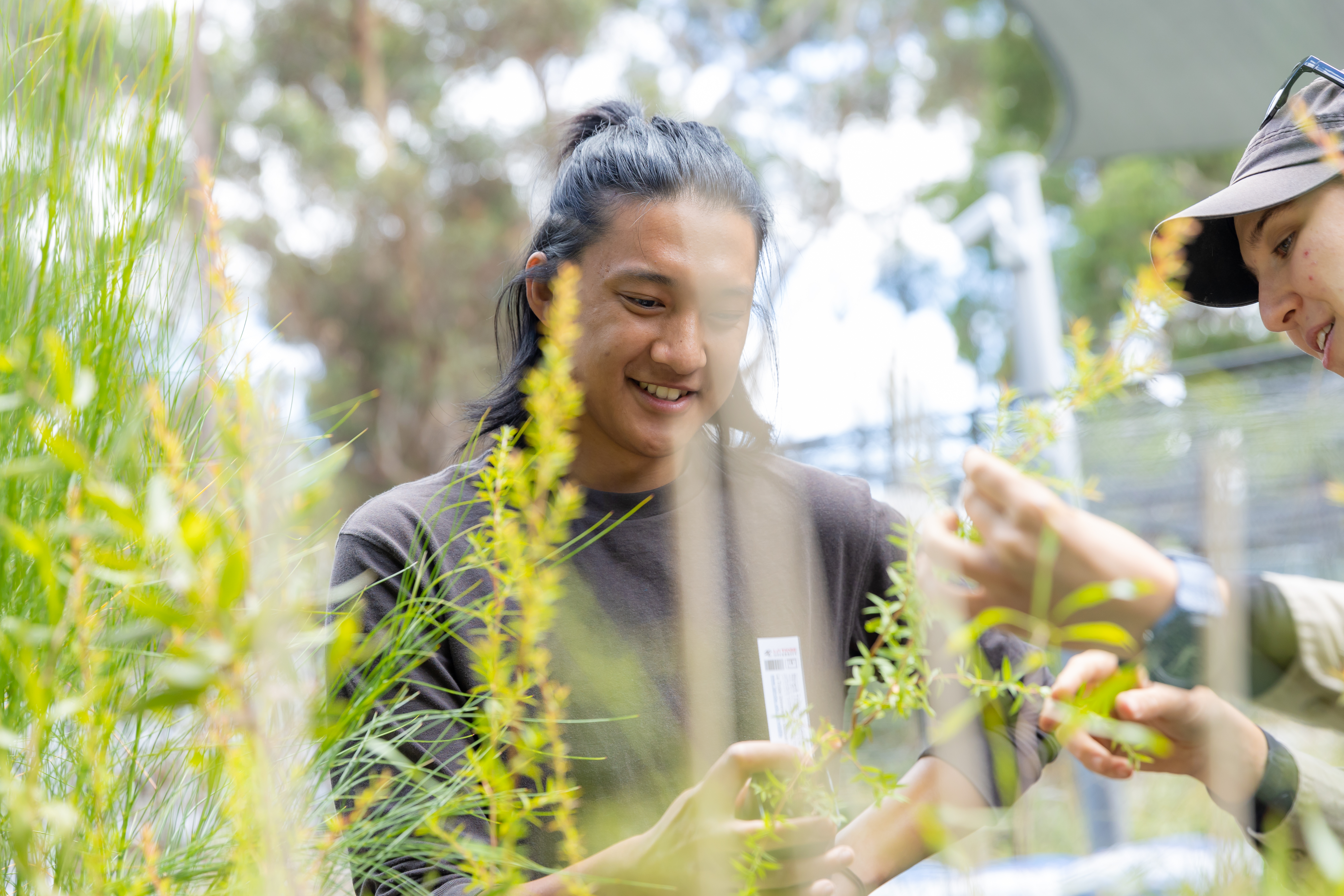
La Trobe is committed to a circular economy in how we run our campuses, teach our students and conduct our research. Our circular economy work spans every part of university life: how we eat, how we buy, how we build, how we teach and how we research.
How we practise circular economy at La Trobe
Our approach is built on the three core principles of a circular economy. Together they guide how we run our campuses, from the food we serve and the products we buy to the buildings we construct and the landscapes we care for.
The most effective way to manage waste is not to create it. We look for opportunities to remove unnecessary items and packaging before they ever reach campus, and to use less energy and water in everything we do.
Designing waste out of campus life
- Replacing single-use crockery and cutlery with reusable cups and plates at Agora. Request to use Reusable Revolution for an event.
- Free drinking water is available across La Trobe campuses via water fountains and refill stations for students, staff and visitors. View the Melbourne (Bundoora) campus water fountain map.
- 100% recycled paper- used for all basic office and student printing.
- Working with suppliers to reduce packaging and to take back products, such as printers and audiovisual equipment, at the end of their life.
- Running energy and water efficiency programs that cut the resources our buildings consume.
When something is needed, we aim to make it last, then capture as much value from it as possible when it reaches the end of its useful life. Keeping products and materials in circulation avoids the energy, water and raw materials needed to make replacements.
Making things last
Reuse keeps products performing their original function. Across our campuses, this means:
- Reusable cups and plates that are washed and returned to service, rather than thrown away after one meal.
- Repurposing and redeploying furniture and equipment between buildings and teams before buying new.
- Capturing rainwater in tanks across our campuses for reuse.
Turning waste into resources
We separate waste into dedicated streams so materials can be processed into something useful:
- Food and organic waste processed on site into a nutrient-rich soil enhancer (SoilFood System), using dehydrators at our Bundoora and Bendigo campuses.
- Paper, cardboard and commingled recycling collected across all campuses.
- Specialist streams for e-waste, batteries, fluorescent lighting and polystyrene.
- Chemical waste from our laboratories recovered for other uses wherever possible, through a specialist waste partner.
- Diversion of 60% operational waste from landfill for all campuses.
See how we’re tracking on waste and materials
Construction and campus development
Buildings are among the largest flows of materials on any campus. Our design standards and guidelines bring circular thinking into how we plan, build and refurbish.
- A minimum 80 % diversion rate for construction and demolition waste on our projects.
- Replacing a portion of Portland cement with lower-carbon alternative materials, guided by our design standards and Green Star ratings.
A circular economy goes further than doing less harm. It aims to regenerate nature by improving natural environments and building biodiversity, rather than focusing only on what we can take. That includes farming and land management practices that restore soils and increase biodiversity.
Returning nutrients to the soil
- The soil enhancer made from our food waste closes a natural loop. Nutrients that would have been lost to landfill go back into campus gardens and landscapes, improving soil health and reducing the need for synthetic fertilisers.
Protecting and restoring habitat
- Our campuses are home to remnant bushland, wetlands and native wildlife. At Bundoora, the Nangak Tamboree Wildlife Sanctuary protects habitat for native species and is a place where students, staff and the community take part in restoration. Native plantings across our campuses support pollinators and local ecosystems.
Caring for water
- Our Bundoora campus moat treats around 1,000 megalitres of stormwater a year, supporting habitat and irrigating sports fields.
- With Traditional Owners and partners, we use cultural burning and reintroduce native fish to restore waterways.
Research highlights
Teaching
We’re preparing students to lead the move to a circular economy. Circular thinking features in courses such as:
- Bachelor of Outdoor and Sustainability Education (Bendigo)
- Master of Logistics and Supply Chain Management
- Master of Professional Accounting
- Global Master of Business Administration
- Health and sustainability
How you can get involved
A circular campus is built by thousands of everyday decisions. Here's how you can be part of it.
- Choose to reuse: ask for reusable crockery in the Agora and return your dishes to the collection trolleys.
- Bring a bottle and cup: carry your own and use our refill stations.
- Make it your project: use the campus as a living laboratory for assignments, research or student club initiatives.
- Buy wisely: consider lifecycle impacts, durability, packaging and end-of-life options before purchasing.
- Bring it into your work: embed circular thinking into teaching, research, lab practice and team operations.
- Sort it right: use the green organics and yellow commingled bins correctly to keep contamination low.
- Recycle the hard stuff: drop old phones, batteries and small e-waste at our collection points/recycle hubs.
- Join in: get involved in sustainability events and volunteering.