
BAGGARROOK YURRONGI: CULTURALLY SAFE CONTINUITY OF CARE FOR WOMEN HAVING A FIRST NATIONS BABY
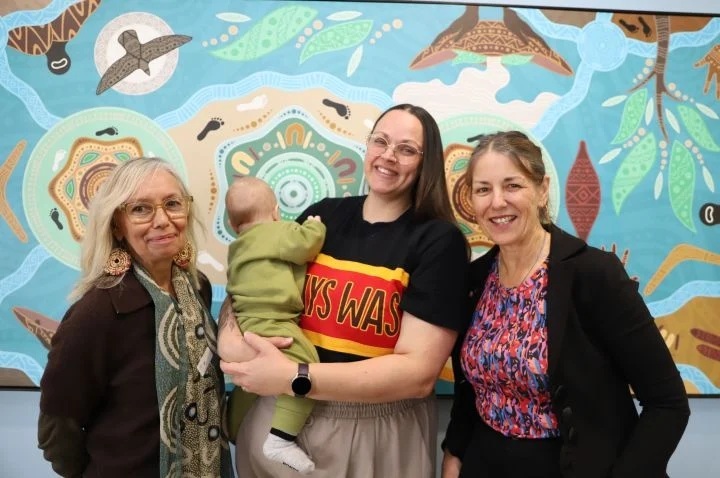
Beginning with a large NHMRC Partnership project in 2015, researchers from the Judith Lumley Centre worked with the Victorian Aboriginal Community Controlled Health Organisation and three tertiary maternity services to develop Baggarrook Yurrongi, meaning ‘Women’s Journey’ in Woiwurrung language. The model provides women having a First Nations baby with pregnancy, birth and postnatal care from a known midwife, alongside existing First Nations health services and supports.
The original study achieved a 21-fold increase in access to culturally tailored continuity of midwifery care, increasing from 34 to more than 700 First Nations families over three years, with 90% uptake among women offered the model. Women reported feeling emotionally and physically supported, safe and reassured in their relationship with their midwife.
Newly published findings provide strong evidence of improved health outcomes. Babies whose mothers received Baggarrook Yurrongi had 45% higher adjusted odds of being born healthy, were 33% less likely to have low birthweight, 36% less likely to be born preterm and 30% less likely to require neonatal special or intensive care. Women receiving the model were also 86% more likely to commence breastfeeding. Professor Della Forster was first author on the clinical outcomes paper, from the original overarching Baggarrook project led by Professor Helen McLachlan.
Building on these results, a new MRFF-funded project, also supported by philanthropic donations, is co-designing, implementing and evaluating locally tailored models across metropolitan and regional Victoria. Bendigo Health, Mildura Base Public Hospital, Bayside Health Peninsula and Eastern Health are active partners, with further sites in discussion. Led by Aunty Gina Bundle and Professor Della Forster, the long-term aim is for all women having a First Nations baby in Victoria to have access to locally led, culturally tailored caseload midwifery care.
Published August 2026.