
SMARRT Partnership
The SMARRT partnership is a collaborative alliance of Victorian rural health services and academic expertise.
SMARRT connects remote, rural and community health services across Victoria with academic expertise to support research translation, service innovation and stronger health outcomes for rural communities.
Together, these projects explore how rural health services can strengthen collaboration, better understand community needs, improve care coordination and respond to emerging opportunities in digital health.
As a partner-led learning partnership, SMARRT is designed to be flexible, collaborative and responsive to emerging opportunities. It provides a space for members to share knowledge, develop research, test new ideas and build a strong community of practice.
Projects
SMARRT’s project areas focus on practical, collaborative approaches to strengthening rural health care and improving outcomes for communities across Victoria.
- Multiprofessional practice – supporting broader scope and shared ways of working
- Consumer experience – understanding what people need from the rural health system
- Integrated care – exploring coordinated care for clinicians and consumers
- Digital health and AI – identifying opportunities for technology-enabled care
- Project in progress – integrated care literature review
Partners in Victoria, Australia
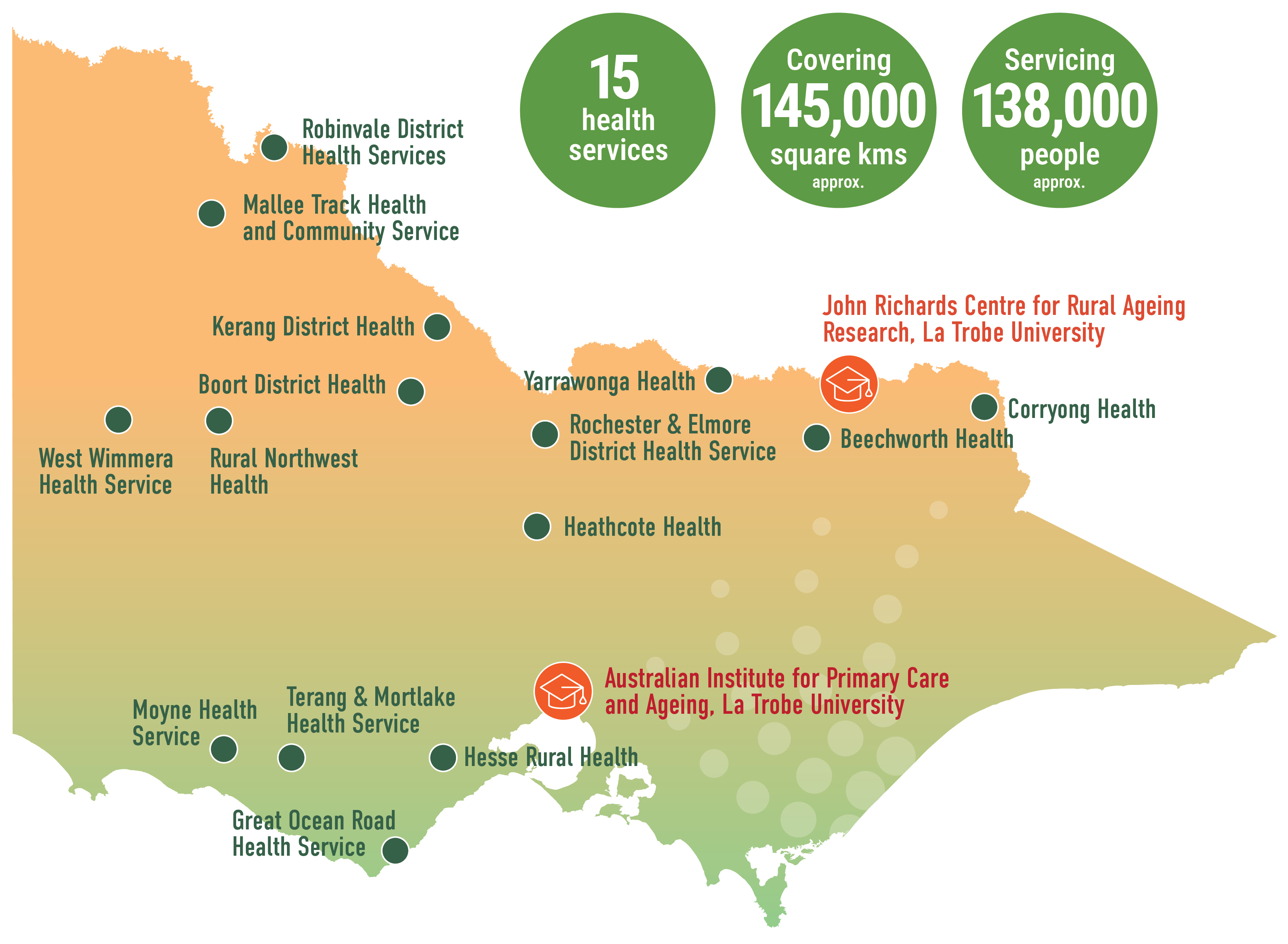
Members bring different priorities to the partnership, but share a common commitment to practical, collaborative research that improves rural health outcomes.
- Identify practical, sustainable solutions that improve health outcomes and access to services in rural Victoria.
- Translate evidence-based research into better service delivery and best practice.
- Invest in collaborative research that creates a strong foundation for future joint projects.
- Provide leadership in rural health policy and innovative models of care.
- Raise the profile of remote, rural and community health services by sharing success stories and examples of excellence.
- Promote effective collaborative research models and build momentum for future funding opportunities.
Alongside its research focus, SMARRT also creates wider benefits for members, including professional development, stronger networks, shared influence, support for change management and reputational value through successful collaboration.
- Beechworth Health
- Boort District Health
- Corryong Health
- Hesse Rural Health
- Great Ocean Road health service
- Kerang District Health
- Moyne Health Services
- Robinvale District Health Service
- Rochester & Elmore District Health Service
- Rural Northwest Health
- Terang & Mortlake Health Service
- Yarrawonga Health
SMARRT is guided by principles that support open, effective and purposeful collaboration.
- Value diverse perspectives and contributions.
- Communicate openly and address issues early.
- Stay focused on improving health outcomes for rural communities.
- Support active participation and shared decision-making.
- Make realistic commitments and come prepared to contribute.
- Build trust through transparency, respect and reliability.
SMARRT governance supports practical collaboration and shared accountability across partners.
- Health services nominate a representative empowered to contribute and make decisions.
- The academic team is represented at each meeting and shares updates with members who are unable to attend.
- Meetings are held four times a year alongside the Rural CEO Forum.
- Action lists are recorded for each meeting, with La Trobe University supporting documentation and administration.
- A Microsoft Teams channel is used for partnership communication.
- Pooled funding, project planning and annual review processes are managed collaboratively.
Previous SMART projects and outputs include a range of research, tools and service innovation resources including:
- Best Practice Digital Stories – Smart Rural Health Research Team
- Best Practice Digital Stories – Smart Rural Health Research Team
- Assessing the value of rural community health services, Australian Journal of Primary Health Farmer Jane, Davis Hilary, Blackberry Irene, de Cotta Tracy (2018)
- Verily Connect
- Royal Flying Doctor Service Telehealth Report
- Dementia training and volunteers