The complexity of challenges faced by these industries requires a multifaceted approach to problem-solving, and diversity plays a pivotal role in driving creativity and fostering an environment conducive to groundbreaking discoveries and innovation.
Understanding the Impact
Diversity in the workforce encompasses a broad spectrum of differences including race, gender, ethnicity, age and sexual orientation, as well as a diversity of characteristics and experiences – as outlined by the Victorian Government.
A variety of perspectives is critical in the scientific community, where complex problems demand a spectrum of viewpoints to develop innovative solutions.
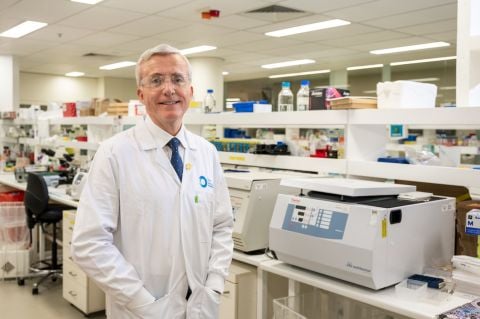
"Diversity ensures that we remain objective in addressing the complex problems that we face in our sector. It compels us to scrutinise our data more deeply and helps us avoid the pitfalls of conformity in our approaches,” says Associate Professor Erinna Lee, Theme Lead, Understanding & Preventing Disease, Laboratory Head, School of Agriculture, Biomedicine and Environment, La Trobe Institute for Molecular Science.
Assoc. Prof. Lee's lived experience has imbued her with a profound appreciation and understanding of the importance of diversity.
“As an ethnic Chinese born in Singapore, who moved to Australia as a teenager for university and subsequently to work, the value of both inherent and acquired diversity is embedded in my DNA.
“I have a heightened awareness of the need for diversity which drives my commitment to fostering a barrier-free environment to best allow diverse ideas to flourish so that we can collectively contribute to equitable healthcare solutions for all”.
Assoc. Prof. Lee maintains that teams composed of varied thinkers and individuals approach problem-solving with a broader perspective, especially towards healthcare challenges. This diverse approach is particularly relevant in environments where minorities form a significant part of the team, and leadership recognises and values different ways of thinking.
Fostering Inclusivity
According to the STEM Equity Monitor, a national data resource on women’s and girls’ participation in science, technology, engineering and mathematics (STEM), only 15 per cent of STEM-qualified jobs are held by women. Fostering inclusivity in STEM, particularly for women, is crucial given the stark underrepresentation highlighted by the STEM Equity Monitor.
Statistics like this underscore the importance of initiatives like the BioMelbourne Network's 'Connecting Women Lunch', held recently in Melbourne. It is an example of tangible efforts being made to foster inclusivity and empower women in the fields of biotechnology, medical technology, and pharmaceuticals. Such initiatives provide opportunities for networking, mentorship and professional development which are vital for overcoming barriers, celebrating achievements and promoting gender equality in STEM fields.
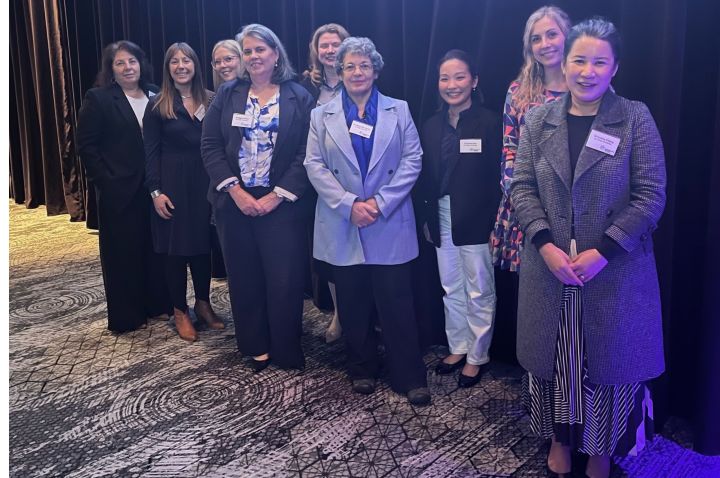
Assoc. Prof. Lee attended this year’s event, alongside fellow La Trobe guest and Research and Innovation Precinct Partner, Xenia Sango, CEO and Managing Director, VivaZome Therapeutics Pty Ltd.
“Diversity stands as a cornerstone for innovation and progress in the biotechnology, medical technology and pharmaceutical industries. As a female leader in the biotech industry and the CEO of VivaZome Therapeutics Pty Ltd, I am constantly inspired by the potential of our work to improve and transform the lives of those living with AMD, disabilities from stroke, Traumatic Brain Injury (TBI) and other neuroinflammatory diseases.
“In a field often dominated by men, I am proud to be leading a company that is making significant strides in extracellular vesicle research. But my role is not just about advancing science – it’s about improving lives. Diversity is not just a moral imperative; it’s a practical necessity in our industry. The complexity of healthcare challenges requires a multitude of perspectives to develop effective solutions.
"Diverse teams bring a variety of experiences and ideas that are essential for creativity and innovation,” says Ms Sango.
Path Forward
The biotechnology, medical technology, and pharmaceutical industries stand at the forefront of solving some of humanity's most pressing health challenges.
For example, La Trobe researchers collaborate with bioscience institutes, healthcare providers, industry partners, and government bodies to make groundbreaking discoveries in fundamental sciences. These contributions are pivotal in improving diagnostics, therapeutics, and clinical outcomes across a range of diseases. Research centres involved in this effort include the Biomedical and Environmental Sensor Technology Research, Centre for Alcohol Policy Research, Centre for Cardiovascular Biology and Disease, Centre for Materials and Surface Science, Centre for Technology Infusion, Cisco-La Trobe Centre for AI and Internet of Things, and the Research Centre for Extracellular Vesicles.
Progress in these fields requires a concerted effort to build and nurture diverse teams that reflect the multifaceted nature of the global population they serve.
Ultimately, these industries are uniquely positioned to harness the power of diversity. By fostering an inclusive environment, they can ensure they remain at the cutting edge of scientific discovery and innovation, leading to better healthcare outcomes for everyone.
Dr Megan Fisher, Pro Vice-Chancellor (Industry Engagement), proudly hosted a table at BioMelbourne Network’s 2024 'Connecting Women Lunch'. Pictured, from left: Xenia Sango, CEO, VivaZome Therapeutics Pty Ltd; Dr Marthe D'Ombrain, Head of Global Research Innovation, CSL; Dr Sarah Stewart, ARC DECRA Fellow, La Trobe University; Dr Megan Fisher; Olga Hogan, Senior Director, Innovation Platforms, Breakthrough Victoria; Dr Jacqueline Orian, Adjunct Senior Research Fellow, Biochemistry, La Trobe University; Dr Erinna Lee, Theme Lead, Understanding & Preventing Disease, La Trobe University; Dr Amy Baxter, Tracey Banivanua Mar Research Fellow, La Trobe University; Dr Lesley Cheng, Senior Research Fellow, Biochemistry.