
Core dna
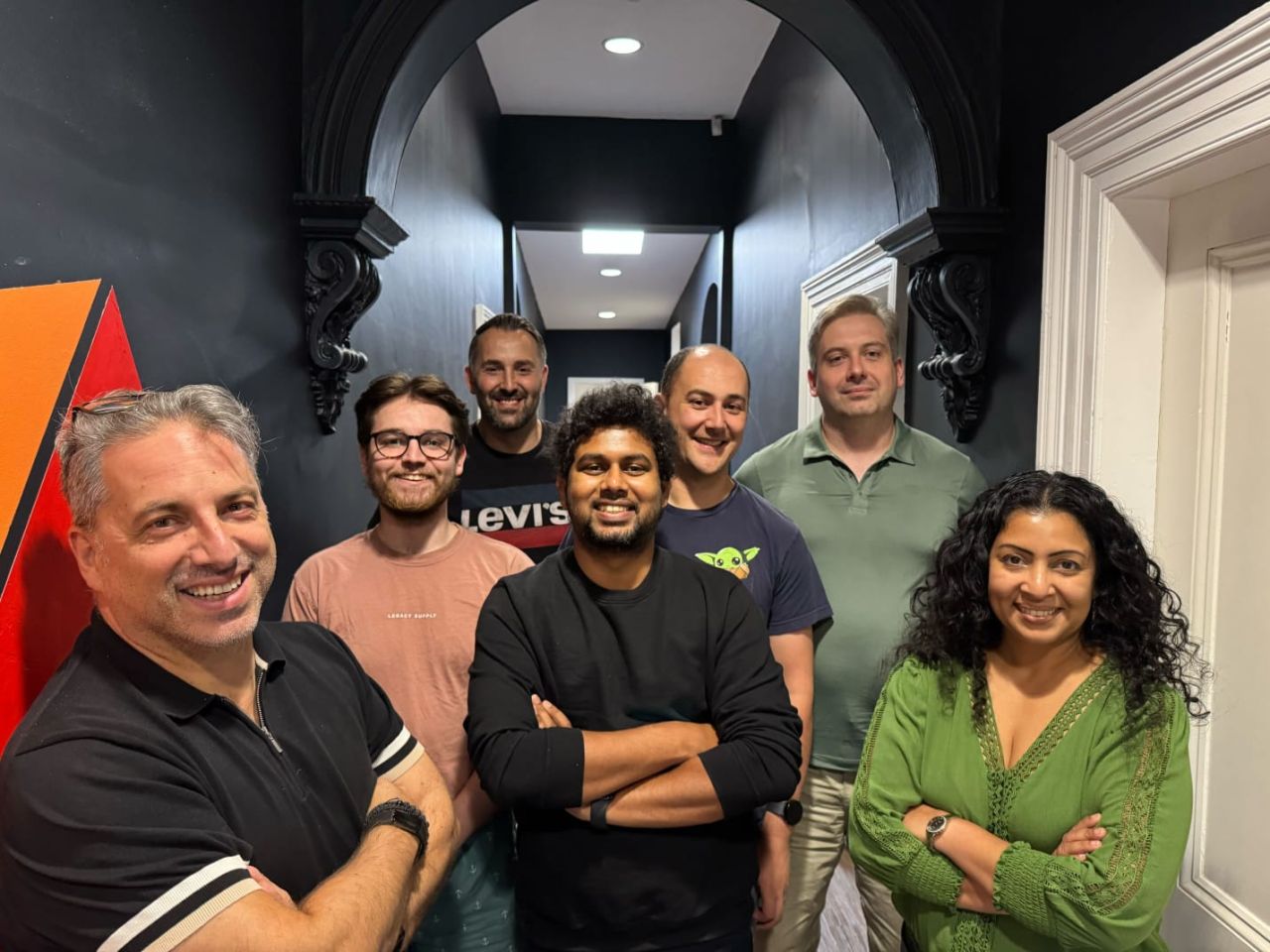
Core dna’s relationship with La Trobe began with an alumnus wanting to give back. It has since grown into a partnership spanning student experience, industry research and practical product development.
Partnership at a glance
- In 1988, Sam Saltis graduated from La Trobe and secured a graduate position at ANZ through a recruitment drive on campus.
- Decades later, he returned to contribute his industry experience, becoming involved in course advisory work.
- Dr Shalinka Jayatilleke then worked with Core dna through an industry engagement that included three months as an AI consultant.
- That initial work led Core dna to sponsor an industry PhD exploring a more scalable approach to hyper-personalisation.
- The partnership has expanded to include student internships, research with commercial applications and plans for a scalable internship model.
Case Study
In 1988, Sam Saltis left La Trobe University with a major in computer science and a graduate position at ANZ, secured through a recruitment drive on campus. Almost four decades later, he returned with an opportunity of his own.
Now CEO of technology company Core dna, Saltis had reached a point in his career where he wanted to reconnect with the university that helped him enter the workforce.
“La Trobe provided many career opportunities, and I felt compelled to offer my services in return,” he says.
What began with Saltis contributing to course advisory work in 2023 has developed into a broader partnership. It now connects La Trobe students and researchers with live commercial challenges at Core dna, whose digital platform brings content, commerce and business operations together.
“Our relationship has deepened as the university advances its AI initiatives, which align with my own work,” Saltis says. “I am eager to help accelerate AI adoption at La Trobe and to provide students with opportunities in AI, data science and IT.”
A commercial question becomes a research project
Dr Shalinka Jayatilleke, La Trobe Senior Lecturer in AI and Analytics and Course Coordinator for the Bachelor of Business Analytics, was one of the first people from the University to work closely within Core dna.
Her industry engagement included around three months as an AI consultant, working alongside the company’s commercial developers and identifying opportunities to improve productivity.
“Shalinka was the first person to engage with the business, bringing a strong blend of academia and innovation to a team of commercial developers,” Saltis says.
That engagement helped both sides understand what the other could contribute. Jayatilleke gained direct insight into Core dna’s commercial environment, while the company gained a different way of examining complex product questions.
The experience led Core dna to sponsor an industry PhD focused on hyper-personalisation: tailoring a digital experience to the needs and interests of each user.
“Think of it as you and I going into the same website and looking at it from two different angles,” Jayatilleke explains. “Could that experience be personalised to you and to me differently?”
Personalisation has existed for years, but the configuration and maintenance it requires have often put it beyond the reach of smaller organisations. The research is exploring how AI can make the approach more scalable while meeting privacy and data-hosting requirements.
It has already generated practical product development and academic research, including a paper on scalable personalised recommendations accepted for RecSys 2026, the ACM Conference on Recommender Systems.
Preparing students for work that is changing quickly
The partnership also brings La Trobe students into Core dna to work on genuine business problems.
Rather than handing them tightly prescribed tasks, Core dna gives students deliberately open briefs. They must investigate what the internal customer needs, communicate with colleagues and decide how best to approach the problem. AI tools are part of the work, but so are initiative, teamwork and leadership.
For Core dna, working with students and researchers has also supported a broader change in direction. The company has reorganised its workflows around an AI-first development approach, using AI tools from early concept development through to testing.
Developers can produce prototypes more quickly, put them in front of customers and gain approval before building a detailed solution. The tools can also help teams consider security, scale and other requirements earlier in development.
“When AI first emerged, we were unsure which direction to take and how it would affect our product,” Saltis says. “Today we are confident that AI aligns our offering with customer needs, allowing us to respond faster as the market evolves.”
The learning travels back into La Trobe’s courses. Jayatilleke says employers increasingly expect graduates to arrive with “a running start with AI systems”. In response, she is embedding practical AI experience throughout the Bachelor of Business Analytics.
Core dna, meanwhile, has become more open to employing recent graduates. Saltis says they bring research ability, teamwork and fresh thinking, even when their commercial experience is still developing.
He now hopes to help create a scalable internship model that could connect students with hundreds of smaller businesses unable to run substantial graduate programs alone.
For Saltis, the relationship has brought his La Trobe experience full circle. The opportunity he received as a graduate has become an opportunity for today’s students, while Core dna gains direct access to research, skills and perspectives that strengthen its work.
“Students gain real industry exposure and experience solving actual problems,” he says, “while businesses see the capabilities and impact these students can bring.”