
Telecare
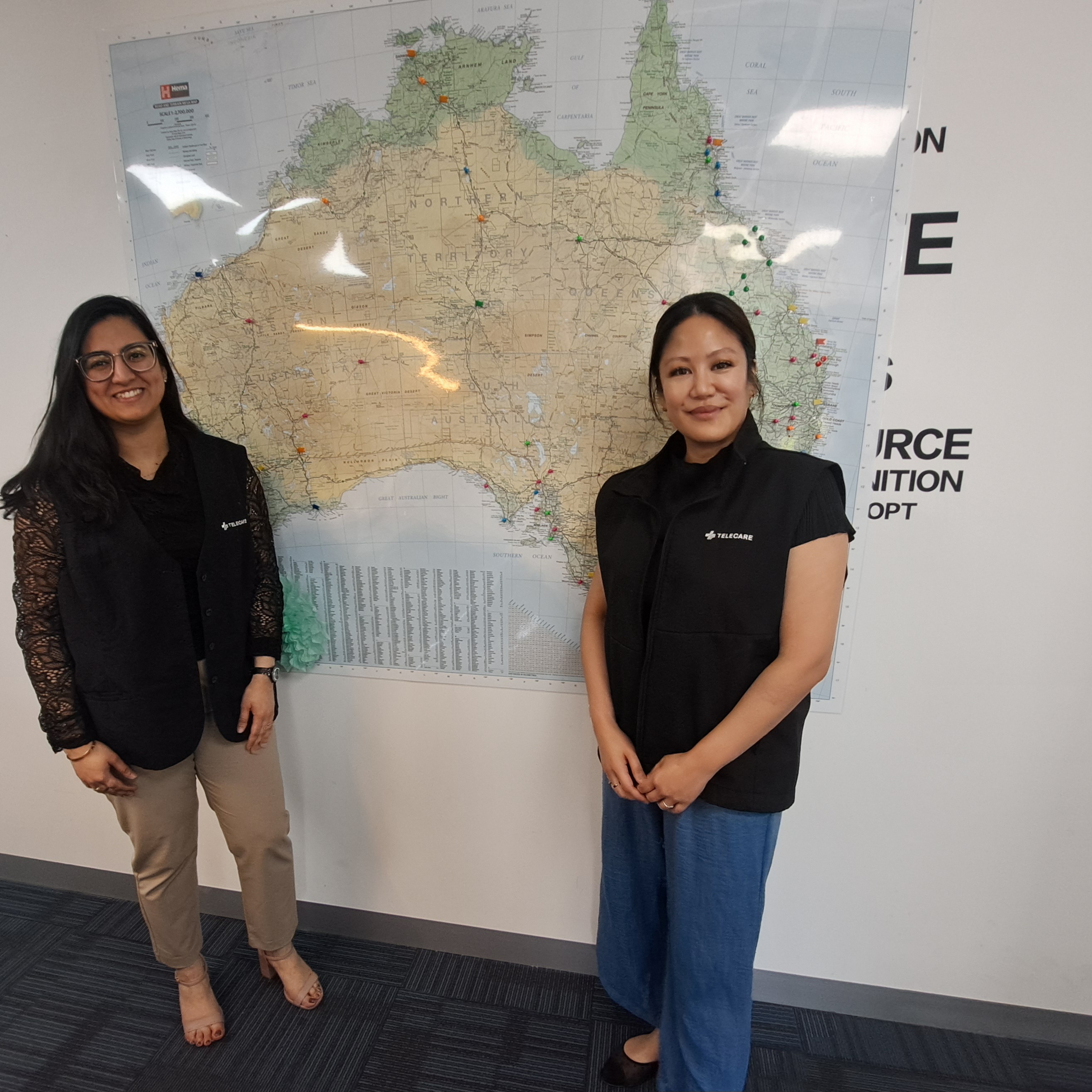
Telecare’s partnership with La Trobe brings fresh thinking into virtual healthcare and, for Master of Digital Health student Min Wang, turned a 100-hour placement into a casual role
Partnership at a glance
- Several years ago, Telecare began hosting La Trobe students, giving them practical experience while supporting its goal of improving access to healthcare.
- As the partnership grew, students moved from observing the workplace to contributing to projects addressing real healthcare and business needs.
- By 2026, Telecare had hosted more than 10 students in areas including data analysis, virtual healthcare delivery, patient safety and quality, service improvement, marketing and business development.
- In 2026, Master of Digital Health student Min Wang completed a 100-hour placement, helping coordinate virtual appointments and analyse service data.
- She created a trial dashboard showing patient numbers, waiting times, missed appointments and patients waiting to be booked, and suggested improvements to administrative processes.
- After the placement, Telecare offered her a casual role, allowing her to continue building experience in digital health.
- Telecare plans to grow the partnership by welcoming students from more disciplines and involving them in projects that improve healthcare access and outcomes.
Case Study
Min Wang arrived at Telecare with six years of nursing experience and a clear sense that healthcare was changing. What she did not yet have was experience applying her clinical background inside an Australian digital health organisation.
Four weeks and 100 placement hours later, she had helped coordinate virtual care, developed a demonstration data dashboard, suggested practical workflow improvements and been offered a casual role with Telecare.
Her experience captures the value of a partnership that has brought La Trobe University students into Telecare for several years and counting. Founded in 2019, Telecare delivers primary and specialist care virtually, helping patients access clinicians regardless of where they live. It now connects patients with more than 300 specialists across 30-plus medical specialties.
For Telecare Chief Operating Officer Lina Xu, hosting students is part of building the workforce needed to make healthcare more accessible, particularly in regional, rural and underserviced communities.
“Students bring fresh perspectives, curiosity and new ideas that can help challenge existing assumptions and improve the way we work,” Xu says.
Telecare has now hosted more than 10 La Trobe students across data analytics, virtual healthcare operations, business development and marketing, clinical governance and digital transformation. The placements have developed from observational experiences into project-based roles connected to real organisational priorities.
Turning study into a practical contribution
Wang undertook her placement in 2026 while completing a Master of Digital Health at La Trobe. Working as a Telehealth Coordinator and Data Analyst, she supported appointment coordination, patient administration and the day-to-day delivery of telehealth services.
“I was attracted to the placement because I was interested in virtual healthcare and wanted to understand the operational side of digital health,” Wang says. “Coming from a nursing background, I had experience with traditional clinical care, but I wanted to understand how healthcare is coordinated when care is delivered virtually.”
Her main project was a demonstration dashboard built in Microsoft Power BI, software that turns data into visual reports. Using Telecare’s booking and workflow data, Wang created measures showing patient and case volumes, waiting times across hospitals and specialties, missed appointments and patients waiting to be booked.
While the dashboard was not implemented during the placement, it showed how operational data could be organised and visualised to support future service analysis. Wang also identified possible workflow improvements, including clearer remarks fields for rescheduling and cancellations and more specific SMS templates for different patient circumstances.
The work allowed her to apply knowledge from La Trobe subjects including Big Data and Health Analytics and Trends in Digital Health. It also exposed her to the practical connections between data, technology, people and healthcare processes.
“As someone who had previously worked in healthcare outside Australia, one of the most valuable aspects was gaining local experience and seeing how virtual healthcare operates within the Australian context,” she says.
Working with Telecare also strengthened Wang’s interest in rural and regional digital health. She saw how virtual care can connect patients with services when geography, workforce shortages and long waiting times create barriers.
The placement ultimately became a pathway into employment.
“Being offered a casual position with Telecare after completing my placement was especially meaningful,” Wang says. “It gave me the opportunity to continue building my skills and confirmed that my transition from a clinical nursing background into digital health is a realistic and valuable career pathway.”
Students become part of the team
Telecare aims to make students part of the organisation rather than placing them on the sidelines. Students join team discussions and work on service improvement, healthcare innovation, patient engagement, research, evaluation and business development projects matched to their interests and strengths.
“Students become valued members of the team from day one,” says Telecare Operations Manager Kathleen Pulanco. “Clear goals, supportive mentoring and open communication give them the confidence to contribute to meaningful work.”
Xu adds that students often become more involved than they initially expected. “One of the biggest surprises has been the level of ownership students take over their projects,” she says. “Many arrive expecting to observe, but quickly become active contributors who are genuinely invested in achieving outcomes.”
Their questions can prompt Telecare’s experienced staff to reconsider familiar processes. Their research, analysis and recommendations have contributed to project planning, service design and conversations about improving patient and clinician experiences. For Telecare, that fresh thinking supports a workplace culture built around learning and adaptation.
The organisation now wants to welcome students from a broader range of disciplines and continue connecting placements with projects that improve healthcare access and outcomes.
“To any organisation considering hosting La Trobe students, I would simply say: do it,” Xu says. “Students bring fresh thinking, enthusiasm and capabilities that can create real value for your organisation.”