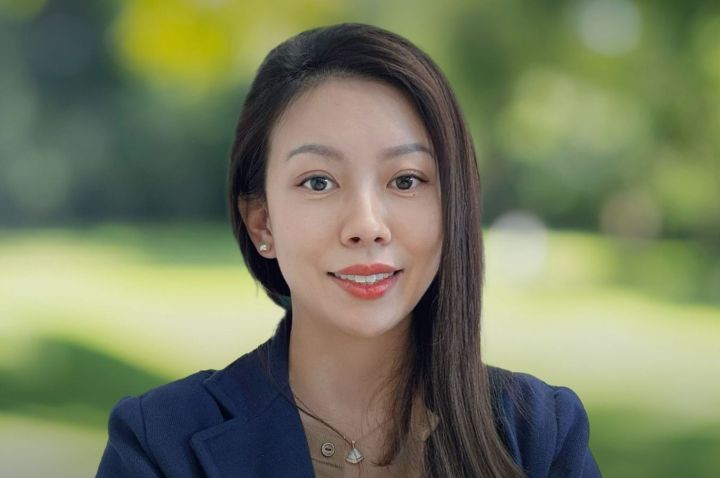
According to La Trobe University Associate Professor Sophia Duan, the biggest challenge is understanding the people expected to use it.
Her research focuses on what happens when new technology moves into everyday workplaces, whether people have the skills and confidence to use it, whether it fits the way they work, and whether organisations are ready to change.
"AI has enormous potential, but technology on its own doesn't create impact," Associate Professor Duan said.
"The organisations seeing the greatest benefits are the ones that invest just as much in people, processes and capability as they do in the technology itself."
Working with industry, government and community partners, Associate Professor Duan investigates how organisations across sectors including agriculture, healthcare, retail and mobility can successfully integrate new technologies into their operations. Rather than treating implementation as a technical exercise, her research examines the organisational, cultural and behavioural factors that determine whether technology is adopted and delivers value.
"Too often we assume that if an AI system performs well technically, people will naturally adopt it," she said.
"Our research shows that's rarely the case. Success depends on whether the technology fits the realities of people's work, whether they trust it, and whether organisations are prepared to change the way they operate."
That human-centred approach has become increasingly important as businesses invest in new technologies while facing pressure to demonstrate value.
Associate Professor Duan's research draws on close collaboration with organisations to understand the barriers they face and co-design practical solutions. Her current partnerships span large organisations such as global biotechnology company CSL, government agencies, advocacy groups and Indigenous communities.
"Every organisation is different," she said.
"There's no universal blueprint for AI adoption. The best solutions are developed alongside the people who understand the challenges they're trying to solve."
Her research has also contributed to policy beyond individual organisations. Associate Professor Duan provided evidence-based research for Australia's AI policy white papers in 2023, contributing to national discussions around regulation, ethics and adoption.
In work with the Australian Communications Consumer Action Network, her research has examined the barriers small businesses face when adopting digital tools. The findings have fed into advocacy networks and government discussions about digital capability and competitiveness.
Responsible technology adoption is another major focus of her research. Associate Professor Duan is particularly interested in the challenges facing regional communities and small businesses, which may have fewer resources to support digital transformation.
Her work in agriculture examines how new technologies can be adopted alongside farmers' existing knowledge, systems and local conditions, rather than simply introduced as standalone tools.
"I'm interested in making sure AI creates opportunities rather than widening existing gaps," she said.
"Regional communities, small businesses and underserved groups all have enormous potential to benefit from AI, but only if we build the capability and confidence to use it effectively."
This focus also extends to Indigenous communities, where Associate Professor Duan is working to support digital literacy and meaningful technology use.
"I can see the gap between the technology and the actual use of the technology by different people. If we can close that gap, then we can really make better use of AI. This is what motivates me the most."
Rather than evaluating AI solely through technical measures such as accuracy or speed, Associate Professor Duan's research considers whether organisations actually adopt the technology, improve decision-making and create lasting value.
"For me, success isn't simply that an AI model works," she said.
"It's whether people continue to use it because it helps them make better decisions, solve real problems and improve the way they work."
For Associate Professor Duan, the measure of impact is ultimately whether research changes practice. Her work has been recognised nationally, including being named one of Australia's Top 25 Analytics Leaders in 2022 and being a finalist for AI Academic/Researcher of the Year at the Australian AI Awards in both 2025 and 2026.
Looking ahead, Associate Professor Duan believes Australia's opportunity lies in combining technological innovation with a deeper understanding of human behaviour and organisational change.
"The future of AI won't be determined only by better algorithms," she said.
"It will depend on how well we bring people along with the technology. That's where I think research can make the biggest difference."
Connect with Associate Professor Duan
La Trobe profile: Associate Professor Sophia Duan
Email: Sophia.Duan@latrobe.edu.au
To stay up to date on future La Trobe Industry articles and news, subscribe to the Industry newsletter or Follow ‘La Trobe Industry’ on LinkedIn and Eventbrite.