According to La Trobe University Professor Daswin De Silva, General Chair IRAI (2026) & Co-Director of the La Trobe AI Institute, responsible AI means building systems people can trust as AI capabilities evolve.
In early Spring, the same week that OpenAI released GPT-6 Astra, AI researchers and AI industry leaders from 43 countries were in La Trobe’s city campus on Collins St working on the harder questions AI now poses. Can we trust models we cannot fully explain? Can AI run as reliably on a sensor, a phone or a robot as it does in the cloud? And how do we audit systems and agents that changes with every AI model release?
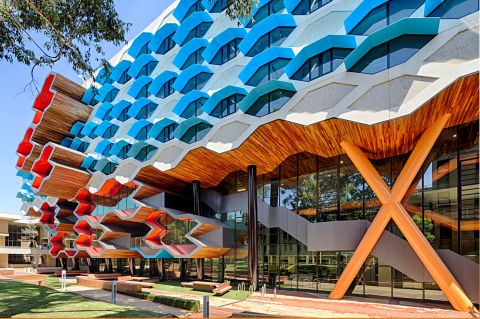
The IEEE International Conference on Responsible AI (IRAI 2026) was held on 2-5 September 2026 at La Trobe University's City Campus in Melbourne, with NEXTDC, Australia’s largest listed data centre operator, as key industry partner. The conference opened with the Industry AI Workshop Day, followed by three days of technical program and a conference dinner at the National Gallery of Victoria.
IRAI’s conference metrics tell the story of scale. Keynotes from OpenAI, NEXTDC, Arm, panel discussions focusing on industry, education and community, and five hands-on workshops, were followed by a technical program that drew 390 submissions and 170 presented papers by authors from 43 countries and 122 organisations, ranging from Cambridge, Columbia and Duke Universities to Apple, Meta, IBM, Hitachi and ABB.
The distinguished keynote framed AI as three moving parts that leaders must manage together, compute, capability, people. Craig Scroggie (CEO & MD, NEXTDC, Chair of Data Centres Australia) spoke for the physical layer, the AI factories where models are trained and deployed. Demand is real and contracted, and for any business, this means compute, power and location are now strategic choices and not just IT spend line items.
Satya Tammareddy, Head of GTM ANZ at OpenAI, covered the frontier AI capabilities where models write and debug production code and carry out multistep tasks across software with little supervision. In mathematics, AI has moved past competition problems to resolving long-standing open research problems, with proofs checked in formal languages. In cybersecurity, models can now find previously unknown software vulnerabilities on their own, including flaws that escaped human review for decades. For industry, these developments indicate that AI can now undertake skilled work. The principal challenge has shifted from adoption to deciding which tasks are suitable to delegate, and how the resulting AI output should be verified.
Professor Theo Farrell, Vice-Chancellor of La Trobe University, turned to the people who must work alongside AI. As capability rises, the scarce resource is no longer access to AI but the competence and judgement to use it well. That judgement includes framing the right problem, checking output and anticipating where AI is likely to make mistakes. These are built through daily practice rather than a single course. La Trobe is acting on this at scale by rolling out 40,000 ChatGPT Edu licences to students and staff by 2027, alongside AI in the curriculum and Australia’s first AI MBA. For industry, this makes La Trobe a source of talent with skills that may not yet appear in any job description. La Trobe graduates join the workforce fluent in AI-enabled ways of working, from building agents to AI-assisted coding, that many workplaces are only beginning to discover.
In the second keynote, Arm’s Robert Iannello and Matt Cossins set out the shift from cloud compute to distributed, on-device AI. Arm Limited is a semiconductor IP licensing company that designs the processor architecture for much of the technology industry, including NVIDIA, AWS, Microsoft, Google, Meta and Samsung. Its energy-efficient designs sit inside 99% of Android and Apple smartphones, across more than 350 billion chips shipped. The practical enabler is ExecuTorch, which extends PyTorch to edge and embedded devices. Its recent release gives AI builders one workflow to export, optimise and deploy the same model from microcontrollers to phones.
The final keynote by Prof. Saman Halgamuge (FIEEE, University of Melbourne) focused on the gaps and challenges of Physical AI by tracing the path from LLMs through VLMs to Language-Action and Vision-Language-Action models. He argued the assumption that VLAs can fully represent the physical world through tokenised vision, language and sensor input. For industry, it is timely now to pick one workload that could run on-device, such as visual inspection, voice capture or sensor anomaly detection, and scope a pilot.
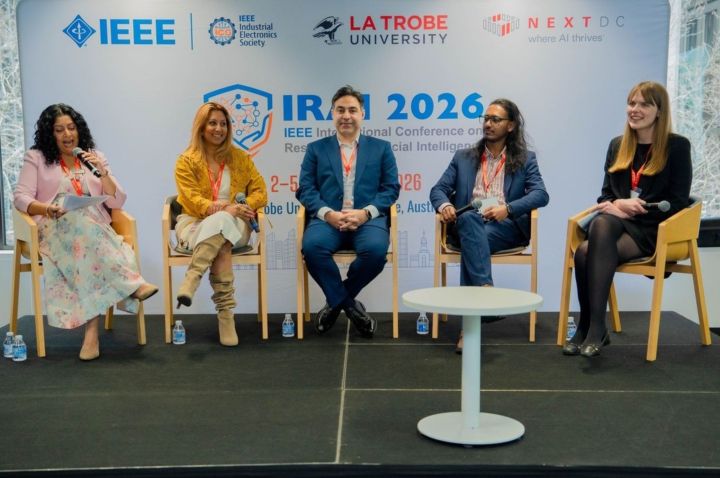
The AI Founders Panel was aptly focused on the topic of ‘what survives the next model release’. Moderated by Dr Harsha Moraliyage (Senior Lecturer AI & Analytics, La Trobe University), the panellists, Sam Saltis (CEO, Core dna), Dr Jing Mu (Co-Founder, Virtetic), Dr Ravini Savindya (CEO/Co-Founder, QuantCare), Dr Lukas Wesemann (CEO/Co-Founder, Base Compute), Kanchana Wickremasinghe (VP & Field CTO, WSO2), discussed how defensibility really comes from proprietary data, depth in a specific workflow, distribution and customer relationships, and regulatory access and trust. They also covered the unglamorous parts that never make the pitch deck, including evaluation, reliability, enterprise procurement, and unit economics that only work at scale. Industry must start to treat any single model as a component that will change, not a foundation that will stay fixed. Frontier labs will update, reprice and retire models at short notice, which means model behaviour can shift between versions. Organisations should design for substitution by maintaining independent evaluation sets, avoiding reliance on model specific behaviour, and revalidating critical workflows whenever the underlying model changes.
The Human Skills for an AI World panel stepped past the "which jobs will AI replace" hype to ask which human capabilities become more valuable as AI improves. Moderated by Dr Shalinka Jayatilleke (Senior Lecturer AI & Analytics, La Trobe University), the panellists, Karine O'Donnell (Founder & Director, Projecting With People), Lily Ballot Jones (AI Law Researcher, KomplyAI), Dr Rajith Vidanaarachchi (Research Fellow, University of Melbourne), Dr Behnam Forouhandeh (Director of Academic Services Australia, Risepoint) discussed, how broad shifts in the knowledge economy flow down to individual roles, activities and tasks. They considered how critical human skills can be identified, taught and developed across education, professional and industry settings. Recent workplace learning reports describe the most valuable professionals as those who combine AI fluency with communication, systems thinking and adaptability. For industry, this suggests that AI fluency and human judgement should be developed together, rather than treated as separate training.
These highlights only scratch the surface of IRAI 2026. The conference showed what responsible can look like when frontier labs, industry, community organisations and researchers from 43 countries unpack the complex challenges of AI together. The next edition in 2027 will go further.
If you would like to join as an author, reviewer, track chair, speaker, workshop lead, sponsor or attendee, please connect with Professor Daswin De Silva.
Connect with Professor Daswin De Silva
La Trobe profile: Professor Daswin De Silva
Email: d.desilva@latrobe.edu.au
To find out more about La Trobe AI Institute news, announcements or initiatives, visit our website La Trobe AI Institute or email aiinstitute@latrobe.edu.au.