New research from Dr Mohammad Sadegh Taskhiri is exploring how businesses can reduce plastic waste while making alternative packaging more economically viable.
“Australia generated about 3.2 million tonnes of plastic waste in 2020-21. Only 13% was recycled, while 81% ended up in landfill,” he says. “Businesses considering alternative materials need to understand the costs involved in making the transition and what infrastructure is required.”
The study compared the economics of producing conventional and more sustainable packaging materials in Australia.
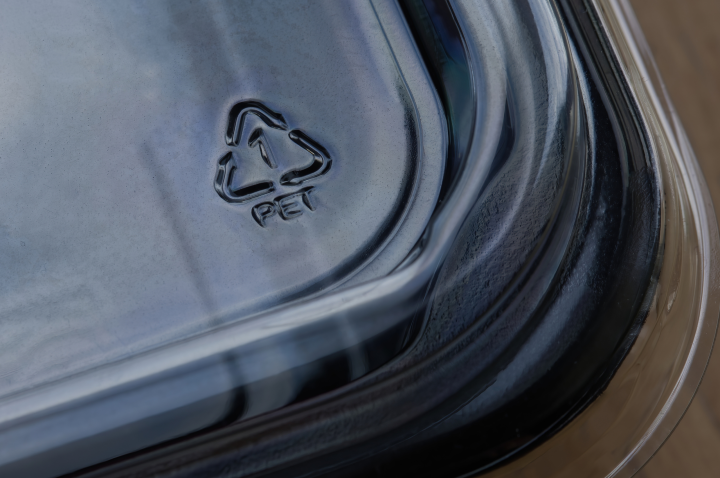
It found that recycled PET, a plastic commonly used in drink bottles and food packaging, can be cost-competitive with newly produced PET, depending on how it is collected.
In one scenario, recycled PET collected through container return schemes was estimated to cost about $0.80 per kilogram to produce, compared with $1 per kilogram for new PET and $2.82 per kilogram for PLA, a plastic made from renewable resources.
“Our findings help identify when different materials could be economically competitive and what factors influence their cost,” Dr Taskhiri explains. “This can help businesses and policymakers make more informed decisions about packaging and recycling.”
Dr Taskhiri will now work with industry to test the model using real-world data and to examine where it needs refinement.
“A priority is to connect these economic comparisons more closely with environmental outcomes, so that production costs are considered alongside resource use and waste reduction.”