Archaeologist and PhD candidate Nicholas Sutton is uncovering new insights into how early pastoralist societies adapted to environmental change.
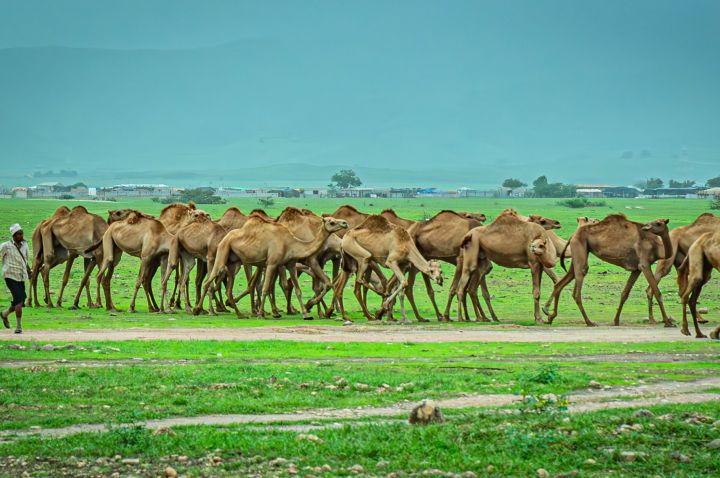
“Pastoralism is a means of food production focused on the management of herds of grazing animals,” he explains. “It is widely practiced in arid and semi-arid environments where food resources are less reliable.”
Nick is currently working with an international team of archaeologists on a site called Laheem in Southern Oman, which contains exceptionally well-preserved organic remains from pastoralist societies dating from more than 6000 to around 3000 years ago.
The team includes six other researchers from La Trobe’s Department of Archaeology and History, and the work is part of an Australian Research Council Discovery Project co-directed by Nick’s principal PhD supervisor, Senior Lecturer Matthew Meredith-Williams.
“Due to the organic nature of the deposits, which have been sampled by our team, there is high potential for the preservation of micro-particles from plants,” he says. “This would allow us to identify local vegetation and what the climate was like at the time of site occupation.”
The discovery is particularly significant because organic materials rarely survive in the archaeological record of Arabia’s arid regions, often leaving researchers with only “part of the puzzle”.
Nick says the research will help archaeologists understand how early pastoralist communities responded to environmental variability. It also has the potential to offer insights into how societies today can adapt to the future challenges of climate change.
The next stage of his research will involve analysing plant micro-particles in the lab, alongside DNA studies with collaborating institutions in Australia and Germany.