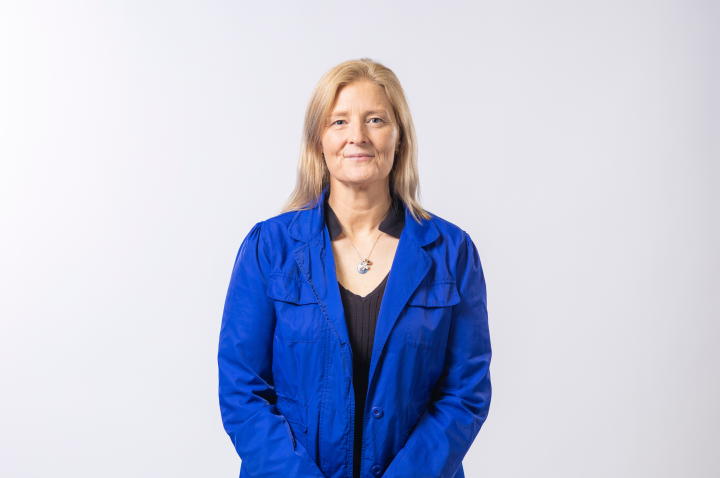
Dr Ruth Gamble is exploring the history of energy across one of the world’s most populous and climate-critical regions, the Asia-Australia Monsoon Zone.
“The Asia-Australia Monsoon Zone, stretching from northern Australia to the Himalaya, is home to about half the world’s population and is now at the centre of global energy demand and emissions,” Dr Gamble says.
“The Asia-Pacific produced 52.2% of global energy-related CO2 emissions in 2023, and 65% of the growth in global energy demand in 2024. How this region shifts to renewables will largely decide the world's climate future, including here in Australia.”
Supported by an Australian Research Council Future Fellowship, Dr Gamble’s new project, Monsoon Metabolisms, will investigate how energy systems across the region have developed over the past century.
The project will examine energy as part of a much larger system, exploring its connections with climate, food, labour, land and industry, as well as the experiences of communities affected by energy transitions.
It builds on Dr Gamble’s research into environmental change in the Himalaya and Tibet, including her latest co-authored book, Rivers of the Asian Highlands, which examines the history and future of the region’s major river systems.
“My work on Himalayan rivers showed that today's dam building and water disputes follow long historical patterns, and that community knowledge offers practical alternatives,” she says.
“Monsoon Metabolisms applies this approach to energy across the whole region. It will be the first history of the zone's twentieth-century energy transitions, and it treats energy change as a shift in whole systems including climate, food, labour, land and industry.”
Over the next four years, Dr Gamble will conduct archival and field research across the Monsoon Zone, drawing on local-language sources and community knowledge.
The research will produce a book, journal articles, interactive maps, videos and policy resources designed to make this history accessible to communities, researchers and decision-makers.
“Understanding how previous energy transitions unfolded, including who benefited and who was left behind, can help us think differently about the transition that is happening now.”