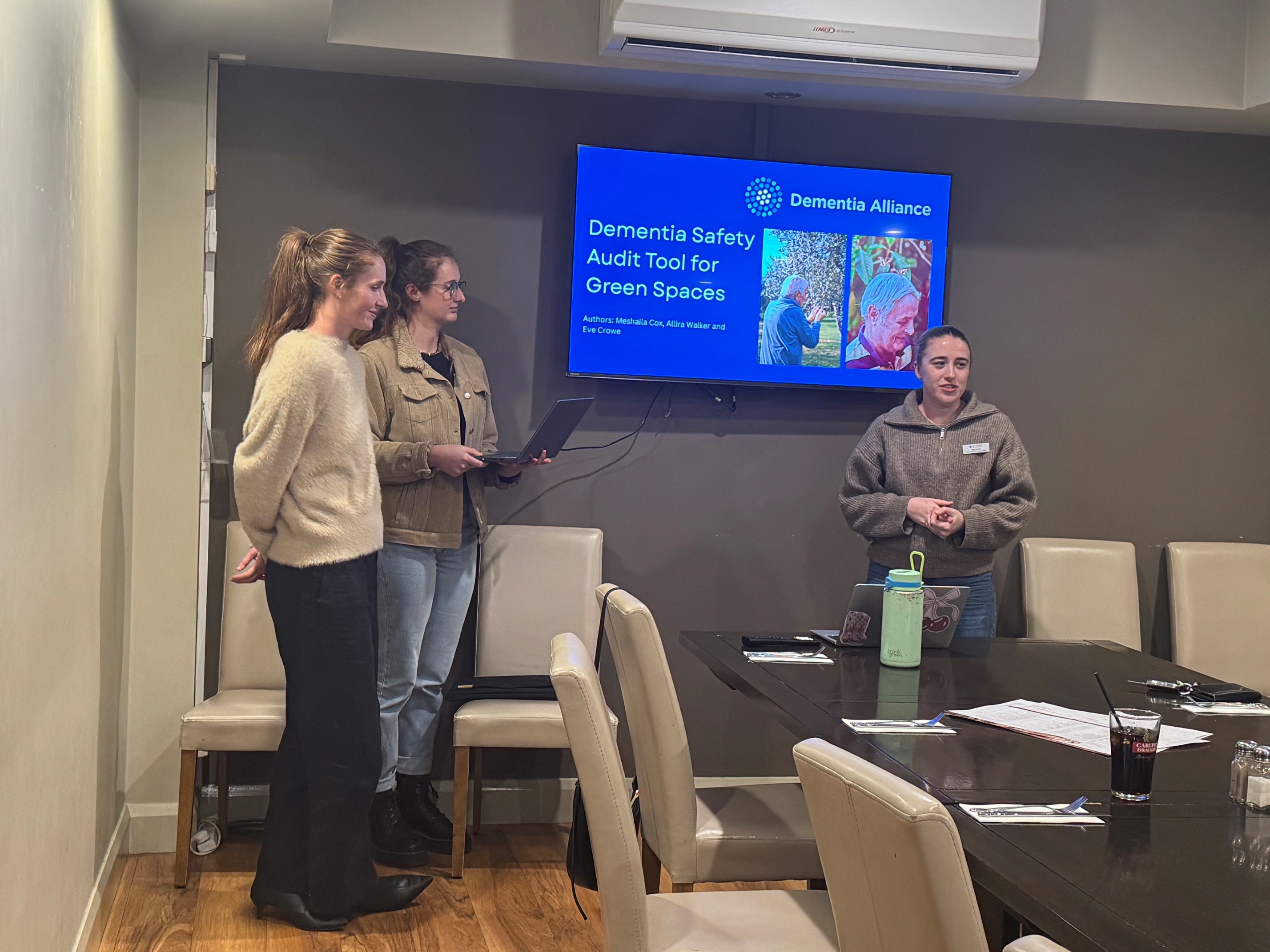
A new group of students is continuing a partnership with Dementia Alliance through the From Audit to Action project. Building on a tool developed by Bachelor of Occupational Therapy (Honours) students in 2025, the next phase will focus on testing the tool across a range of outdoor and community settings and exploring how it can be applied in practice.
"The students are gaining hands-on experience in community-engaged practice while contributing to a project with the potential to improve outdoor environments for people living with dementia and their carers," said La Trobe Senior Lecturer, Occupational Therapy and project supervisor, Asmita Mudholkar.
Working with Dementia Alliance, students developed an outdoor environmental audit tool designed to assess green spaces and community outdoor environments against dementia-inclusive design principles.
"People living with dementia should be able to access and enjoy outdoor spaces with confidence," said Sandra Slatter, Founder and President of Dementia Alliance.
"This project has helped turn research and design principles into a practical tool that communities can use to better understand and improve the environments around them. Features such as unclear pathways, inadequate signage, limited seating and inaccessible facilities can affect whether someone feels confident navigating a space, and the audit tool provides a practical way to identify these barriers and consider achievable improvements."
Alongside this student-led field testing, Dementia Alliance is partnering with the Wicking Dementia Research and Education Centre at the University of Tasmania to support further development and validation of the tool.
Subject to the outcomes of this work, the tool could form the basis of an online education and certification program for occupational therapists and other professionals.
The project is particularly relevant for rural and regional communities, where access to specialist dementia services can be limited. Local parks, gardens and community spaces can play an important role in helping people remain active and connected, and the audit tool may help communities identify ways to make these environments easier to navigate.
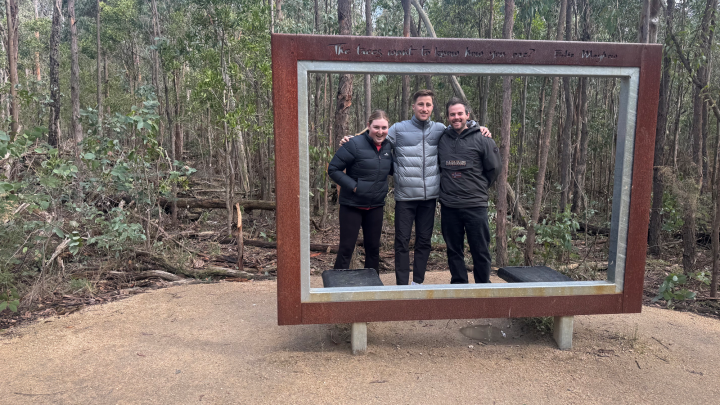
Reflections at Eppalock, a nature-based sanctuary at Lake Eppalock for people with dementia and their carers, is serving as an important demonstration site for the tool, highlighting how environmental design can support participation and inclusion while delivering practical community benefits.
“This partnership also provides an opportunity to translate research and student learning into something tangible and impactful for councils, community organisations and health services, and ultimately, for people living with dementia, carers and the wider community,” said Ms Slatter.
Learn more about La Trobe Rural Health School