Why did you want to pursue science as a career?
When I was in secondary school, we had to choose our subjects. It was like removing things I didn’t want to do – I didn’t want to do chemistry, I didn’t want to do physics. So, I worked very hard to take biology class. I found it really interesting; our teachers offered us a lot of supplementary activities including an excursion to see the Body Worlds exhibition. It was so cool – I thought it was really amazing to see our physical biology in that way.
When I finished school, my dad advised me to choose something I wanted to work with in the future that made use of what I was learning, and that’s been my motto ever since. I attended a college – sort of a TAFE equivalent – to get a diploma in molecular biotechnology. I loved learning all of the hands-on skills you need to work in a lab. One of our enrichment classes saw us extracting the DNA of strawberries, which was so cool!
I love the hands-on stuff, and these practical skills really helped me excel in my Master’s later on. While I was studying, I was already working in a proteomics lab where we had to do a lot of molecular biology. It was basically the same as what we were learning in our course and having that practical experience made it much easier to learn the theory.
Why did you pursue lymphoedema research?
During the second year of my Master of Biotechnology and Bioinformatics, my interest in working with zebrafish and microscopy led me to join Dr Okuda’s lab. I was able to apply my past lab experience to my work as a researcher, which allowed me to learn and do more. During my time in Dr Okuda’s lab, I managed to generate two new zebrafish transgenic lines that are actively being used in his research.
With Dr Okuda’s support and encouragement, I applied to continue my research with his research group as a PhD student, and I am very grateful to La Trobe University for awarding me a PhD scholarship to do this. I also applied for the scholarship top-up from the NHMRC Centre of Excellence in Lymphoedema and Lymphatic Regeneration so I can focus even more on my research journey and contribute to the community that gave me this opportunity.
Tell us about your research.
My research investigates the mechanisms behind lymphoedema - a painful, chronic condition which causes excessive swelling due to a build-up of protein-rich lymph fluids in the body.
Lymphoedema is estimated to affect up to 300,000 Australians. Of this group, the majority are affected by secondary lymphoedema caused by damage to the lymphatic system. In Australia, and in other developed countries, the most common causes for secondary lymphoedema is surgical and radiation therapies from cancer treatment. Although radiation therapy is known to impair lymphatic vessel repair, the mechanism which causes this damage is poorly understood.
Currently, the only way to treat lymphoedema is to reduce its symptoms, and there are no treatments which directly combat the causes of condition itself. Without treatment, those living with lymphoedema experience a worsening of their symptoms over time, with severe pain and chronic swelling reducing their mobility and increasing their risk of infections.
By seeking a better understanding of the mechanisms which cause secondary lymphoedema, our research group hopes to open the way for the discovery of new, effective treatments to combat this condition.
How did you feel when you heard you had received the NHMRC Centre of Research Excellence in Lymphoedema and Lymphatic Regeneration PhD top-up scholarship?
As I’ve only just begun my PhD, I was surprised and very grateful to receive the scholarship top-up. I’m glad that the project was so well received, and I’m excited to show results from this project.
I’m very thankful to Dr Okuda for bringing the scholarship to my attention and for his guidance, as well as to the NHMRC Centre of Research Excellence in Lymphoedema and Lymphatic Regeneration for providing this opportunity and support.
You’re at the beginning of your research career. What impact do you hope your work will have as your career progresses?
I want to always keep learning. Because, no matter what field you work in, as long as you are learning you will discover more and more, which will always make an impact on the community. I also love doing the hands-on work in the lab, so as long as there’s somewhere I can keep doing that while learning new things, I think I can make more scientific discoveries.
--
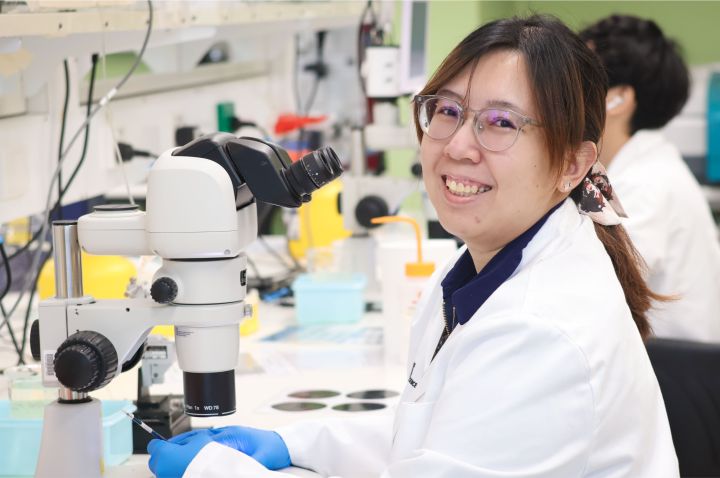
Linda Jiabao Woo is a PhD student in Dr Kazuhide Shaun Okuda’s Vascular Therapeutics and Regeneration group at LIMS, the Centre for Cardiovascular Biology and Disease Research (CCBDR), and La Trobe University’s School of Agriculture, Biomedicine and Environment (SABE). Linda is co-supervised by Dr Maria Jelinic (LIMS, CCBDR and SABE, La Trobe University) and Professor Benjamin Hogan (Peter MacCallum Cancer Centre).
In recognition of the potential impact of her work in lymphoedema, Linda recently received a $15,000 PhD top-up scholarship from the NHMRC Centre of Research Excellence in Lymphoedema and Lymphatic Regeneration, where Dr Okuda is also an Investigator, and Professor Hogan is co-director.
Find out about the Okuda group’s research: