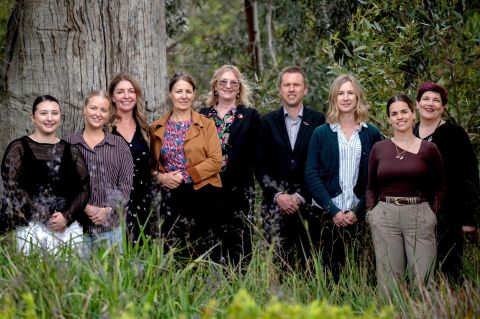
At La Trobe University, Dr Anisur Rahman, Lecturer in Business Analytics and AI in the La Trobe Business School, is developing explainable artificial intelligence systems designed to support patient care while maintaining transparency, fairness and clinical trust.
Working in collaboration with St Vincent’s Hospital Melbourne, Dr Rahman’s research focuses on improving decision-making at one of the most critical points in healthcare: when a patient first arrives in the emergency department. Using information available during triage, including vital signs, presenting complaints, demographic information and clinicians’ notes, his team is developing models that can predict whether a patient is likely to be admitted or discharged, identify the most appropriate admitting specialty and estimate their expected length of stay.
The research is part of a multi-site study involving health services in Victoria, Western Australia and Tasmania, allowing the team to examine how the models perform across different hospitals and patient populations.
By providing these insights early, the research aims to help clinicians make faster, better-informed decisions, improve patient flow and support more effective use of hospital resources.
Dr Rahman’s research career has centred on applying artificial intelligence and machine learning techniques to solve practical problems across healthcare, agriculture, housing and public policy.
Before joining La Trobe University, he worked as a Data Scientist with NSW Health, using data-driven approaches to improve clinical and operational decision-making across emergency departments, mental health services, Aboriginal health programs, inpatient care and community-based health services.
His work has attracted support from organisations including VicHealth and Property Compliance Victoria and has been recognised through awards such as the 2022 Murrumbidgee Local Health District Excellence Award and finalist recognition in the 2025 Charles Sturt University Alumni Research Excellence Awards.
Since joining La Trobe, he has expanded this work through partnerships with hospitals, government agencies and industry organisations, leading interdisciplinary projects designed to deliver measurable impact.
Emergency departments face increasing pressure from rising patient numbers, overcrowding and limited resources. One of the biggest challenges for clinicians is determining as early as possible whether a patient is likely to be admitted or discharged and what care pathway they may need.
Dr Rahman’s research addresses this challenge by developing systems that not only generate accurate predictions but also explain how those predictions are made.
Many artificial intelligence models operate as “black boxes”, producing recommendations without revealing the reasoning behind them. In healthcare, where accountability and trust are essential, this can limit their usefulness. Dr Rahman’s approach focuses on explainability, identifying the clinical factors that influence each prediction so clinicians can better understand and evaluate the recommendations alongside their own expertise.
The team is also assessing model performance for accuracy, fairness, robustness and reliability across different healthcare settings, recognising that a model developed using data from one hospital may not perform in the same way elsewhere.
The research draws on routinely collected emergency department information, including patient demographics, vital signs, clinical observations, presenting complaints and triage notes.
Through the partnership with St Vincent’s Hospital Melbourne, the team has assembled a multi-hospital emergency department dataset incorporating data from hospitals across Victoria, Western Australia and Tasmania.
Protecting patient privacy is a central priority. All data used in the research are securely de-identified before analysis, while careful attention is given to data quality, missing information and potential sources of bias. The models are also validated using independent datasets to ensure they perform consistently across different hospitals and patient populations.
Developing reliable clinical decision-support tools presents a range of technical challenges. Triage notes often contain abbreviations, inconsistent terminology and unstructured language, making them difficult to analyse effectively. Another challenge is ensuring that models developed using data from one hospital continue to perform well in other healthcare settings with different patient populations and clinical workflows.
Equally important are the ethical considerations. All projects are conducted under strict ethics approvals and governance processes, and every member of the research team has completed Good Clinical Practice certification. The team continually evaluates its models for fairness and potential bias to help ensure equitable outcomes across different patient groups.
Importantly, the technology is designed to support clinicians, not replace them. Clinical judgement remains central, with the models providing evidence-based insights to assist decision-making.
The research is also examining the potential impact of these tools on patient outcomes and healthcare costs, rather than measuring success solely by the technical performance of the models.
Dr Rahman believes artificial intelligence will become an increasingly important part of clinical decision support across healthcare over the next decade. Future systems are likely to securely integrate multiple sources of information, including electronic health records, medical imaging, laboratory results and clinicians’ notes, to provide more personalised and timely support.
At the heart of this work is a strong collaboration between La Trobe University and St Vincent’s Hospital Melbourne, bringing together expertise in artificial intelligence, data science and emergency medicine. By combining academic research with frontline clinical experience, the team is developing practical solutions to real healthcare challenges. The interdisciplinary team includes Dr Anisur Rahman, Professor Damminda Alahakoon, and a PhD researcher from La Trobe University, together with Associate Professor Hamed Akhlaghi and Dr Sam Freeman from St Vincent’s Hospital Melbourne.
The multi-site approach is intended to help establish whether these tools can work reliably across different healthcare environments, an important step before their potential use in clinical practice can be assessed.
Through a commitment to transparency, fairness and clinical relevance, Dr Anisur Rahman’s research is exploring how decision-support tools can provide useful information to clinicians while keeping clinical judgement and patient care at the centre of emergency medicine.
Connect with Dr Anisur Rahman
La Trobe profile: Dr Anisur Rahman
Email: Anisur.Rahman@latrobe.edu.au
To stay up to date on future La Trobe Industry articles and news, subscribe to the Industry newsletter or Follow ‘La Trobe Industry’ on LinkedIn and Eventbrite.