When cells die, they do not simply disappear. Instead, they send messages.
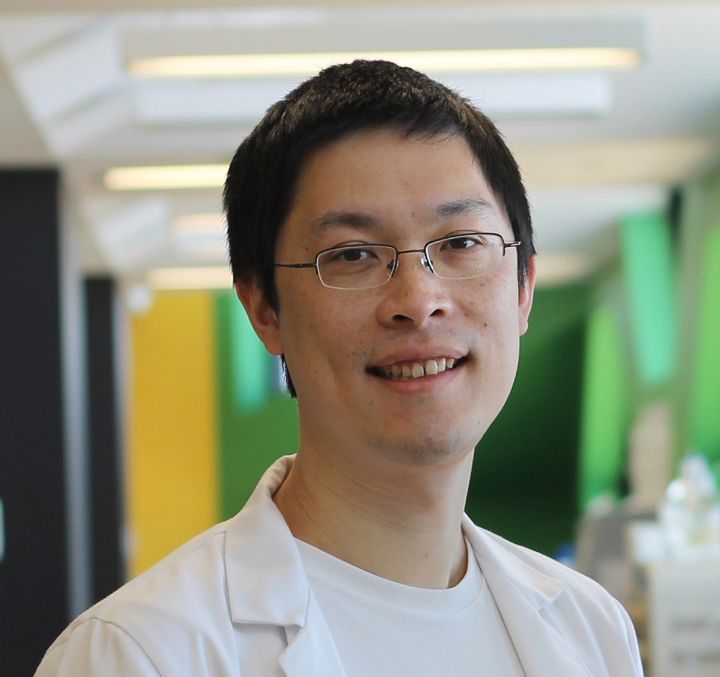
That idea sits at the heart of Professor Ivan Poon’s research at La Trobe University, where his team studies how dying cells break apart, package their contents, and communicate with surrounding cells. While cell death has been observed for decades, Prof Poon’s work has helped overturn the long-held assumption that the fragmentation of dying cells is chaotic and uncontrolled.
“My group is always interested in how, when cells die, they communicate with neighbouring cells, healthy cells or immune cells,” he says. “In particular, we’re interested in when cells die through this programmed cell death known as ‘apoptosis’, how the cells actually undergo fragmentation, and how those small fragments interact and communicate with other cells.”
This question first captured Prof Poon’s attention during his doctoral research, when he became fascinated by what happens after cells die. Billions of cells are replaced every day in the human body, and clearing them efficiently is essential for health.
“If those cells accumulate in different organs and tissues, that can cause unwanted inflammation and affect how those tissues function,” he explains. “So the body has developed very effective ways to remove those cells.”
A turning point came during Prof Poon’s postdoctoral work in the United States, when careful microscopic imaging revealed something unexpected. Rather than breaking apart randomly, dying cells actively reshape themselves, forming protrusions that help divide them into multiple, neatly packaged pieces. “For many years, people thought the disassembly of dying cells was random. What we’ve discovered is that it’s actually very well controlled,” he says.
These protrusions, sometimes described as the ‘feet of death’, play an active role in separating a dying cell into distinct fragments. Observing this process up close raised new questions for Prof Poon about how fragmentation is regulated and why cells invest so much energy in controlling it so precisely.
When dying cells become messengers
Those questions have led to insights with major implications for infection and disease. In viral infections, for example, cell death is one of the body’s primary defense mechanisms. By killing infected cells, the body shuts down the virus’s ability to replicate.
“But viruses are very clever,” Prof Poon says. “Some viruses actually hide inside these dying cell fragments. Those fragments then interact with other cells, acting like a Trojan horse and spreading infection.”
Understanding this process has allowed Prof Poon’s team to identify specific proteins that control how cells fragment, and drugs that can speed up, or block, fragmentation.
“We’ve identified key molecular factors inside cells that control this process, and we’ve also identified drugs that can help cells fragment more, or stop them from fragmenting,” he says. “The idea is that if we can block fragmentation, we may be able to stop virus traffic between cells.”
A second major focus of Prof Poon’s work is on extracellular vesicles – membrane-bound packages released by cells to carry information to other cells. While most research has focused on very small vesicles, Prof Poon’s team is leading work on unusually large vesicles, some as big as platelets.
“These large vesicles can contain a lot of material,” he explains. “Cells can package things they don’t want exposed, or damaged material, and let neighbouring cells deal with it. They also have a large surface area, which means they can carry many different signals.”
Prof Poon is Professor of Biochemistry and Chemistry at La Trobe and Director of the Research Centre for Extracellular Vesicles, which brings together researchers studying different aspects of cell-to-cell communication across the University. He also leads the Bioimaging Platform, a shared facility that allows scientists to visualise biological processes at extraordinary resolution, from individual cells to whole organisms.
Together, these capabilities help translate fundamental research into real-world insights, and open the door to collaboration beyond academia. Prof Poon sees strong potential for industry partnerships, particularly in pharmaceuticals, diagnostics, and biotechnology.
“We’re very interested in diagnostics,” he says. “These large extracellular vesicles have a lot of potential as biomarkers for infection, cancer, and neurological disease. We’re developing technologies to separate different types of vesicles, and that could lead to new diagnostic tools.”
While the work is still at the proof-of-concept stage, Prof Poon has big ambitions for the long term. “We definitely want to have a spin-off company within the next five years, if we can build the technology to that point,” he says.
For Prof Poon, impact is not only measured in discoveries or commercial outcomes, but also in people. Mentoring early career researchers and helping them establish their own directions is a core part of his work.
“We’re really focused on helping the next generation of scientists grow,” he says. “Giving them the opportunity to lead and build something of their own is incredibly important.”
Connect with Professor Ivan Poon
La Trobe Profile: Professor Ivan Poon
Email: i.poon@latrobe.edu.au
To stay up to date on future La Trobe Industry articles and news, subscribe to the Industry newsletter or Follow ‘La Trobe Industry’ on LinkedIn and Eventbrite.