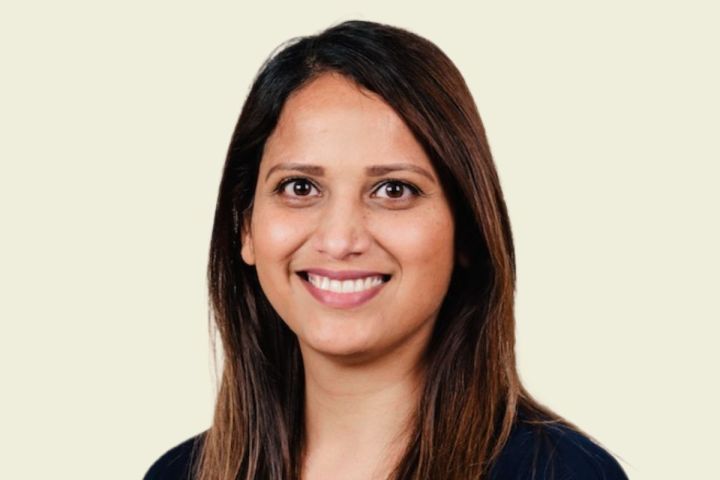
For Dr Deepa Agarwal, food innovation starts with a simple idea: good products need to work on every level. They need to be nutritious and safe, but they also need to taste good, perform well in processing, and make sense at scale.
At La Trobe’s Centre for Food Science, part of the La Trobe Institute for Sustainable Agriculture and Food, Dr Agarwal works across all of those challenges.
“I specialise in understanding how to design food systems using different food ingredients,” she says. As a material scientist working in food, she looks closely at how ingredients behave, how processing changes them, and how those changes affect digestibility, sensory perception, and final product quality.
“Food has to be tasty, because that’s how a consumer loves and enjoys it.”
That broad, applied view is central to her work. Dr Agarwal and her colleagues use a range of techniques to understand food systems, from ingredient functionality and processing through to safety, nutritional value, shelf life, and consumer experience. Just as importantly, she wants to challenge simplistic assumptions about processed food.
Processing food, she points out, is not automatically a negative. It is often essential for maintaining the nutritional and sensory profile of a product and ensuring it remains shelf-stable and safe to eat.
That thinking also shapes the work Dr Agarwal will discuss as part of La Trobe’s upcoming Innovation Series event: From Concept to Shelf: Accelerating Food Innovation. Her current research into legumes and fermentation sits at the intersection of sustainability, nutrition, and product development. It is also a good example of the way she approaches food science: by asking how promising ingredients can be made more appealing, more functional, and more useful in real products.
Making legumes more appealing and accessible
Dr Agarwal says her interest in legumes grew from her earlier work with precision fermentation and from a desire to explore how traditional technologies can solve modern food challenges. While fermentation is not new, she says, it has become increasingly relevant because of the benefits it can bring to structure, nutrition, and digestibility.
“How can we further improve the palatability of legumes to cater to more of the Australian population?” she says. “How can we make them more palatable and approachable for a wider audience?”
The team has been working particularly with fava beans, an ingredient with strong nutritional and agricultural potential. Dr Agarwal describes them as a valuable part of Australian agriculture, with a protein profile that supports dietary needs and sustainability benefits in the field as a nitrogen fixer. But she also knows why legumes can be a hard sell. They can take time to prepare, can be difficult for some consumers to use at home, and are not always perceived as appealing. Fermentation, she says, offers a way to change that.
We try to build a bridge between academia and industry... We really want to work together, because that’s the only way we can provide the solutions and support industry needs.
A bridge between research and industry
Dr Agarwal’s industry background gives her a particularly practical perspective on these questions. Before joining La Trobe, she worked across academic, institute, and industry settings, including startups and larger food businesses. That experience, she says, has shaped the way she thinks about research. “One factor common across all three types of industry is scaling up,” she says, explaining that while a product might look promising in the lab, unless it can move from “grams to tonnes” at the right cost and quality, its impact will be limited.
That is why she encourages students and collaborators to think beyond the experiment in front of them. “Always think about the big picture,” she says.
For industry partners, that mindset matters.
Dr Agarwal says the team is well placed to support companies because all of its members bring experience from both academia and industry. “We try to build a bridge between academia and industry,” she says.
“We understand the lingo and we can help navigate that. We don’t think the approach should be, ‘Give us the project, we’ll run it, and then give you something back.’ We really want to work together, because that’s the only way we can provide the solutions and support industry needs.”
Connect with Dr Deepa Agarwal
La Trobe Profile: Dr Deepa Agarwal
Email: D.Agarwal@latrobe.edu.au
To stay up to date on future La Trobe Industry articles, events and news, subscribe to the Industry newsletter or Follow ‘La Trobe Industry’ on LinkedIn and Eventbrite.