New research from Dr Ali Zia is helping to make autonomous systems more reliable in complex, real-world conditions.
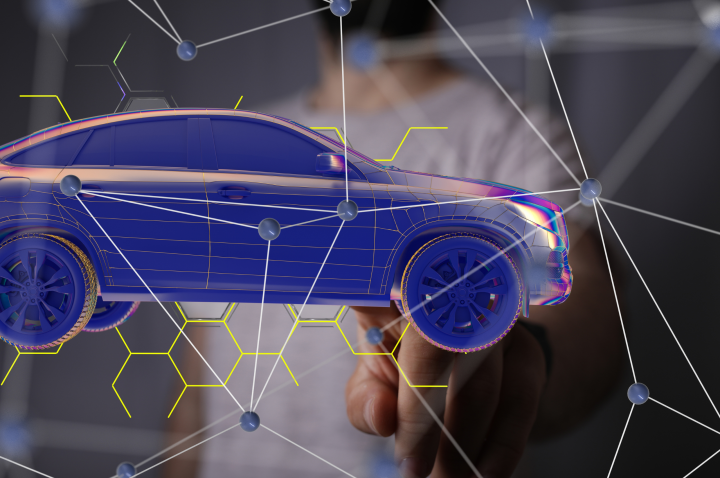
“Autonomous systems use sensors and AI to understand their surroundings, plan their movements and act without continuous human control,” he explains. “They often combine cameras, laser-based distance sensors called LiDAR, and radar to detect obstacles and other road users."
“However, interpreting radar data can be difficult. This is because a pedestrian, cyclist or vehicle may generate several weak, fragmented signals rather than being read as one clearly defined object. Environmental conditions, such as rain or fog, can also make objects difficult to identify."
To address this challenge, Dr Zia is developing AI systems that can better identify objects from incomplete and fragmented radar signals.
His new AI framework, called HyperRadar, learns how groups of radar signals are connected and combines information from multiple radar perspectives to build a more accurate picture of the surrounding environment.
“Instead of analysing radar signals individually, HyperRadar learns which signals belong together,” he explains. “This helps the system recognise that several scattered reflections may actually represent one pedestrian, cyclist or vehicle.”
His next step will be to extend HyperRadar from two-dimensional radar images to more detailed three-dimensional images.
“Beyond autonomous driving, this approach could potentially support warehouse robots, agricultural machinery and industrial vehicles that need to detect people and obstacles in challenging conditions.”
Dr Zia’s research has also been accepted at the European Conference on Computer Vision (ECCV) 2026, a major international conference in computer vision, recognising its contribution to interpreting radar data for autonomous systems.