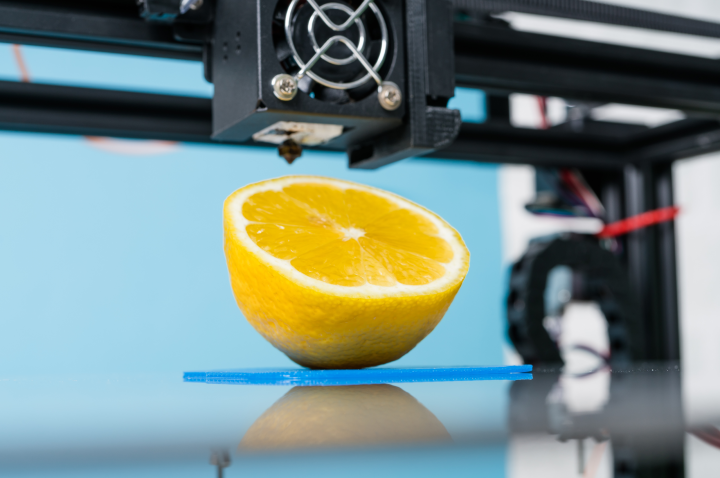
Research led by Dr Deepa Agarwal in collaboration with Annie Lassemillante Cornette from School of Allied Health, Human Services and Sport has explored whether 3D food printing could help create safer, more nutritious and appealing meals for people with swallowing difficulties.
“Dysphagia, or difficulty in swallowing, affects a significant proportion of the ageing population and people with neurological or physiological impairments,” Dr Agarwal explains. “Dysphagia often requires texture-modified foods. However, these foods can offer limited variety and visual appeal.”
To help address this, Dr Agarwal and Dr Cornette reviewed the potential of 3D food printing to create more personalised and appealing meals that meet specific texture requirements.
The review found that while 3D food printing is promising, significant technological challenges currently limit its practical use.
“Producing a complete meal introduces a range of challenges, from maintaining the right food texture and nutritional content to printing reliability, food safety, equipment accessibility and preparation time,” Dr Agarwal says.
Dr Agarwal adds that while 3D printing may make texture-modified meals more appealing, it may introduce new challenges for the people preparing and serving them.
“Overcoming these barriers will require collaboration across food science, healthcare, engineering and design, as well as greater involvement from the people who will ultimately use the technology.”
Dr Agarwal says future research should focus on bridging the gap between engineering innovation and clinical application.
“This includes developing standardised, compliant food formulations, and user-friendly printers, alongside testing for nutritional adequacy, mealtime satisfaction and patient outcomes,” she says.
“Improving cost-effectiveness and developing food service guidelines will also be essential to move this technology from promising prototypes to routine clinical care.”