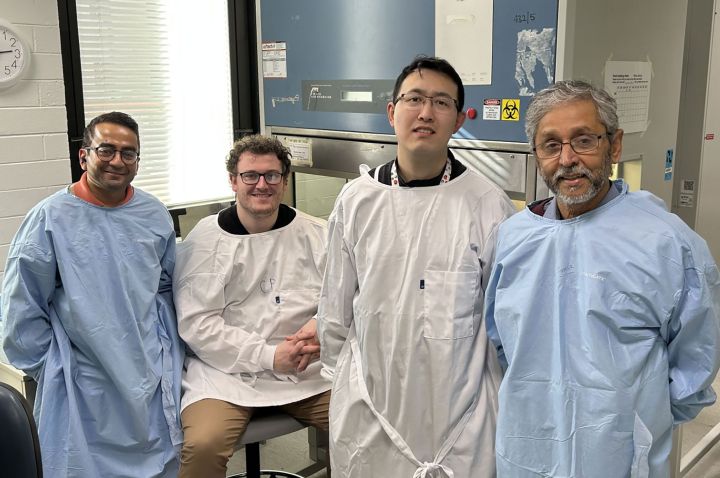
The funding, provided by Coefficient Giving, will advance critical research into this complex and life-threatening condition. Coefficient Giving is a philanthropic funder and advisor whose mission is to use its resources to help others as much as possible.
Sepsis remains a major global health challenge, impacting 84,000 Australians and causing more than 12,000 deaths every year. Sepsis occurs when the immune system goes into overdrive in response to infection. It leads to extreme inflammation that can cause blood clots and block oxygen from reaching vital organs, resulting in tissue death and multiple organ failure.
Research Lead, Associate Professor Hamsa Puthalakath focuses on cell death (apoptosis) and inflammation, aiming to understand how it is disrupted in sepsis and to identify strategies to reduce tissue injury and improve survival.
“We are committed to advancing innovative biomedical research. This funding enables us to push the boundaries of discovery and move closer to therapies that could significantly improve patient outcomes,” says Hamsa.
The funding will support research aimed at improving understanding of sepsis biology and developing new therapeutic approaches. The long-term commitment from 2026 to 2029 will support sustained scientific progress and impact.
The project will examine how immune signaling in the body drives sepsis and advance a new therapy to reduce harmful inflammation without compromising the body’s ability to fight infection. It will also address life-threatening bloodstream Candida infections, an increasing risk for critically ill and immunocompromised patients, including those in intensive care. Across both areas, the team will develop and test host-directed therapies and develop better, more reliable diagnostics, advancing the most promising candidates through preclinical studies towards future human trials.
The funding reflects continued confidence in La Trobe University’s research expertise and the team’s capacity to deliver high-impact scientific outcomes.
It also highlights the critical importance of partnerships between philanthropy and academia in driving medical discovery. La Trobe University is internationally recognised for its strengths in biomedical and immunological research, with multiple research laboratories focused on understanding human disease by uncovering how cell death and immune responses are regulated.
The support from Coefficient Giving reflects a growing global recognition of the need for innovative approaches to tackling sepsis. Philanthropic support plays a crucial role in enabling high-risk, high-reward biomedical research that may otherwise struggle to secure early-stage funding.
This funding will enable La Trobe University to strengthen global health outcomes, and contributes to the Make Your Impact campaign. The campaign supports areas such as such as education reform, advancing AI technology, healthcare and innovative Australian research that has the potential to save lives.