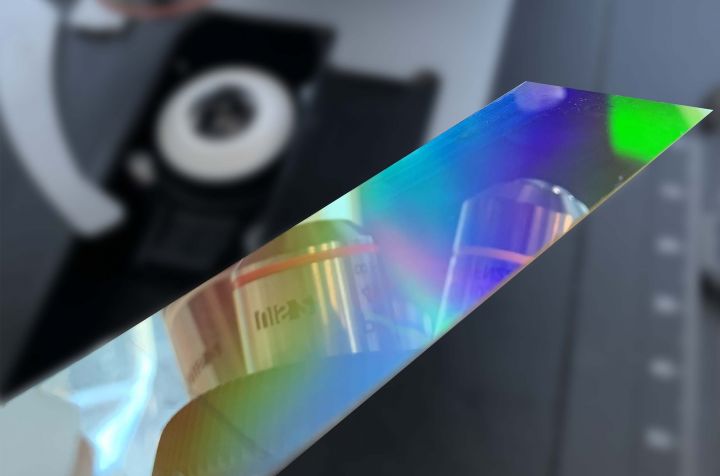
The NanoMslide is a cancer diagnostic tool that could help reduce the need for reoperation in diseases such as breast cancer.
Currently around 30% of women who undergo lumpectomy to remove breast cancer need to return within 90 days to have further surgery. The NanoMslide could help improve patient outcomes by more accurately determining tumor margins, reducing the need for a second operation.
Determining the exact edge or border of the tissue removed in breast cancer surgery is critical. Pathology of fresh frozen tissue, which is often used for intraoperative margin detection, is both challenging and time consuming. Obtaining clear images of the tumour using frozen tissue can be difficult and the current reliance on chemical staining means that the patient spends longer on the operating table whilst they wait for a pathology diagnosis.
The NanoMslide can generate instant, high-contrast images of tissues. This revolutionary diagnostic tool delivers both accurate morphology and chemical contrast without the need for extensive tissue preparation or staining.
The funding support from the VMRAF will enable the team behind NanoMslide to validate its potential to provide more accurate surgical margins, which will have significant positive outcomes the health economy and society more widely.
The NanoMslide won the 2022 Eureka Prize for Innovative Use of Technology.
Read more about Professor Abbey’s NanoMslide, a collaboration with Associate Professor Belinda Parker at the Peter MacCallum Cancer Centre.
Dr Brian Abbey is a Professor of Physics at La Trobe University and the Deputy Director of the La Trobe Institute for Molecular Science (LIMS).