Thanks for letting us know you are using this book.
There were errors submitting the form. Please correct the marked fields and try again.
In development – early 2027 launch
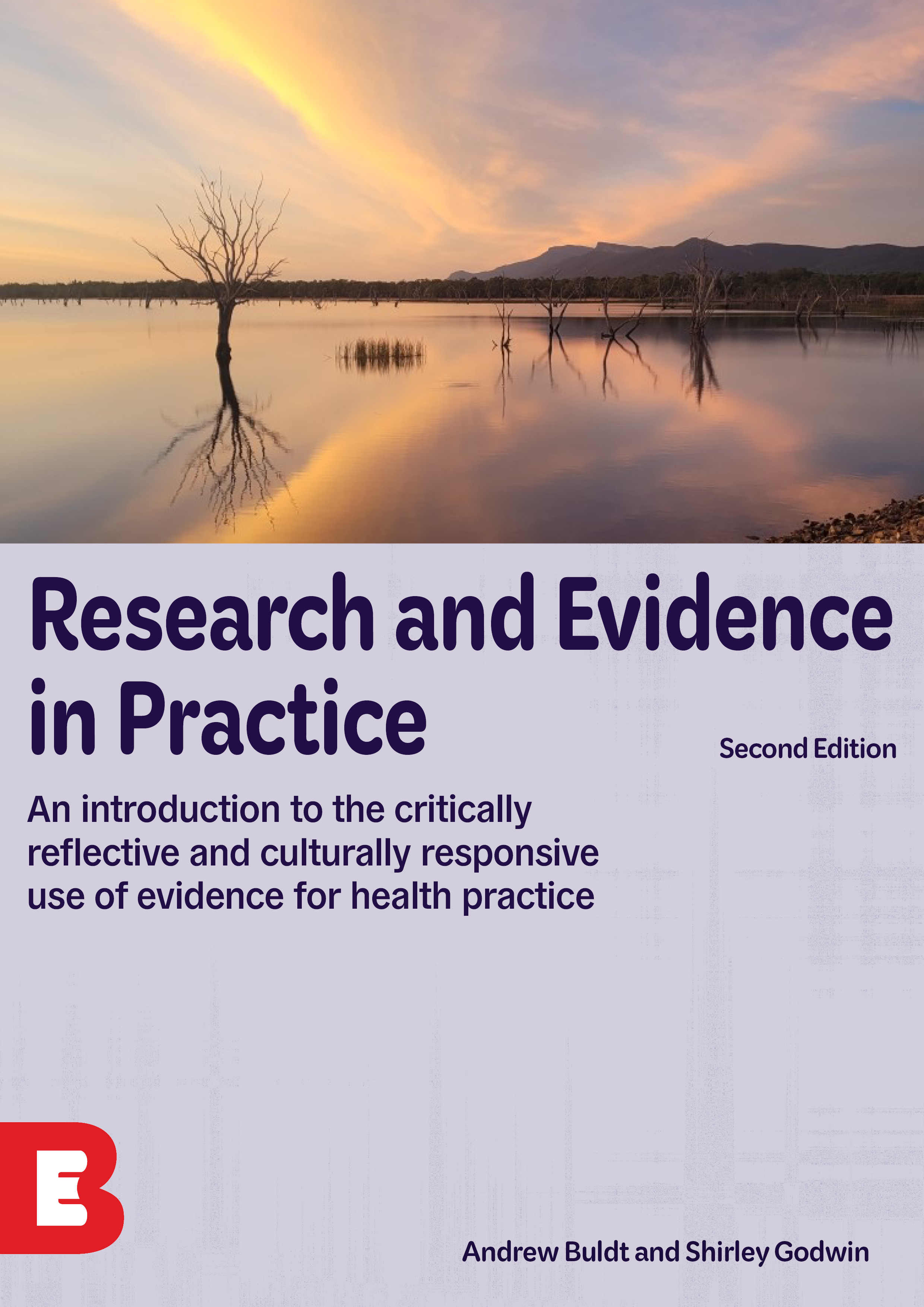
Research and Evidence in Practice: An introduction to the critically reflective and culturally responsive use of evidence for health practice is a revised open education resource that introduces learners and educators to evidence-based practice through the combined lenses of critical reflection and cultural responsiveness. Alongside core skills in finding and using research for practice, the resource helps readers identify, analyse and evaluate evidence in ways that are critically informed and culturally aware. Chapters move from understanding the role of evidence and systematic search strategies to recognising and interpreting different forms of research, with learning activities that support critical appraisal of information used to guide clinical decisions across diverse cultural contexts.
With a strong focus on Aboriginal and Torres Strait Islander health, this second edition takes an integrated approach to Indigenous content, rather than adding it as an isolated section. Designed to develop the capabilities of a critically reflective and culturally responsive health practitioner, the resource is relevant across health disciplines. Created for undergraduate and postgraduate students as well as teaching staff, it includes text, graphics, videos, interactive activities and additional materials to support different learning styles. Clinical examples and practical applications enhance relevance, and readers also explore how to apply a critical and cultural lens to the use of Artificial Intelligence (AI) in evidence-based health practice.
Chapter 8: Measurement and analysis – outcome measures and scales of measurement in health research
Chapter 9: Introduction to descriptive statistics and statistical inference
Chapter 10: Treatment effects – mean difference, odds ratio, risk ratio and confidence interval
Chapter 11: Probability, statistical significance and power
Chapter 12: Introduction to qualitative research design
Chapter 13: The role of rigour in qualitative research
Chapter 14: Introduction to mixed methods designs
Chapter 15: Ethics in research and practice
Chapter 1: Evidence-based practice
Introduces the use of research and evidence in healthcare and outlines a practical approach to evidence-based practice.
Provides clinical examples of how research produces evidence for health practice.
Introduces critical thinking as a foundational process required to appraise evidence and make sound clinical judgements.
Proposes a culturally responsive approach to using research and evidence in practice.
Chapter 2: Asking questions to guide your search for evidence
Outlines the use of the PICO framework to develop effective clinical questions from clinical scenarios.
Provides clinical examples for using PICO to find answers to clinical questions.
Prompts critical thinking on how to use PICO effectively to address specific clinical issues.
Describes a culturally responsive approach for using PICO to include cultural context in clinical questions.
Chapter 3: Acquiring the evidence
Outlines where and how to find the best evidence using key terms and search strategies.
Provides practical examples of turning clinical questions into search strategies.
Prompts critical thinking on the use of grey literature as a source of evidence and on building effective search strategies.
Describes a culturally responsive approach for appraising grey literature as evidence and for using advanced search strategies.
Chapter 4: Starting to think critically about research
Describes how end-user participation in research can benefit patients and communities, and how researchers can ensure their studies are ethical and safe.
Provides clinical examples of the application of research ethics values and principles.
Prompts critical thinking on the evaluation of research benefits and ethical standards.
Describes a culturally responsive and ethical approach to research in Aboriginal and Torres Strait Islander contexts.
Chapter 5: Introduction to quantitative research
Outlines the quantitative research process from initial theory to producing research findings that can be used for evidence-based practice.
Provides clinical examples to illustrate how quantitative research leads to recommendations for clinical practice.
Prompts critical thinking about each decision the researcher has made, how the findings are communicated, and how they can used to provide patient-centred care.
Examines quantitative research in Aboriginal and Torres Strait Islander contexts, and cultural responsiveness and knowledge equity in disseminating research findings.
Chapter 6: The critical appraisal of quantitative research – internal validity and external validity
Outlines how the quality of quantitative research is influenced by internal and external validity and various forms of bias.
Provides examples and practical tools for critical appraisal of research methods and findings.
Prompts critical thinking about appraising validity and identifying bias to determine the value of quantitative research as evidence for practice.
Details key considerations for culturally responsive appraisal of research in Aboriginal and Torres Strait Islander health contexts.
Chapter 7: Measurement validity and reliability
Describes the use of measurements in research and how the quality of the study findings is influenced by measurement validity and reliability.
Provides clinical examples to illustrate why validity and reliability can vary based on specific patient circumstances and practice settings.
Prompts critical thinking about the factors and types of errors that affect the value of measurements for use in clinical practice.
Proposes culturally responsive approaches to appraising the validity and reliability of measurements in diverse cultural contexts.
We welcome expressions of interest to join this community of practice, where you can contribute your expertise, peer review forthcoming chapters, develop chapters or shape the direction of this important La Trobe eBureau open textbook.
Share You may copy and redistribute the material in any medium or format.
As long as you follow these terms:
Attribution You must give appropriate credit, provide a link to the license, and indicate if changes were made. You may do so in any reasonable manner, but not in any way that suggests the licensor endorses you or your use.